


Since the establishment of Israel in 1948, the relationship between Syria and Israel has remained one of the most complex and sensitive issues in the region – a “existential struggle” central to Syrian political discourse under both Hafez and Bashar al-Assad.
Hafez al-Assad did not treat the Palestinian issue as purely national or pan-Arab – rather, he wielded it as a political instrument to strengthen his regional influence and control over Palestinian decision-making. Syrian support for specific factions was conditional upon their full compliance with Damascus’ directives, and opposition to others was shaped by strategic interests rather than ideology.
Despite Syria’s decades-long official narrative of perpetual confrontation with Israel, Tel Aviv proposed a comprehensive peace agreement in the 1990s under Prime Minister Yitzhak Rabin. This offer envisaged a full withdrawal from the Golan Heights in exchange for formal diplomatic recognition and normalisation. Assad delayed and negotiated, not out of principled commitment to “national” ideals, but to preserve leverage with global powers, particularly the United States. The Palestinian issue thus became both a tool for domestic control and a pillar of Syria’s regional positioning – allowing Assad to maintain authority while diverting attention from internal affairs.
After 1948, Syria hosted tens of thousands of Palestinian refugees across multiple camps, providing support to various factions as part of a broader political-military strategy to sustain its regional role in the Arab–Israeli conflict.
Following the fall of Assad’s regime in December 2024, questions resurfaced regarding the future of Syrian–Israeli relations and the potential for a shift from long-standing stalemate to normalisation, against the backdrop of profound regional transformations.
Read also: How Washington Handles Israel’s Rising Demands in Southern Syria
The interim authorities in Damascus have avoided discussing direct normalisation. Yet, the first Syrian–Israeli security meeting took place in Baku in December, followed by a statement from interim President Ahmad Al-Sharaa, describing the emerging security understanding as “not optional but necessary” – signalling the limited options available to the authorities in this sensitive arena.
Despite international and regional support, Syria’s new government remains vulnerable, particularly because direct normalisation with Israel remains politically and strategically unpalatable. The old Assad approach – secretive or informal relations – is no longer viable, especially following Israel’s operations against Iran-affiliated groups in the region, including Hamas and Hezbollah. Israel today is more confident and assertive, bolstered by military achievements since 7 October and successive Abraham Accords with regional states, most recently Kazakhstan.
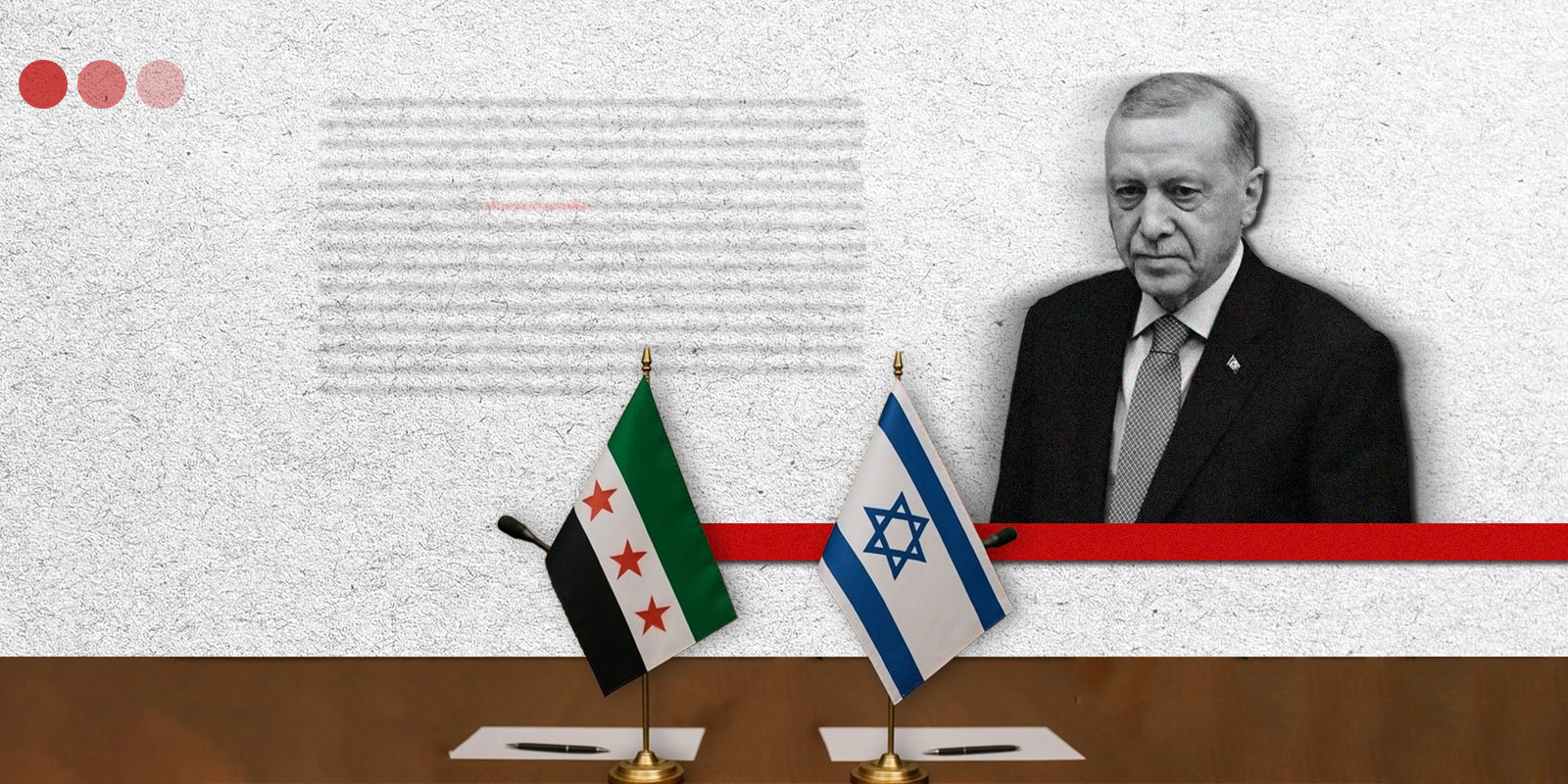
Today, the normalisation question resurfaces under markedly different circumstances. Washington and London are pressing Damascus to engage in a “peace track”, while Ankara actively seeks to prevent Sharrah from pursuing direct Israeli relations. Turkey views any Syrian–Israeli agreement as a threat to its geopolitical and commercial influence in the Middle East. A normalised Syria could regain regional leverage – particularly as a potential energy transit corridor to Europe – thereby diminishing Ankara’s historical role and strategic leverage, built over decades through its northern Syrian interventions.
Turkey also fears that Syrian–Israeli normalisation will generate new regional alignments that marginalise its influence and recalibrate its relations with the West. Ankara’s approach has been consistent – obstructing potential rapprochement by supporting factions opposed to normalisation, tying its economic and security interests to anti-peace actors, leveraging its military presence in northern Syria, and stoking concerns over Kurdish empowerment or Israeli intelligence penetration in southern Syria.
In sum, Ankara does not see Syrian–Israeli normalisation as a pathway to regional stability – rather, it is perceived as a direct threat to Turkey’s political and strategic position. Consequently, Turkey prefers to maintain the current stalemate in Syria – no decisive war, no formal peace – ensuring its continued role as an indispensable actor in any future settlement.
The views expressed are those of the author and do not necessarily reflect those of +963.











