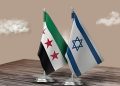



Since the beginning of 2025, with Ahmad al-Sharaa assuming leadership of the transitional phase in Syria, the country has entered a decisive turning point in restructuring its political and cultural institutions. The previous People’s Assembly was dissolved, the role of the Ba’ath Party ended, and steps began to integrate military factions into state institutions. Yet alongside these institutional transformations, a deeper question arises regarding the cultural and intellectual identity of the new Syria: can a cultural Islamic elite emerge that is capable of overcoming historical and intellectual barriers to meet the secular other?
Transformations in the Political and Intellectual Landscape
Al-Sharaa, who rose from revolutionary leader to Islamist-leaning statesman, was not initially bound by strict religious ideology. His orientation developed under the pressures of war and conflict. This transformation, analysts argue, “reflects a similar trajectory among wide segments of the Syrian elites who today are searching for a new formula to bring Islamists and secularists together under the roof of a modern state without exclusion or monopolization.”
In this context, workshops and dialogue meetings between Islamic and secular figures have been launched in recent months, aiming to rebuild lost trust and open communication channels that long remained closed.
Although these initiatives are still in their early stages, they reveal a growing awareness of the necessity of coexistence and compromise in order to spare the country a cultural clash that would parallel its political conflict.
Read also: Syrian Women in the Transitional Phase: Symbolic Presence and Limited Participation
A Renewed Old Debate
The greatest challenge lies in the profound debate about secularism and the place of religion in state and society. The Islamic elites in transitional Syria fluctuate between a discourse rejecting strict secularism that separates religion entirely from politics, and a more pragmatic discourse that accepts differentiation between the two spheres without marginalizing religion or diminishing its role.
This distinction between “separatist secularism” and “differentiated secularism” has become central to the consciousness of Islamists. The former is seen as an extension of Western experiences that do not suit the Syrian reality, while the latter is understood as a possible formula that preserves the rights of all, safeguards freedom of belief, and acknowledges the role of Islam in public life.
In this regard, Mohammad Habash, director of the Human Fraternity Studies Center, told +963 that “the proper dialogue should be between secularism and fundamentalism, as both are currents within the Islamic community.” He warned that framing the discussion as “Islamist versus secular” excludes secularists from the community, even though many of them operate within it with a rational spirit akin to the historical Mu‘tazila school.
Deep-Rooted Fears of Sectarianism
The sectarian dimension has shaped Islamists’ relationship with the concept of secularism. In Syrian Islamic memory, “secularism” was associated with the Baathist regime, which claimed to uphold it but in practice entrenched sectarian biases and opened the way for unjust balances of power.
This legacy has led many Islamists to view secularism as a cover for the dominance of certain minorities or groups, fueling fears of reproducing conflict.
Habash stresses that “the formation of a cultural Islamic elite in federal Syria requires abandoning the mentality of superiority and launching responsible dialogues between religious and secular leaders to build bridges and tear down walls.” He also warns of the danger of sectarian fatwas that have “distorted our societies,” the effects of which have appeared in violence and bombings. He emphasizes that the national state is obligated to protect its citizens from such hostile and exclusionary calls.
Read also: Bashar Al-Haj Ali to +963: Failure to Manage Political Differences Has Fuelled Hate Speech in Syria
Voices Calling for Dialogue
Despite these fears, growing voices are calling for consensus between the two currents. In this regard, Abdullah Turkmani, a researcher in political theory, explained to +963 that “building a modern Syria requires the joint efforts of all its children without exception.”
Turkmani, who belongs to the pro-secular democratic camp, called for “dealing with Islamists as social and political movements shaped by their environment,” while urging Islamists to “leave behind ambiguity in their stance on the religious state and equal citizenship rights.”
He argued that the greatest challenge facing Islamists is committing to full equality among citizens, while the greatest challenge for secularists is recognizing that the Islamic current is an integral part of the Syrian fabric.
He emphasized that “secularism is not hostility toward religion, but rather its liberation from exploitation by power,” urging that differences be managed through dialogue and that the country avoid slipping into destructive conflicts.
He concluded by stressing the importance of social and cultural initiatives in strengthening national consensus, allowing for a safe transition toward a democratic alternative system freely chosen by Syrians.
Open Horizon or Renewed Obstacles?
What is evident in the trajectory of the transitional phase is that the birth of a cultural Islamic elite capable of crossing barriers to meet the secular other is not merely a theoretical possibility, but a reality in the making. Yet this attempt faces deep-rooted obstacles, from a long history of ideological and sectarian conflict to the mistrust born of decades of authoritarianism.
Despite these challenges, the ongoing efforts to integrate different currents within state institutions and to open spaces for cultural dialogue may open a window toward a new formula of coexistence. A formula that does not replicate Western models or reproduce past patterns of authoritarianism, but one that draws from the uniqueness of the Syrian experience and the necessity of reconciliation among its elites.