


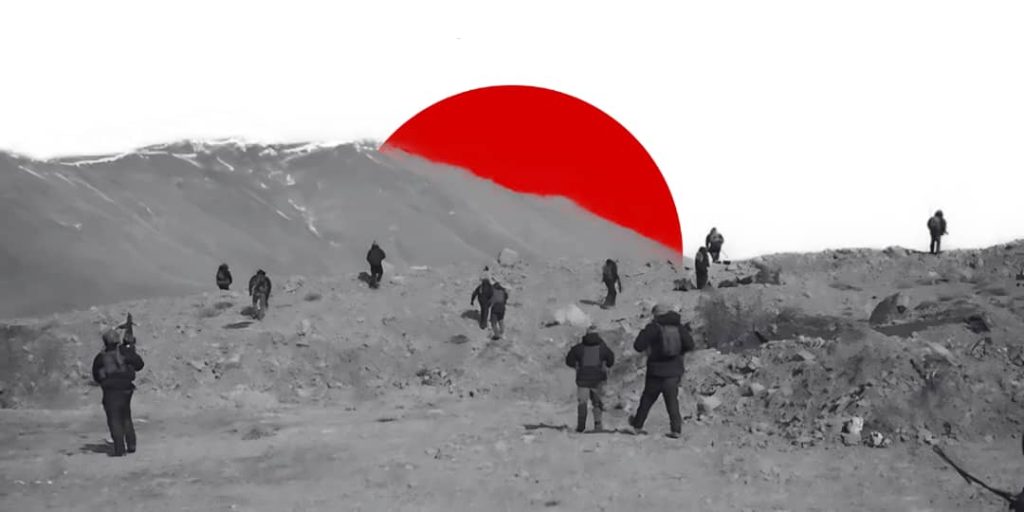
Mount Hermon, also known as the “Mountain of Snow,” continues to represent a strategic focal point of immense importance in the Middle East conflict equation. Its geographical position, stretching across Syria, Lebanon, and Palestine, along with its towering elevation exceeding 2,800 meters, makes it a militarily, security, and environmentally sensitive center. Since Israel imposed its control over its summits, the mountain has turned into a bargaining chip used as a tool of military, political, and water pressure on regional states.
In December 2024, Israeli forces seized the summit of Mount Hermon, located in the far southwestern corner of Syria, following the collapse of the former Syrian regime. Israel established advanced military outposts on the peak, including radar and surveillance stations, to strengthen its intelligence and monitoring capabilities in the region. It also created tourist facilities on the western slopes of the mountain, such as a ski resort, to benefit from winter snowfall.
In a previous statement, Israeli Defense Minister Yisrael Katz affirmed that Israel would remain on Mount Hermon’s summit and in the surrounding security zone “to protect the Golan and Galilee from threats coming from the Syrian side.” He added that this presence is a “fundamental lesson” learned from the events of October 7, 2023, noting that Israel would also continue to protect the Druze population in Syria.
Despite decades having passed since the Arab–Israeli wars, Mount Hermon has preserved its status as one of the most important geographical and strategic nodes in the region. Since Israel took control of its upper summits, the mountain has functioned as an “open eye” monitoring the movements of armies, armed groups, and even civilians across a wide radius stretching from southern Syria into the depths of Lebanese territory and parts of the Golan. This control has not been a mere military detail but rather a political and intelligence lever that Tel Aviv uses as a bargaining chip no less important than any formal agreement or advanced weapon.
The mountain’s multifaceted significance—military, water-related, political, and even environmental—has made it a flashpoint open to wide-ranging scenarios. While Israel views it as a strategic guarantee for its survival and superiority, Syria considers it an inalienable part of its sovereignty, and regional actors such as Iran and Hezbollah regard it as a direct threat to supply lines and confrontation dynamics. This divergence among parties makes Mount Hermon more than a geographical elevation; it is a regional pressure card reflecting the Middle East’s layered complexities and the intertwinement of its security and political files.
Read also: New Syria’s Diplomatic Gamble in Washington
A breach of Syrian sovereignty
Dr. Hassan Merhej, an expert on Middle Eastern and Israeli affairs, told +963: “Israeli control over Mount Hermon’s peaks represents an extremely strategic military and intelligence vantage point, granting Tel Aviv a field advantage in monitoring and targeting movements in southern Syria, Lebanon, and parts of the Golan Heights. This elevated mountainous location provides natural vantage points with sweeping fields of vision, enhancing Israel’s ability to dominate intelligence and track troop movements and supplies that could threaten its security.”
He added: “This military advantage turns the mountain into a natural watchtower covering vast areas, which explains Israel’s insistence on holding it.”
The political dimension is no less complex than the military one. Merhej continued: “Politically, Israeli control over Mount Hermon constitutes a direct violation of Syrian sovereignty, as the mountain is part of Syrian territory under international law. This reality greatly complicates any future negotiations or settlements. The mountain functions as a strategic bargaining chip in Israel’s hands, potentially shutting the door to Syria regaining sovereignty over such a vital area. Moreover, Israeli control over these highlands strengthens Tel Aviv’s negotiating position and heightens the sensitivity of the Syrian file in international forums.”
The Middle East affairs expert stressed that “Israel is not satisfied with military positioning alone but uses the mountain as a political card to enhance its influence and weaken the Syrian side at any future negotiating table.”
Merhej warned of implications for Iran and Hezbollah: “Israeli control of this strategic location represents a direct threat to supply and logistical support lines, compelling them to adopt tougher stances and possibly escalate in other arenas to offset the loss. This ongoing tension increases the risk of wider regional conflicts, as the mountain becomes a direct friction point between the Iran-aligned resistance axis and the occupying entity. In this sense, the mountain becomes a strategic contact zone between Israel and the resistance axis, heightening the likelihood of military escalation in the region.”
Read also: Syria’s FM in Washington: Talks on Sanctions, Reconstruction, and a Deal with Israe
Mount Hermon and the water reservoir
The importance of Mount Hermon extends beyond security and military dimensions. Water resources add another strategic layer. Merhej explained: “With regard to water resources, Israeli control over Mount Hermon gives it unprecedented leverage over the hidden water reserves in the region, which Syria and Jordan consider vital for environmental sustainability and agriculture. This control comes at the expense of a fragile regional water security balance and represents a serious threat that could be used as a political and strategic card in future water conflicts, especially amid deteriorating natural resources and growing population needs.”
He added: “The humanitarian and environmental repercussions for local communities surrounding the mountain are also considerable. Military blockades and recurring clashes over these highlands cause displacement, destroy infrastructure, and deprive Syrians and Lebanese of essential natural resources such as farmland and grazing areas. They also negatively impact biodiversity in the mountainous ecosystem, which is home to rare plants and animals.”
As for potential solutions, Merhej proposed: “International guarantees or joint management arrangements for the mountain would require the establishment of a solid regional and international framework that respects Syrian and Jordanian sovereignty and ensures the protection of water resources. One could envision a multilateral international monitoring mechanism involving neutral parties and regional organizations to oversee usage and prevent control from turning into a tool of exclusion or exploitation. Such arrangements must rest on strict provisions in peace agreements with binding commitments to integrated water management and respect for national sovereignty, in the interest of security and stability throughout the Middle East.”
He concluded: “Israeli control of Mount Hermon’s summits is not merely a matter of geographic possession but rather a complex nexus interwoven with military and intelligence strategy, national sovereignty, regional water security, political climate, and social and environmental consequences for local populations. This makes it an acutely sensitive issue that demands a comprehensive diplomatic approach to ensure a stable future grounded in justice and shared interests.”
Ayman al-Dasouqi, a researcher at the Omran Center for Strategic Studies in Damascus, concurs. He emphasized that “technological advances in weaponry, electronic warfare, and surveillance have not diminished the military importance of geography. This applies to Mount Hermon, which is one of the strategically commanding highlands due to its dominant location over neighboring states and its towering height, granting its holder the advantage of advanced defense or launching preemptive strikes against the adversary, thereby shaping the security balance and influencing its outcomes across multiple fronts.”
He told +963: “There are serious concerns about Israeli control of Mount Hermon and the undermining of Syrian sovereignty. This relates to acknowledging Israeli superiority and its ability to dominate and reshape the long-term security and strategic balance. Mount Hermon is only 40 kilometers from Damascus, Syria’s political capital, and it also represents a water reservoir at a time when the region suffers from severe water scarcity.”
He noted the impact on Iran and Hezbollah: “Israeli control of Mount Hermon undermines the ability of Hezbollah and Iran to target Israel. I believe that both parties’ ability to seize initiative in Syrian geography has been weakened by Assad’s fall and the concentrated, high-profile strikes they have suffered in recent times.”
Mount Hermon is considered a natural renewable water reservoir, providing an estimated 1.5 billion cubic meters of water. Israel relies on the mountain for a third of its water resources, while several rivers flowing through Syria, Jordan, and Lebanon also depend on Mount Hermon’s springs. Syria, however, faces an annual water deficit of about 3 billion cubic meters. This disparity bolsters Israel’s water security while undermining Syria’s, allowing Mount Hermon’s resources to be used as an economic and negotiating card, according to al-Dasouqi.
He also warned of pressures on local communities: “Israeli control of Mount Hermon and its dominance over the security and water equation will further strain local communities, which will face mounting pressures to preserve their security and sustain their livelihoods.”
He concluded with an assessment of Israel’s stance: “I do not believe Israel intends to withdraw from Mount Hermon, given its sense of surplus power, American backing, and the limited capabilities of Syria’s new regime, along with Israel’s lack of confidence in it. Nonetheless, there are opportunities for reaching a regional and international arrangement to address this situation, requiring intensive negotiation efforts to reach a formula that is both acceptable and implementable.”











