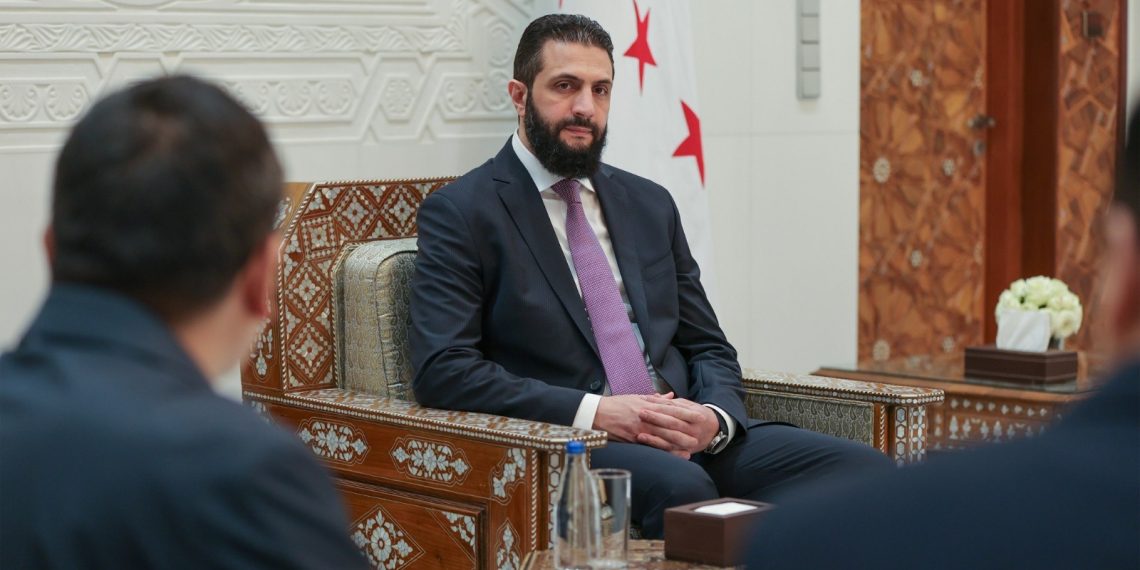
Beirut, Lebanon – A senior Israeli official said Friday that Syria’s transitional government has shown initial signs of goodwill toward Israel, suggesting a potential shift in relations between the longtime adversaries. The comments, reported by the Saudi-owned Al Hadath TV, come amid ongoing talks between Israeli and Syrian officials brokered by Turkey.
“The meetings held so far have been positive,” the official said, noting that Tel Aviv views Syria as an important state in the region. He added that any Syrian endorsement of the Abraham Accords—U.S.-brokered normalization deals between Israel and several Arab countries—would significantly reshape the regional landscape.
The official emphasized that Israel is closely monitoring developments inside Syria and would not tolerate a return to the conditions seen under the previous regime of Bashar al-Assad, who was ousted following years of civil war.
Among the key concerns for Israel is the Syrian–Lebanese border, which the official said requires tighter control. Israel has repeatedly accused Iran-backed groups of using the border area for weapons transfers and drug trafficking, particularly involving the amphetamine-like drug Captagon.
Read also: Israel and Turkey Agree to Avoid Military Clashes in Syria
The official also clarified that Israel does not support any faction within Syria but has begun to treat the transitional government—led by Ahmed al-Sharaa—as the country’s sovereign authority. He said Israel has informed Syria’s Druze community that it would not accept any harm against them but encouraged them to engage directly with the new administration.
The Israeli official said that the United States supports the transitional government and has taken practical steps to ensure its success. He noted that Washington played a role in facilitating recent coordination between Israel and Turkey, and has asked both sides to avoid altering military positions in Syria until the situation becomes clearer.
According to the Israeli official, the Assad regime attempted to broker a peace deal with Tel Aviv through Russian mediation during the final phase of its rule, but Israel rejected the overture.
The official revealed that Israel and Syria’s transitional government are in direct contact, with recent meetings reportedly held in Azerbaijan. These contacts have included high-level figures.
In a separate but ymbolically significant development, Reuters reported last week that Syria’s transitional government has agreed to return personal items belonging to Eli Cohen, the Israeli spy who was captured and executed in Damascus in 1965.
Read also: America and Iran: A Contradiction in Terms
Sources, including a Syrian security official, a presidential advisor, and an individual familiar with the secret negotiations, said the decision was aimed at reducing hostilities and signaling goodwill—particularly toward the United States and President Donald Trump, under whose administration the transitional process was initiated.
The Mossad, Israel’s intelligence agency, praised the return of Cohen’s archive as “a high-level moral achievement,” though the agency did not disclose how the materials were recovered. Israeli officials have described the recovery as part of a joint intelligence operation with a foreign partner.
According to Reuter’s source, the transitional leadership offered Cohen’s belongings as a quiet confidence-building measure by President al-Sharaa, who is attempting to stabilize Syria and win international support following the collapse of the Assad regime.