


More than four months after the fall of the Assad regime, Syria continues to grapple with a host of pressing challenges, chief among them a struggling economy still reeling from the compounded crises of recent years. Inflation has surged dramatically, while corruption and deteriorating living conditions have pushed standards of living to extremely low levels.
The country faces an urgent need to lift international sanctions and launch a comprehensive reconstruction plan to revive its devastated infrastructure. Critical sectors such as electricity, water, communications, and transportation remain in dire condition after more than a decade of war that left much of the country in ruins.
According to the Washington-based Specialised Energy platform, the electricity sector alone has suffered direct losses estimated at $40 billion, with indirect damages exceeding $80 billion. The water sector has also sustained heavy damage, amounting to $1.2 billion, with widespread loss of access to clean water.
The education sector is in crisis as well. Recent official government figures reveal that at least 10,000 out of Syria’s 20,000 schools have been damaged. Of these, 70% are completely demolished, while many others are in such poor condition that they no longer meet even the most basic standards for education.
Both Syrians at home and abroad are looking to the future with hope, anticipating improvements in infrastructure, security, and living conditions, provided that international restrictions are lifted and global and regional institutions begin providing the necessary support.
In a special interview featured in the seventh issue of the printed edition of +963, Syrian researcher Salam al-Kawakibi, Director of the Arab Center for Studies and Policy Research in Paris, spoke about the complexities of reconstruction, the role of the Syrian diaspora, and which international partners the new Syrian administration may rely on to rebuild the country’s economic foundations.
Planning for Reconstruction
“The reconstruction process in Syria has become one of the most urgent and complex issues today,” al-Kawakibi said. “But we cannot talk about reconstruction without first achieving broad political and security stability.”
He emphasised that only once this stability is in place can Syrian, Arab, and international investors feel confident entering the Syrian market. “Reconstruction must be planned by the state itself, as it best understands the country’s needs. Personal and self-serving interests from certain political blocs must not interfere,” he added.
Read more: Rebuilding Syria: The Rise of Women from the Margins to Leadership
In this special interview featured in the seventh issue of the printed edition of +963, we asked Salam al-Kawakibi more in-depth questions; here is a glimpse of them.
The reconstruction process in Syria has become one of the most urgent and complex issues today. What do you think is the best strategy for approaching the issue of reconstruction?
Reconstruction cannot begin without first achieving general political and security stability. Once that foundation is in place, Syrian, Arab, and international investors can enter the market and participate in rebuilding efforts. However, this process must be carefully planned by the state itself, as it is the only entity capable of truly assessing the country’s needs. Any interference from interest-driven groups or blocs must be avoided to ensure the process remains focused on national priorities rather than personal or political gain.
The international community seems reluctant to fund Syria’s reconstruction. What is the reason?
Not at all. The international community is not hesitant about the reconstruction process in Syria, but it has set clear conditions, repeated several times, focused on political participation, the nature of the governance system, the role of women, and regional relations. There are also more complex conditions imposed by dominant powers, especially the United States, which go beyond those set by European or Western countries.
What is the role of the Syrian immigrant private sector, and what are the reasons for the failure of Syrian expatriate businessmen to contribute to rebuilding their country’s crumbling economy?
The Syrian diaspora has an essential role to play in rebuilding Syria, but its members are primarily concerned with profits and their current places of residence and investment. As the saying goes, “capital is a coward”; they will not invest in an unclear and unstable environment, especially amid policy confusion and an uncertain political landscape, all of which are interlinked.
To what extent can we say that ongoing U.S. sanctions on Syria are a decisive factor in regional and international efforts to support Syria’s reconstruction?
American sanctions have effectively halted all initiatives, including the most recent European attempt, when European countries agreed to suspend major sanctions on Syria for a full year. However, this had no real impact, as the United States maintains tight control over international banking transactions, particularly through the SWIFT system based in New York. This has blocked any financial transfers, such as Qatar’s failed attempt to send salaries to Syrian employees, an effort thwarted by Washington’s refusal to ease banking sanctions.
As I mentioned, U.S. conditions differ from those of Western nations. Washington is not focused on democracy, integration, or women’s rights. What matters most to the Trump administration is ensuring Israel’s security and meeting the demands of Israel’s current far-right government, which seeks open access to Syrian airspace and the removal of weapons from border regions.
It now appears that there is a share for Turkey and another for the Gulf states in reconstruction. Which countries will the new Syrian administration rely on to rebuild the country’s economic system?
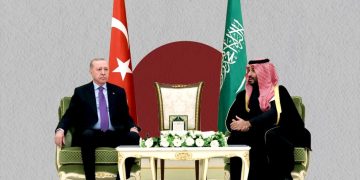
Turkey is expected to play a leading role in Syria’s reconstruction, thanks to its strong construction sector, geographic proximity, and well-established bilateral relations. Turkey will likely secure the “lion’s share” of reconstruction projects, which will be financed by Gulf states.
However, the Syrian government must diversify its reconstruction partnerships, both in terms of technical support and financial backing. All relevant regional and international stakeholders must stay informed about developments in Syria to help preserve stability and prevent any destructive interference in what we hope will be a democratic transformation.