


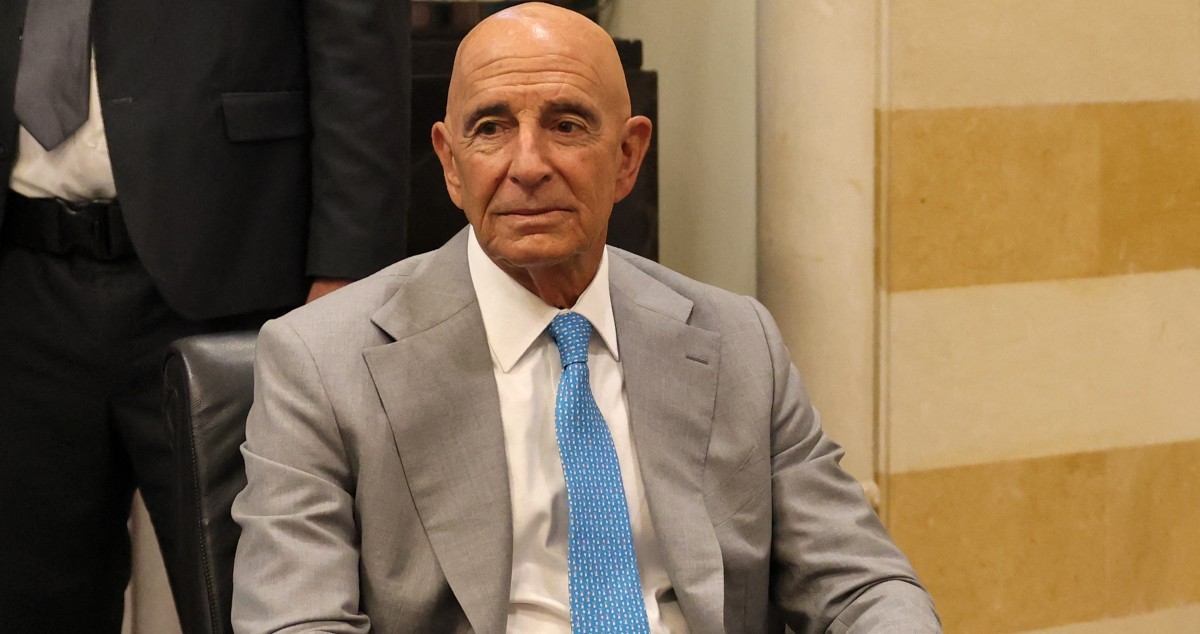
Beirut, Lebanon – U.S. Special Envoy to Syria, Thomas Barrack, said on Monday that the Syrian government must “be held accountable” for the violence that erupted in Suwayda earlier this month. Speaking at a press conference in Beirut following his meeting with Lebanese Prime Minister Nawaf Salam, Barrack called for immediate accountability and inclusive governance.
Barrack stated that Damascus must assume responsibility for investigating and prosecuting those involved in the recent violence in the Druze-majority governorate in southern Syria.
“The current government of Syria, in my opinion, has conducted themselves as best they can as a nascent government with very few resources to address the multiplicity of issues that arise in trying to bring a diverse society together,” Barrack emphasized, calling for the inclusion of minority groups in the country’s emerging governing institutions.
Barrack described Syria as being led by a “new government that’s only been in place for seven months,” now trying to navigate a deeply complicated situation inherited from “15 years of atrocities.” He contrasted it with Lebanon, emphasizing that Syria’s minorities and tribes “have spent most of their children’s lives in chaos under a different government.”
Related: EU-Sanctioned Militia Fighter Details Foreign Role, Sectarian Killings in Suwayda
The U.S. envoy added that while Syria remains deeply divided, the solution lies in promoting national identity over sectarian or tribal affiliations. “I think all of the minority communities are smart enough to say, we’re better off together, centralized.” He added.
When asked about regional dynamics and Israel’s latest attack on Syria, Barrack noted that the U.S. “was not asked, nor did they participate in that decision, nor was it the United States responsibility in matters that Israel feels is for its own self-defense.”
However, he described Israel’s intervention, which targeted several headquarters of the new Syrian regime in the capital, Damascus, as “creating another deeply confusing chapter” that “came at a very bad time.”











