


At dawn, before the vegetable market in Amuda – west of Qamishli – fills with vendors and shoppers, Hanaa arrives at work. She folds the cloth on her shoulder, rolls up her sleeves, and begins lifting crates of potatoes and onions with her cracked hands. Everyone now knows her as “Hanaa the Iron Woman”, but the path that brought her here was anything but easy. After losing her husband suddenly, the thirty-year-old mother of three found herself without income, without a qualification, and without support – yet with an unbreakable will.
“After my husband died, I had two choices,” she tells +963. “Either surrender to poverty or face life with my bare hands. I chose the harder path and started working as a porter in the vegetable market. At first, no one believed I could do it. Some laughed, others whispered, and many refused to hire me at all. But I kept coming back every day, asking for a chance, proving myself. My back ached unbearably, my hands cracked from the weight, but the look in my children’s eyes kept me going. Today, everyone in the market knows me. I’m no longer ‘the strange woman’ – I’m Hanaa the Iron Woman. I’m proud I broke the stereotype and proved that a woman can do anything.”
Hanaa’s experience is not unique. It is part of a broader shift driven by years of economic crisis and shrinking sources of income. Many women have entered jobs once considered exclusively male – warehouses, construction-material shops, cargo lifting, and even heavy industrial work. The trend speaks to economic pressure, but it also shows how women redefine their social roles when pushed to the edge.
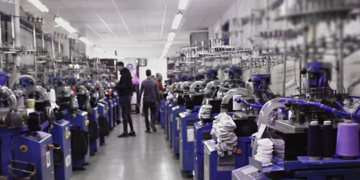
Hanadi shares a different story – one of endurance, pain, and ultimately physical collapse. “I worked in a detergent-production factory,” she says. “Long hours, strong chemical smells, standing without rest. I was the only woman among dozens of men. I had no idea how harsh it would be. My body wasn’t prepared for this work, and I developed a chronic skin allergy, then respiratory inflammation.”
Doctors urged her to leave immediately, but she couldn’t afford to. “I needed that salary – no matter how small – to pay rent and buy food. No one cared how I felt. They would say: ‘If you can’t cope, someone else can.’ I swallowed the pain and came back the next day. But my body started to collapse. One day I fainted and fell between the boxes. They just carried me outside and said: take a break, rethink your situation. I know I gave everything I had. But sometimes, dreaming isn’t enough – reality can be harsher than any dream we try to fight.”
According to social activist Sinar Abd al-Baqi, based in Qamishli, women’s entry into these jobs is deeply tied to the social and economic changes brought by the war.
“Women in Syria have become far more visible in professions once labelled ‘men’s work’,” she tells +963. “Taxi driving, delivery services, driving schools, working as waitresses, even driving minibuses. We now see women in security roles and guarding institutions. There’s also growing social acceptance, especially among women who prefer female taxi drivers or service providers for reasons of comfort and safety.”
Abd al-Baqi explains that the challenges are not only physical but deeply social and psychological. “Many people still believe these jobs ‘don’t suit women’. So, women must prove themselves twice over. Many get little support from their families or communities. But each woman who steps into these roles opens the door for others and slowly shifts the collective mindset.”
Writer and researcher Maya al-Bouti argues that women’s participation in the labour market is not merely economic survival – it is a fundamental step toward social and economic empowerment. “The absence of laws protecting women from discrimination and harassment, and persistent inequalities in wages and promotion opportunities, all hinder participation,” she tells +963. “But work gives women independence, freedom, and the ability to make their own life decisions. It strengthens families and supports broader social progress.”
Women’s entry into male-dominated jobs is therefore more than a professional shift. It is a daily struggle – against the limits of the body, against social norms, against economic collapse, and against necessity itself. With every crate lifted, every bus driven, every shift survived in a factory, another crack appears in the old wall that confined women’s roles.
The question that remains is this: will there come a day when these jobs are simply “jobs” – without a gender label attached? Only time will tell. But today, women across Syria are writing the first lines of that answer with their own hands.