


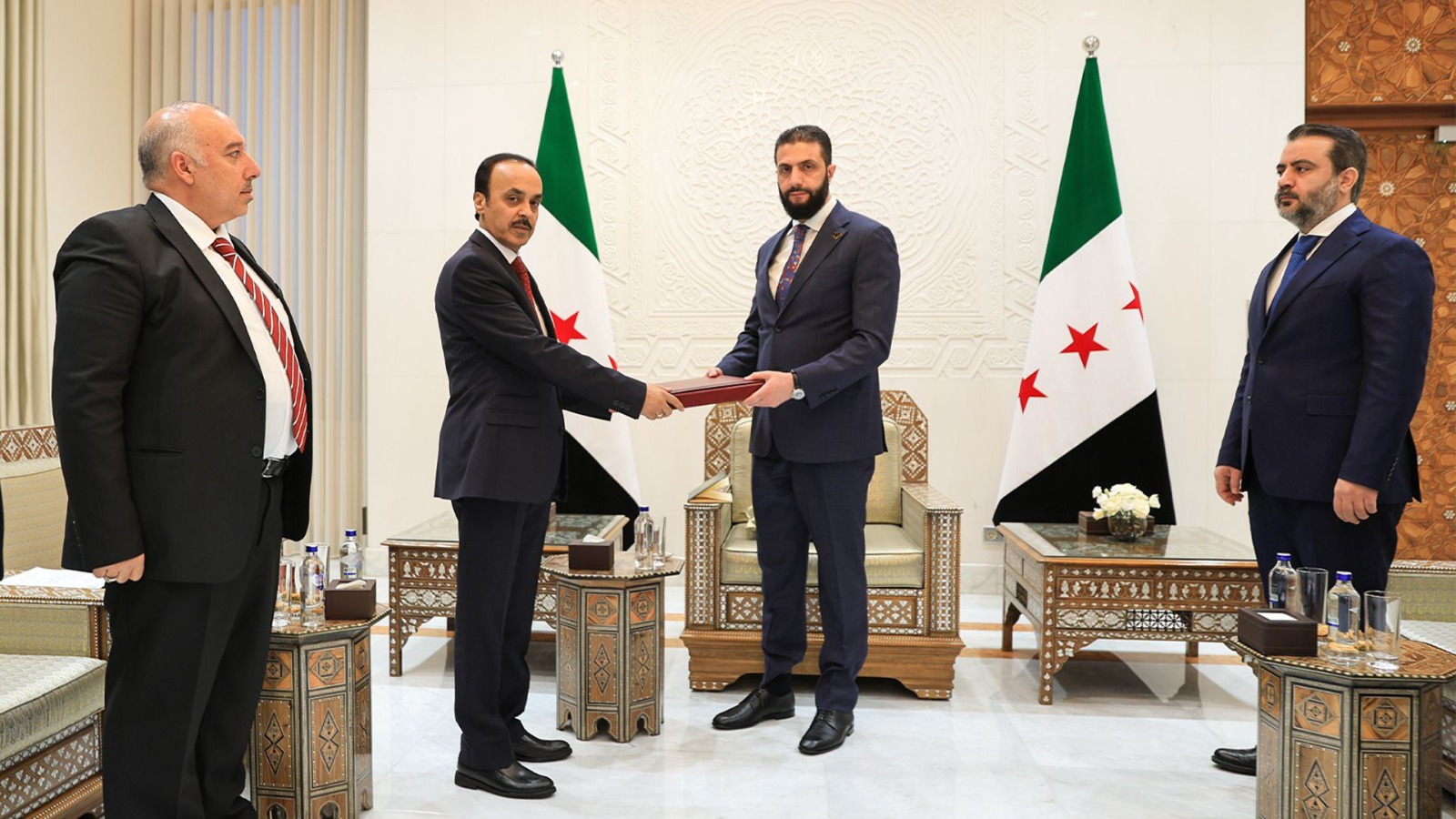
DAMASCUS, Syria – Syrian President Ahmad al-Shara received the final report on Sunday from the national investigative committee probing the deadly events that took place in Syria’s coastal region in March, the presidency announced.
In a statement published on its official Facebook page, the presidency said the committee was formed to ensure that “no violations or efforts to obscure the truth are part of Syria’s future, in the coastal region or anywhere else from north to south.”
The report covers violent events that occurred between March 6 and 10 in the provinces of Tartus and Latakia, where clashes and military raids left hundreds of civilians and soldiers dead, mostly members of the Alawite community.
The presidency thanked the committee for its work and said it would carefully review the findings to ensure accountability and prevent future violations. The committee may hold a press conference to publicly share its key findings, the statement added.
Read also: This is how the “Alawite Question” came to be… and how it might be resolved
EU Sanctions Following the March Violence
The European Union imposed sanctions in late May on individuals and groups allegedly involved in the March violence. Those sanctioned include militia leaders Muhammad Hussein al-Jasem, known as Abu Amsha, and Saif Bulad, known as Abu Bakr, as well as three Turkish-backed factions: the Suleiman Shah Brigade, the Hamza Division, and the Sultan Murad Division, currently under the new Syrian defence ministry.
The EU said the measures were due to their involvement in “serious human rights abuses in Syria’s coastal cities.”
According to government reports, the March violence began with attacks by “remnants” of regime-linked elements on internal security checkpoints and headquarters in the coastal area.
However, the Syrian ministries of defense and interior, along with allied groups, launched counter-attacks, which reportedly resulted in numerous violations against civilians, including mass killings.











