


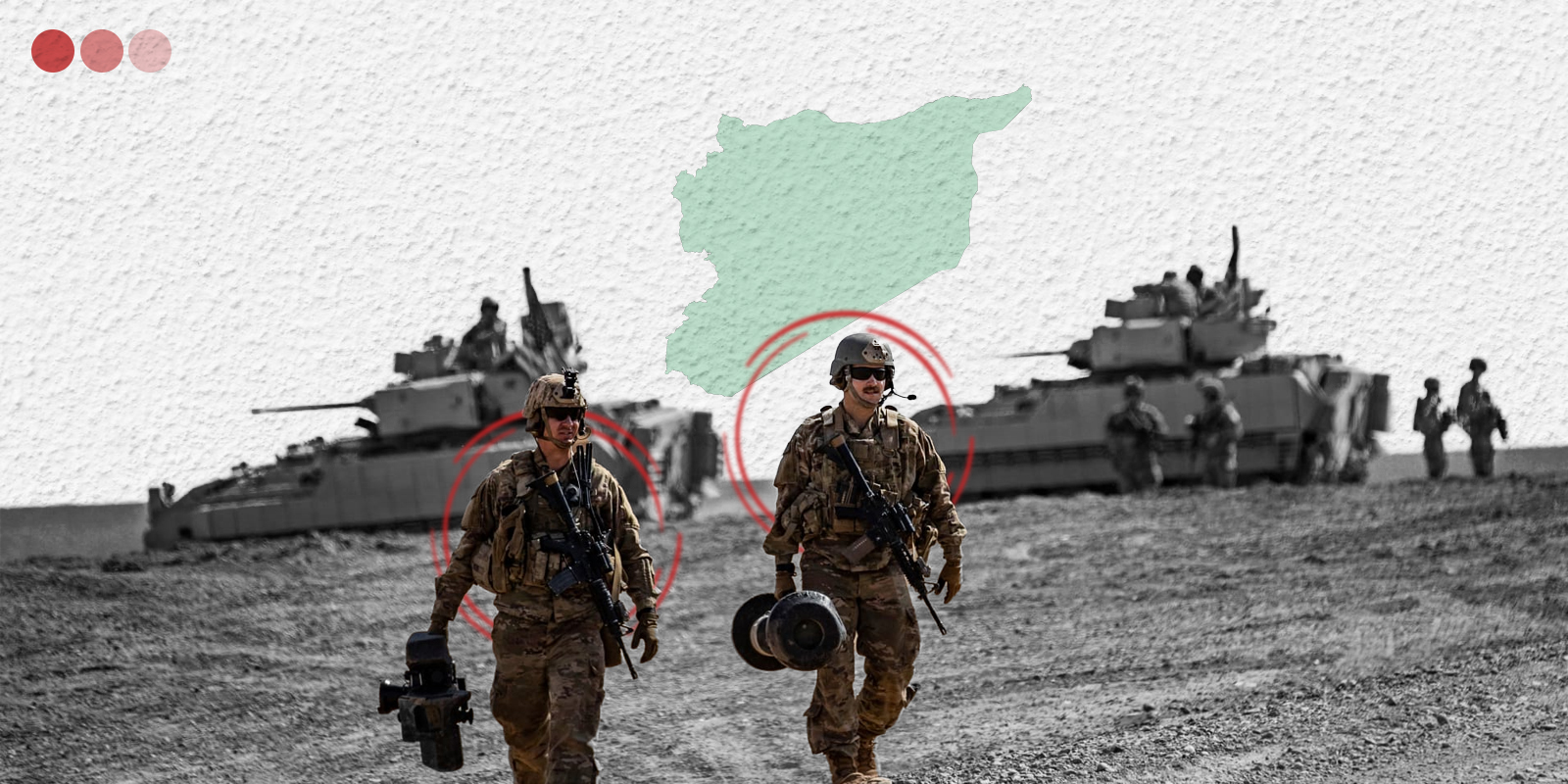
Palmyra and the vast Syrian desert surrounding it have once again moved to the centre of regional and international attention, amid growing debate over the nature and objectives of the US presence in one of Syria’s most strategically sensitive zones. While American involvement in the area was long framed around counter-terrorism operations and the fight against ISIS, analysts say the current focus reflects broader calculations tied to supply routes, military oversight, and the management of complex regional power balances inside Syria.
According to specialists in strategic affairs, Palmyra’s importance is rooted first in geography. The city sits at a critical junction linking central Syria to the eastern regions, making it a key node for controlling movement across the desert. This location allows for monitoring routes leading toward Deir ez-Zor and the Iraqi border – corridors historically used by armed groups and regional actors to move fighters and weapons. Over time, however, security considerations have become intertwined with economic interests, as attention increasingly turns to the desert’s natural resources and their role in long-term influence.
Competition Beyond Security
Darwish Khalifa, a Syrian writer and political analyst, told +963 that the US presence in the al-Tanf area and across the Syrian desert has for years aimed to monitor transit lines previously used by Iran-aligned forces moving from Iraq into Syria and onward toward Lebanon. These routes, he explained, were central to regional supply networks, and controlling or observing them remains a strategic priority for Washington, particularly as it seeks to limit Iranian influence without direct confrontation.
Beyond security, Khalifa stressed that Palmyra and surrounding areas have gained significance due to their mineral wealth. The region contains major phosphate reserves, as well as deposits of silicon – a mineral essential to produce electronic chips used in advanced technology industries. These resources have become part of a wider international competition, involving Iran and Russia in previous years, and increasingly factoring into US strategic calculations. Control over such assets, he noted, is less about immediate exploitation and more about long-term leverage within Syria’s economic and political future.
Professor Hassan Abdullah Al-Dajeh, a Jordanian expert in strategic studies at Al-Hussein Bin Talal University, told +963 that Palmyra’s strategic value lies in the intersection of security and economics. While the area allows for continued surveillance of armed groups and potential ISIS cells operating in sparsely populated terrain, its mineral resources also position it as a potential economic pressure point. Al-Dajeh argued that these assets could play a role in any future recovery of Syria’s desert regions, though he cautioned that such prospects remain limited without a clear political track and sustained security guarantees.
Related: Palmyra Attack Tests US–Syrian Security Cooperation Amid ISIS Threat
Resources and Long-Term Leverage
At the same time, Al-Dajeh warned that shifting competition in Palmyra from purely military objectives to economic interests carries risks. Increased rivalry over contracts, extraction rights, and control of resources could exacerbate local tensions and entrench instability. Rather than fostering development, politicized investment could deepen divisions and complicate prospects for a broader political settlement, turning Palmyra into a long-term point of contention rather than a stabilizing factor.
Khalifa also pointed to the broader geopolitical implications of the US presence near Palmyra, particularly its proximity – roughly 100–120 kilometers – to the T-4 (Tiyas) airbase. He noted that Turkey had previously considered using the base to train Syrian forces, making the US presence a means of monitoring regional dynamics and preventing potential friction, especially between Ankara and Tel Aviv, both key US allies.
In this sense, analysts agree that Palmyra is no longer merely a battleground against ISIS or a symbolic historical site. It has evolved into a strategic node where security imperatives, economic interests, and regional power politics converge. As Syria remains without a comprehensive political settlement, Palmyra’s role is likely to expand further – not as an offensive military hub, but as a geopolitical pressure card shaping negotiations, alliances, and influence across the Syrian desert.











