


In the Damascus suburb of Qudsaya, Rawan steps onto her balcony at sunrise, phone in hand, hoping to catch a usable signal. Her laptop is open inside; files stacked on the screen waiting to be uploaded. Each minute that passes becomes an exercise in patience.
“I struggle every day just to send the videos I need for work,” she tells +963. “The mobile data from Syriatel or MTN is slightly better than DSL, but still unstable and far slower than what they advertise. I’m paying a lot for a service that barely works.”
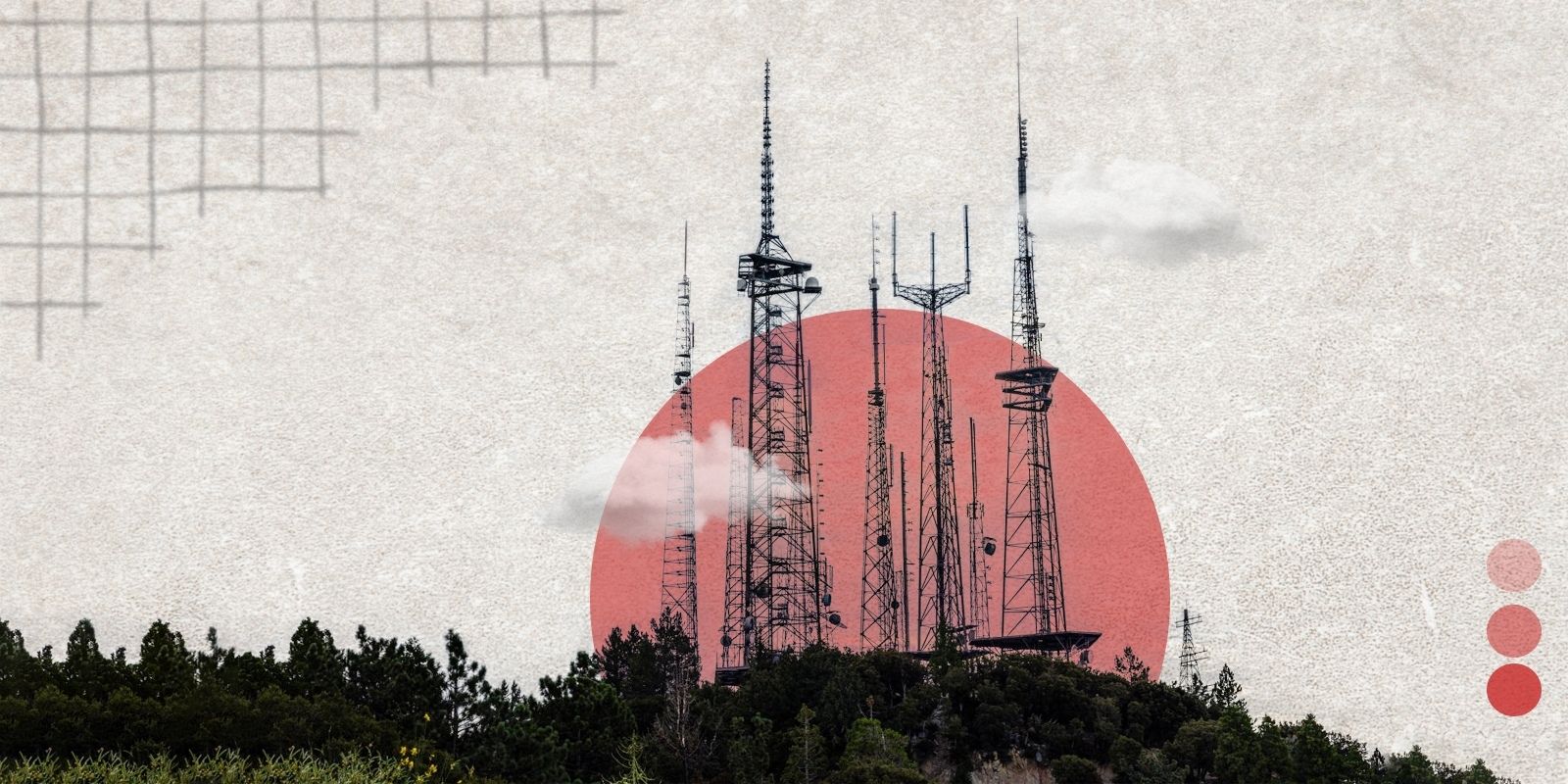
With network towers down, damaged, or stripped for parts, Rawan often has to walk into the street simply to send a file. Her struggle reflects a nationwide reality: internet access in Syria is unreliable, expensive, and often unusable.
A few kilometres away in Sahnaya, 30-year-old Taim faces the same daily battle. “The signal is extremely weak,” he says. “The internet works only late at night, and messages arrive hours late. We bought a signal booster, but it’s very expensive and needs constant electricity. Near the window the connection works, while inside the house, it doesn’t. And mobile packages expire by time, not usage, so they run out before I finish them.”
Aging Infrastructure and Heavy Costs
Telecom technicians say the root problem is simple: Syria’s communication network relies on old copper cables, many more than two decades old.
“In some areas, there are no functioning towers at all,” says Mazen, a telecom engineer from rural Damascus. “In others, the towers exist but their capacity is limited. Power cuts make everything worse – the batteries don’t last, so entire zones lose coverage.”
Upgrading the network requires new equipment, stable power, and teams capable of making constant repairs – none of which are readily available.
Meanwhile, mobile internet is becoming prohibitively expensive. Syriatel and MTN’s 3G and 4G services offer slightly faster speeds than DSL, but prices are extreme: a 60GB package can exceed 80,000 Syrian pounds, turning what should be a basic utility into a luxury.
To compensate, many neighborhoods have turned to local private wireless networks run by small operators. Monthly subscriptions reach about 90,000 pounds, while installation of the receiver and router can cost a million pounds – a huge sum for most Syrians.
Munir, a maintenance worker at one such company, tells +963 that the costs are not arbitrary: “Equipment is expensive, importing parts is difficult, and constant outages damage devices. Every repair takes hours of work.”
Satellite Internet
As frustration grows, some Syrians explored satellite internet – offering speeds up to 200 Mbps. But it remains restricted to government bodies and international organizations, with unlicensed use banned by law. For everyday users, it’s simply not an option.
Read also: Syria’s Fragile Transition Shaken by Damascus Missile Attack
Government Projects
Despite all the difficulties, Syria’s Ministry of Communications has laid out a series of ambitious modernization projects.
One of the flagship initiatives is “Barq Net,” a national fiber-optic program intended to bring high-speed FTTP connections to homes and offices. The ministry says the plan will expand fiber coverage to 85% of households within two years, using an “open access” model that allows multiple providers to operate on the network and, theoretically, drive down prices.
At its launch in June, the ministry said implementation would begin “within weeks,” connecting the fiber network directly to the national backbone, SilkLink.
SilkLink itself is another major project – an international fiber route meant to digitally reconnect Syria with the world. Officials say the first phase should be completed within six to eight months.
In cooperation with the United States and Cyprus, the Ugarit-2 project will upgrade the undersea cable linking Tartus and Cyprus, potentially doubling international bandwidth within two months.
At the AI-Syria 2025 conference, Minister of Communications Abd al-Salam Haykal announced that 5G services had entered the pilot stage in Damascus. Expansion to other governorates, he said, will follow “gradually and carefully.”
Jamal al-Din Khatib, acting head of the Syrian Telecommunications Company, tells +963 the challenges remain immense:“The network is old and suffers daily theft and damage. Rebuilding it requires time and new supplies. Demand is far greater than the improvements achieved so far.”
He says the ministry is testing both FTTH and FWA wireless technology in Damascus as part of the Barq Net rollout. As for content restrictions, Khatib insists: “Only pornographic and Israeli websites are blocked. All other services are available within national protection policies.”
A Daily Struggle With No Quick Fix
Despite high-level projects and public promises, life on the ground remains unchanged. Syrians like Rawan and Taim still face slow speeds, sudden outages, and prohibitive prices. Electricity shortages disrupt every level of the network. Rural areas are hit even harder.
Many households resort to improvised fixes – placing routers on balconies, buying cheap repeaters, or stringing cables across courtyards for a few extra bars of signal.
The gap between Syria’s digital future and the daily reality grows wider each year. The struggle is no longer only about technology; it’s about whether Syrians can integrate into a world where reliable connectivity has become essential for work, school, healthcare, government services, and basic communication.
Between ambitious national projects and immediate daily needs, ordinary citizens remain stuck in limbo – waiting for a stable connection in a country where even sending a message can require stepping outside and praying for a signal.











