
The United States began imposing sanctions on Syria in 1979, when it designated the country a State Sponsor of Terrorism due to its role in Lebanon and its support for groups such as Hezbollah. At this time, sanctions were relatively limited, but persisted for more than four decades, restricting both diplomatic and economic relations.
With the outbreak of the Syrian conflict in 2011, the United States significantly escalated its sanctions. On April 29, 2011, President Barack Obama issued an executive order freezing the assets of individuals involved in human rights abuses. These sanctions targeted senior figures in the Syrian regime, including Maher al-Assad and General Intelligence Chief Ali Mamlouk.
In August 2011, Washington imposed a ban on the Syrian oil sector, froze the assets of the Syrian state and prominent officials, and prohibited the export of related goods and services.
Over time, U.S. sanctions expanded to include foreign supporters of the Assad regime, particularly individuals and entities from Russia and Iran.
These measures targeted a wide network tied to the regime’s economic and military support structure.
U.S. sanctions on Syria are rooted in two main legal frameworks: executive orders issued by the president and legislation passed by Congress.
Related: Syria’s Transitional FM Seeks Stronger Ties with Iraq at Arab Summit
Between 2004 and 2019, successive U.S. presidents issued at least eight major executive orders related to Syria. These orders enabled the White House to swiftly impose or lift sanctions without the need for Congressional approval. They typically included freezing the assets of Syrian individuals and entities, prohibiting financial transactions, and restricting the export of goods and services to Syria.
The Caesar Syria Civilian Protection Act of 2019, commonly known as the Caesar Act, is a landmark piece of legislation passed by Congress and signed into law in December 2019. It aimed to intensify economic pressure on the Assad regime by targeting Syrian officials, business figures, and any foreign actor engaging with the regime, particularly in the oil, gas, and construction sectors. Crucially, lifting the Caesar Act sanctions requires Congressional action and hinges on the Syrian government’s compliance with specific human rights and accountability benchmarks.
In addition, Syria’s designation as a State Sponsor of Terrorism, in effect since 1979, remains a cornerstone of U.S. sanctions policy. This designation brings with it automatic restrictions, including a ban on arms exports and restrictions on foreign aid, as well as financial sanctions tied to counterterrorism efforts.
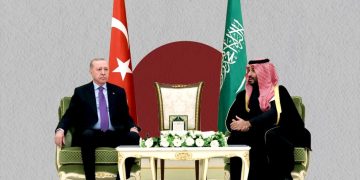
On May 13, 2025, President Donald Trump, during a visit to Saudi Arabia, announced his intention to lift all sanctions on Syria, a stunning reversal that reportedly caught the U.S. Departments of State and Treasury off guard. Trump framed the decision as a step toward offering Syrians a “new opportunity” to build a stable future. He emphasised that the rollback would be gradual, initially easing restrictions on energy, transportation, and financial transactions, while maintaining targeted sanctions on individuals and entities responsible for prior abuses.
Related: Reuters: Syria Plans to Print a New Currency in Germany and the UAE
Other Key Sanctions and Legislative Measures
Syria Accountability and Lebanese Sovereignty Restoration Act of 2003 (SALSRA):
Passed by Congress and enacted in 2004, SALSRA sought to end Syria’s military presence in Lebanon and penalise Damascus for facilitating the movement of fighters and weapons into Iraq during the U.S.-led invasion. It imposed restrictions including bans on exports of dual-use technology, limits on Syrian diplomatic operations in the U.S., a prohibition on Syrian Air flights through American airspace, and a near-total embargo on U.S. exports to Syria, with exceptions for food and medicine.
USA PATRIOT Act of 2001:
Although the USA PATRIOT Act was not originally designed for Syria, it played a role in expanding financial sanctions. In 2006, the U.S. Treasury designated the Commercial Bank of Syria as a primary money laundering concern under Section 311 of the Act. This action prohibited U.S. financial institutions from maintaining correspondent accounts with the bank, a designation that was renewed in 2011.
Presidential Executive Orders (2011–present):
In response to the Syrian uprising, successive executive orders have frozen assets of regime officials, banned exports to Syria, and imposed sectoral sanctions on oil, gas, and financial transactions. These tools provided flexibility to respond quickly to evolving developments.
Countering Assad’s Proliferation Trafficking and Garnering Of Narcotics Act (CAPTAGON Act):
Commonly referred to as the Captagon Law, this was enacted in two stages, first included in the National Defence Authorisation Act (NDAA) for Fiscal Year 2023, passed in December 2022, and later expanded in the Fiscal Year 2024. It directs the U.S. government to develop a strategy to disrupt the Syrian regime’s role in the production and trafficking of Captagon, a powerful amphetamine fueling regional instability. Sanctions under this law target individuals and entities involved in narcotics trafficking that finance the Assad regime.