

Rami Shafiqe
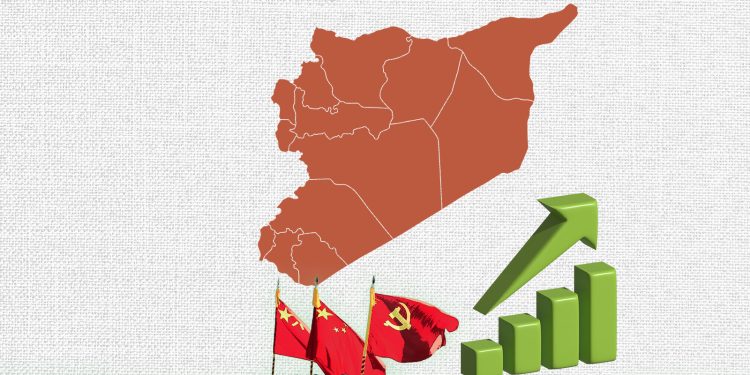
As Syria transitions into a new era following the ousting of the Assad regime, China is carefully assessing the evolving political, security, and economic landscape before defining its future role. Beijing, which has long adhered to a policy of non-direct intervention, is closely monitoring developments to gauge potential opportunities and risks in the country’s shifting dynamics.
China’s engagement with the new administration in Damascus remains measured, as it evaluates the government’s ability to navigate the transitional period. The stability of Syria, the establishment of effective governance, and improved security conditions are key factors that will shape Beijing’s willingness to participate reconstruction projects, invest in the oil sector, and further integrate Syria into its Belt and Road Initiative.
Security Considerations
China’s interests in Syria extend beyond the economics to security concerns. Beijing is particularly focused on preventing Syria from becoming a hub for extremist groups that could pose a threat to regional stability and China’s security. This concern has been evident in China’s past diplomatic support for the Assad regime internationally and its repeated calls for lifting sanctions on Damascus.
Syria’s strategic location within the framework of the Belt and Road Initiative has also made it a focal point for China’s investment ambitions. Beijing has expressed interest in expanding its presence in Syrian ports, such as Tartus and Latakia, in coordination with Russia, which maintains a military foothold in both ports. However, the feasibility of such projects is closely tied to broader international relations, particularly the evolving dynamics between Russia, the United States, and Syria’s new leadership.
Despite China’s aspirations to deepen its influence in the Middle East, the geopolitical challenges, most notably U.S. sanctions on Damascus, pose significant obstacles to its economic ambitions in Syria. Washington’s close scrutiny of Chinese movements in the region could limit Beijing’s ability to invest freely, complicating its long-term strategic objectives in post-Assad Syria.
Political Manoeuvre
The newly established interim government in Damascus seeks to leverage its relationship with China as a means of diplomatic manoeuvering with Europe and the United States, hoping to ease the sanctions imposed on it. However, China’s traditionally cautious approach to Middle Eastern affairs may limit Damascus’ ability to use this relationship for strategic gains.
In this context, Chinese Professor Wang Ning, speaking to +963, highlights that Chinese-Syrian relations have long been based on friendly cooperation and non-interference in internal affairs. Wang explains that China focuses on two main pillars in its engagement with Syria.
First, China supports a political resolution to the crisis through a Syrian-led process, in accordance with United Nations Security Council resolution 2254. Beijing urges the international community to respect the right of Syrians to determine their future without external interference. It has also called for increased humanitarian assistance and a strengthened role for the United Nations in addressing Syria’s ongoing needs.
The second pillar, according to Wang, is counterterrorism. He underscores China’s firm stance against terrorism and its insistence that all terrorist organizations listed by the Security Council must be targeted. China also expresses concerns over the presence of extremist groups, such as the East Turkestan Islamic Movement, and stresses that Damascus must commit to counterterrorism and efforts to prevent any security threats to China.
Wang concludes by emphasizing that China opposes the presence of foreign troops in Syria that could threaten its national security, reiterating that Beijing’s position on this issue remains clear and unwavering.
Sanctions and Economic Future
Syrian writer Firas Allawi observes that international and regional powers are reassessing their positions in Syria in response to the fallout from the former regime’s collapse. He notes that all countries are seeking economic and political advantages in Syria in accordance with their interests.
Speaking to +963, Allawi explains that the current geopolitical conditions do not favour broad international economic engagement in Syria, primarily due to the extensive US sanctions. As a result, many nations are taking await- and-see approach before making significant economic commitments in Syria.
While China provided political backing to the Assad regime in the Security Council, its economic support has been relatively limited, considering its stature as a global power. Beijing is eager to establish an economic foothold in Syria, but the constraints imposed by U.S. sanctions present a formidable challenge.
As Syria enters the post-Assad era, China remains a cautious player, carefully balancing its economic ambitions, security interests, and diplomatic considerations. While Beijing sees opportunities for a greater role in Syria, U.S. sanctions and broader international dynamics continue to hinder its aspirations.
Moving forward, China’s presence in Syria will largely depend on the country’s political and security trajectory, as well as its ability to navigate the international barriers that currently constrain Damascus.