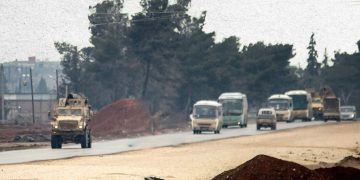
Southern Syria’s Sweida governorate has witnessed a dramatic security escalation in recent days, after rising tensions between local groups over kidnappings and theft spiraled into deadly clashes, triggering a military intervention by the Syrian government and airstrikes by Israel.
On Wednesday, the spiritual leadership of the Druze community, known as the Druze Unitarian Council, issued an urgent appeal to the international community, calling for immediate action to protect civilians in Sweida. The council described the situation as “organized crimes being committed against the people of the governorate” and stressed that the appeal was purely humanitarian, not political.
Read also: Rights Violations Target Civilians in Sweida by Syrian Defense Ministry Forces
How the violence started
Tensions flared last Wednesday when a Druze driver was robbed on the Damascus–Sweida highway. The incident triggered a series of mutual kidnappings between local armed groups and Bedouin clans. According to the local network Sweida24, security forces shut down several roads, including the Masmiya checkpoint, after multiple shootings targeting bystanders.
The clashes quickly spread from central Sweida to surrounding areas, including Al-Maqous neighborhood and the villages of Al-Surah Al-Kabira, Labeen, and Al-Tayra. On Friday, a vegetable truck driver was briefly abducted and robbed in another highway incident.
The next day, retaliatory abductions escalated, peaking on Sunday when fierce fighting broke out between armed Druze groups and Bedouin fighters, leaving more than 200 people dead, according to multiple sources.
Despite mediation attempts by tribal elders and religious leaders, including Sheikh Hammoud Al-Hannawi, who urged restraint to avoid sectarian strife, violence continued. Sweida Governor Mustafa Al-Bakkour also called for restraint, but the Syrian government eventually deployed reinforcements to contain the unrest.
Government crackdown
Syria’s Ministry of Defense announced that it had sent troops to Sweida “to break up clashes and protect civilians,” acknowledging that 18 government soldiers were killed while trying to end the fighting. The ministry accused local armed factions of attacking military convoys as they entered the city.
At the same time, disturbing videos circulated on social media, appearing to show field executions and sectarian insults directed at prisoners on both sides.
Read also: IDF Strikes Syrian Regime HQ in Damascus After Sweida Withdrawal Ignored
Israeli airstrikes
In a significant escalation, Israel launched airstrikes on Syrian military positions around Sweida and the neighboring governorate of Daraa. Israeli Defense Minister Israel Katz said the strikes were intended “to protect the Druze population,” referencing Israel’s unique ties with the Druze community.
Israel accused Damascus of violating an undeclared security arrangement by moving heavy weapons into Sweida, amid signs of a split within the Druze community over dealing with the Syrian government. Prominent Druze cleric Hikmat Al-Hijri withdrew his earlier support for the government’s intervention, condemning what he called a “broken promise” after civilian deaths.
In response to mounting Israeli pressure, the Syrian military pulled heavy vehicles out of downtown Sweida but continued operations against what it labeled “outlaws.” Israel, meanwhile, threatened further strikes if Syrian forces did not fully withdraw.
Why Sweida matters
Historically, Sweida has been a stronghold of Syria’s Druze minority, which has maintained a degree of autonomy through local groups such as The Men of Dignity Movement and The Mountain Brigade. Throughout the war, the Druze community has resisted fully aligning with any side. When Syria’s transitional government formed in late 2024, Sweida remained largely outside its control, creating a power vacuum that fueled local rivalries.
Local reports have long warned of the risks posed by uncontrolled arms spread and the absence of strong security institutions, factors that contributed to both the sudden increase in clashes last April and the current deadly escalation.
What comes next
A +963 correspondent confirmed that a government delegation has arrived in Sweida to negotiate a ceasefire. Diplomatic sources have floated the idea of an internationally supervised buffer zone in southern Syria to prevent further bloodshed.
For now, residents remain trapped between ongoing street battles and humanitarian groups struggling to reach affected areas. Many fear the violence could evolve into a wider sectarian conflict, fueled by deepening mistrust and inflammatory rhetoric.