


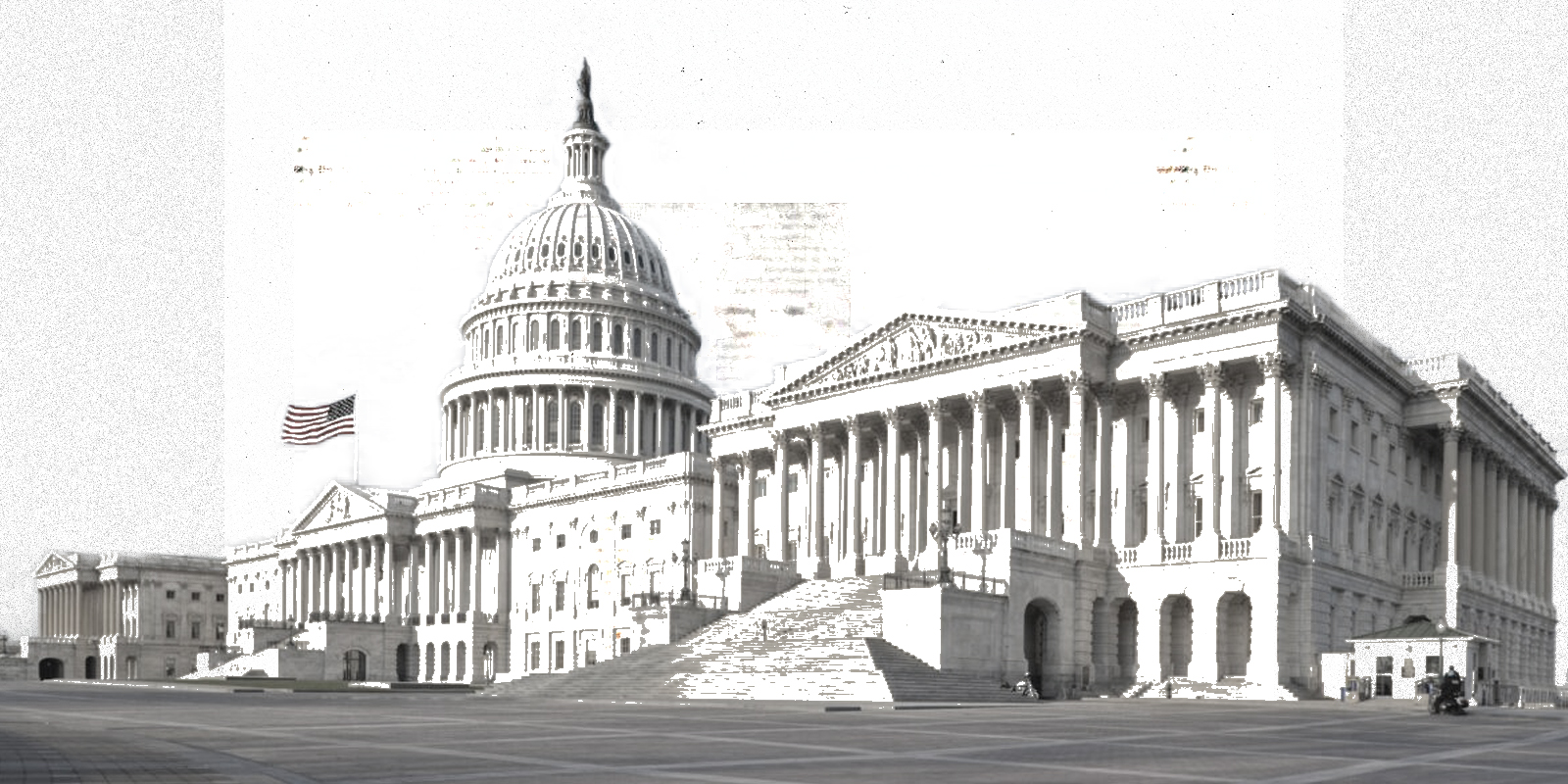
Last Thursday, U.S. lawmakers introduced a draft resolution in the Congress aimed at fully lifting sanctions imposed on Syria, including the “Caesar Syria Civilian Protection Act.”
This development is seen as a positive step, as the provision to repeal the Act has been included in the draft budget bill for the U.S. Department of Defense. This inclusion increases the likelihood of its approval, since defense budget-related decisions are typically difficult to block.
The original Act was passed in 2019 in the same way, by being attached to the defense budget bill, after years of unsuccessful attempts to pass it through regular legislative channels.
Investors can now look favorably upon this development, especially after the bulk of sanctions were suspended on May 23 by an order from President Trump. Although presidential powers only allow for the temporary suspension of sanctions, the current effort seeks to abolish them permanently.
Syrian activist Mouaz Moustafa played a key role in the original enactment of the law in 2019 and is now one of its most vocal opponents, working alongside other Syrian-American organizations that have lobbied for its repeal to be included in the defense budget.
Meanwhile, Republican Representative Joe Wilson of South Carolina has submitted a separate bill aimed at permanently repealing the Caesar Act, asserting in his statements that maintaining the Act stands as an obstacle to the investments essential for Syria’s reconstruction.
This move follows Trump’s decision in May to lift sanctions on Syria, noting that presidential powers allow only a 180-day suspension of the Act.
The “Caesar Act” was originally enacted to hold the ousted Syrian regime accountable for human rights violations during the war and was named after the Syrian military photographer who leaked torture photos in Syrian prisons.
Read also: Writing Off Foreign Debt and Stabilizing the Syrian Pound
U.S. Initiatives
The American political landscape has witnessed a notable shift in positions toward Syria following recent political changes there, with many voices that once supported sanctions now calling for their removal to support the reconstruction process.
The U.S. administration has also recently taken other steps signaling a policy shift toward Syria, such as removing Hay’at Tahrir al-Sham (HTS) from terrorism lists and preparing to reconsider Syria’s classification as a state sponsor of terrorism.
Marah al-Beqai, a Syrian politician and writer based in Washington, told +963 that the “Caesar Act” was passed as part of a package of defense budget bills, and its repeal under the same heading is a strong indication that its full removal is imminent.
She added that there is broad and strong momentum in the House of Representatives from both the Republican and Democratic parties to repeal the “Caesar Act” and all laws passed by House vote, especially after President Trump lifted the sanctions by an executive order, which relate to previous executive orders by former presidents.
Meanwhile, Hazem al-Ghabra, a former advisor at the U.S. State Department, told +963 that the issue of “Caesar” is more complex than merely suspending sanctions, as President Trump did. It is a law that requires a new congressional act to repeal or amend it.
He added that there is bipartisan consensus in Congress to help the Syrian people carve a path toward a better future, but the legislative process in Congress is complex and may be conflated with other politically charged bills.
Al-Ghabra noted that the performance of the new Syrian government will also impact Congress’s position on repealing or amending the “Caesar Act.”
Read also: UAE, Lebanon, and USA: A New Roadmap for Syria and Israel
Washington’s Seriousness
Dr. Ihsan al-Khatib, professor of political science at Murray State University and a Kentucky resident, told +963 that there is clear American intent to repeal the “Caesar Act,” adding that Trump’s leadership within the Republican Party is decisive and holds significant sway over the fate of passing such laws.
He explained that the Trump administration fully understands that the “Caesar Act” and other punitive acts no longer serve a purpose, as they belong to a bygone era in Syria. There is also an American desire to see the success of the new Syria, which cannot be achieved while these laws remain in place.
Al-Khatib added that the Arab role and Trump’s stance toward the new Syria further strengthen the prospect of repealing the “Caesar Act.” In addition to these efforts, the Syrian lobby in the United States has played an influential role in both imposing and removing such laws following the fall of the Assad regime.
He pointed out that the pragmatism of the new Syrian state and its break from Iran’s “destructive” axis, aligning instead with the Western camp and the international community, boosts American willingness to remove the “Caesar Act” and reflects a genuine intention to do so.
Al-Khatib does not believe there are significant obstacles to repealing the Act, given Trump’s backing and a general atmosphere that supports assisting the new Syria, which has transformed from a “rogue” state and haven for terrorism. The law now awaits a vote by lawmakers to confirm its suspension.











