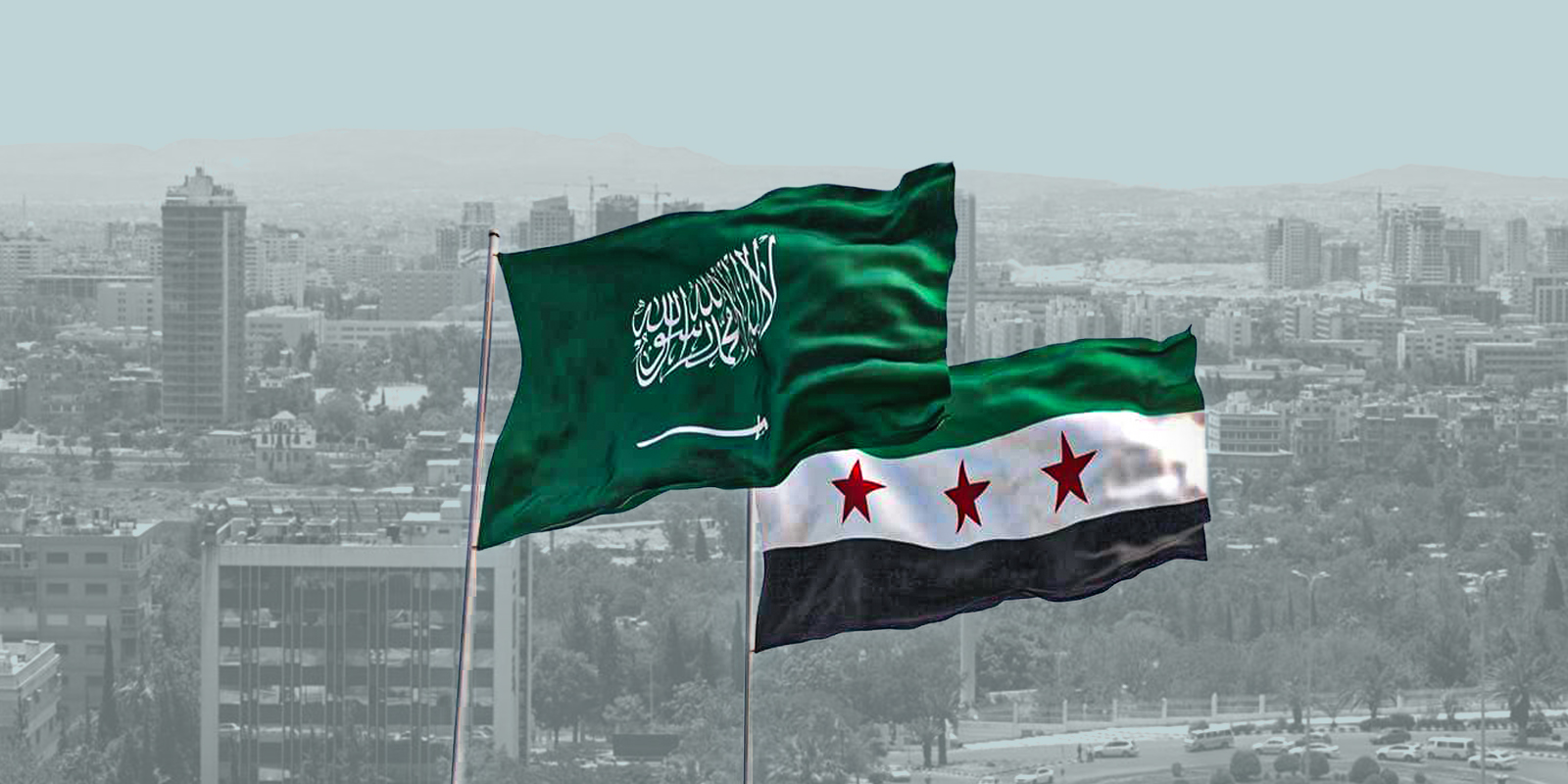
The Saudi visit in Damascus at the end of last July was not just an official visit or a ceremonial signing of investment agreements. From the very first moment, it appeared as an attempt to reshape the map of regional influence and to consolidate Riyadh’s position as a key actor in the new Syria. The high-level participation of Saudi Minister of Investment Khalid Al-Falih and his delegation in the “Syrian-Saudi Investment Forum 2025” went beyond economics. It carried a clear strategic message: Saudi Arabia wants to be a central player in Syria before any other party, especially Turkey, fills the political and economic vacuum.
In today’s Syrian scene, regional influence appears fragmented and multidimensional. Damascus maintains networks of relations stretching from Turkey to Qatar and from France to other European states, in addition to traditional Arab alliances. From this perspective, Riyadh sees winning Damascus as more beneficial than leaving it to reach understandings with other powers that could pose long-term threats to its interests. Saudi Arabia is not merely an economic investor. It views itself as the inheritor of the “Iranian legacy of influence” in the Arab world, seeking to redistribute regional cards in line with its vision. This would secure a stable presence at the heart of Syria, granting Riyadh leverage over reconstruction and political decision-making.
The investments announced during the Saudi-Syrian forum were not arbitrary. Minister Al-Falih highlighted massive projects in telecommunications worth 4 billion Saudi riyals and in real estate development worth 11 billion riyals, including the project of the Saudi trading company Bayt Alebaa in Homs. These are not simply economic ventures. They carry political and cultural dimensions: large real estate and development projects forge direct ties between Syrian stakeholders and the Saudi private sector, embedding the Syrian economy within a Saudi web of interests. This grants Riyadh strategic influence in the reconstruction phase while providing Syria with much-needed investments.
The vital sectors targeted by Saudi investments included real estate, infrastructure, telecommunications and information technology, transportation and logistics, industry, tourism, energy, trade and investment, healthcare, human resources, and financial services. Through these, Saudi Arabia is building a comprehensive network of influence extending from the economy to technology and essential services. It seeks to establish long-term ties with Damascus and to secure a lasting presence at the core of Syrian institutions.
What distinguishes this stage is the signing of 47 agreements valued at 24 billion riyals. These included agreements between Saudi Exchange and the Damascus Stock Exchange to study dual listings, agreements in aviation and navigation between Syrian Civil Aviation and Saudi Airports Company, as well as in cybersecurity between the Syrian Ministry of Communications and a specialized Saudi company. These deals reflect Riyadh’s determination to tie its interests to official Syrian institutions, giving its influence a strategic character beyond mere investment.
Read also: Could Trump’s Support Lead to the Lifting of U.S. Sanctions on Syria?
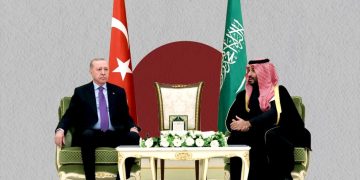
From a strategic perspective, what Saudi Arabia is doing today is not just about investments. It is a project to reengineer influence: reclaiming its role in the region, weakening Turkish attempts to expand influence, and ensuring Damascus becomes its partner in safeguarding vital long-term interests. At the same time, these projects act as a bridge to reinforce Saudi Arabia’s image as a moderate and stable actor that links economic development with political legitimacy, giving it the chance to rewrite the rules shaping Syria’s future away from Iranian influence that dominated for decades.
Saudi Arabia understands that influence cannot be built through investments alone. It requires multiple tools, some economic and others related to political legitimacy. Its intense presence in Damascus and the signing of large agreements send an implicit message: Riyadh is ready to assume both economic and political guardianship of Syria, and any Turkish attempt to play a pivotal role will clash with its interests. In this context, Saudi Arabia seems determined to transform economic projects into instruments of influence, tying development to political legitimacy and placing itself at the center of Syria’s new decision-making.
But the regional dimensions go beyond Turkish influence alone. Reordering the relationship with Iran, or more precisely, attempting to fill the void left by its influence in Damascus, constitutes an essential part of Saudi calculations. Saudi Arabia considers itself the heir to the “Iranian legacy of influence” and seeks to create alternative channels of leverage in Syria through economic projects, massive investments, and strategic partnerships with official Syrian state institutions. This approach allows Riyadh to shape many features of Syria’s future, including its economy, infrastructure, and vital services, as well as its political decision-making, even if indirectly.
The real question is whether Saudi Arabia will succeed in turning these investments and agreements into sustainable political influence, or whether Damascus, with its internal complexities and surrounding regional conflicts, will impose limits Riyadh did not anticipate. What is clear so far is that Saudi Arabia has decided to be strongly present, not merely as an investor, but as a strategic political actor before leaving the vacuum to any other party. In doing so, it aims to participate in shaping a new Syria allied with it or at least orbiting within its sphere, just as it does with other regional powers.
In the end, what Saudi Arabia is doing today in Syria is not just about economy and investment. It is a comprehensive project to reshape influence, combining investment with political vision, and transforming projects into strategic tools that turn Damascus into a center of gravity within its regional network. This gives Riyadh the ability to set the rules of the game before any rival moves. Syria thus stands at the threshold of a new stage of regional rebalancing, where investment is not just numbers on paper but a power card reflecting regional ambitions at the heart of the Syrian scene.
As for the Syrian regime, it does not have the final say in this matter. It takes what is offered in investments and assistance while the new order consolidates its presence, legitimacy, and influence. Until that stage is reached, Syria seems to remain an open market for anyone willing to invest not only in its economy but also in its politics and even in its national decision-making.
*The views expressed in this article do not necessarily represent those of +963 Media Association .