

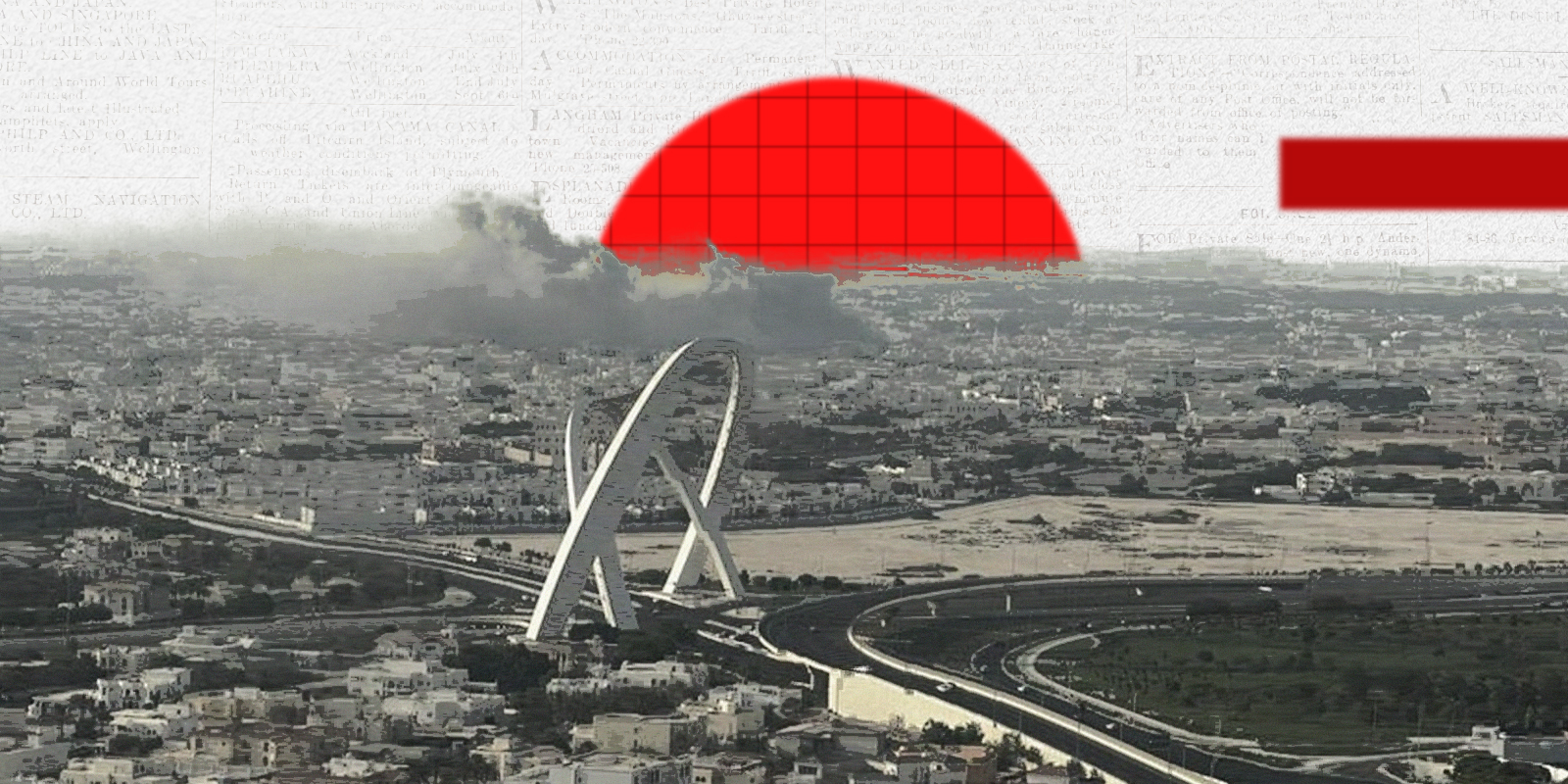
An unprecedented development unfolded in Doha with the targeting of Hamas leaders, regarded as an extension of the escalation that followed October 7, 2023. Yet it marked entry into a new dimension tied to expanding the rules of engagement. The operation took place in what is considered a “diplomatic space,” since Doha, alongside Cairo, is a capital engaged in mediation roles. This was therefore interpreted as a breach of the international mediation framework.
Observers argue that this operation reflects an Israeli shift toward a strategy known in military literature as “eliminating warning period,” meaning depriving the adversary of the ability to prepare in advance or take precautionary measures, leaving it vulnerable to surprise strikes. In this sense, the issue goes beyond limiting Hamas’s options and is linked to proposing a new regional equation and redrawing the boundaries of conflict.
The event is seen as part of a broader strategy aimed at redefining the rules of confrontation in the region, reinforcing military presence at the expense of diplomatic channels. Since Hamas’s October 2023 attack, Israel’s government has pursued a direction that limits the ability of actors in the conflict, especially Hamas and Iran’s regional proxies, to maneuver or gain time. This allows Tel Aviv to impose its own security and political rhythm and consolidate regional influence.
“The Place of the Operation”
Omar Al-Raddad, a strategic security expert, told +963: “Israel’s move cannot be considered an extraordinary and dangerous escalation in the region solely from the perspective of assassinating Hamas leaders. Assassinations have taken place before in arenas categorized as part of the ‘resistance space,’ such as Beirut, Tehran, and Damascus. What makes the latest operation different, however, is that it occurred in Qatar specifically, a country that maintains close ties with Hamas and provides it with political shelter and a safe base through its offices in Doha.”
Read also: Targeting Leadership: A Shift in Israel’s Strategy to Confront the “Iranian Axis”
Doha presented a narrative that the operation occurred without its knowledge, claiming it was carried out in coordination between the United States and Israeli security services. However, the description of the attack as “perfidy” by the Qatari Prime Minister Sheikh Mohammed bin Abdulrahman Al Thani carries significant meaning. Perfidy presupposes the existence of understandings or agreements, suggesting a dual track of understandings: one between the United States and Israel, and another involving Qatar. Israel, it appears, violated that framework. This fuels suspicion about Washington’s true stance.
Qatar also wields tools of influence within Israel, as revealed by numerous leaks concerning ties between Netanyahu’s office and Doha. The affair has even been dubbed “Qatar-gate” within Israel, echoing the “Iran-gate” scandal in the United States during the war with Iraq. Yet Qatar’s capacity to influence has receded compared to the past, with some actors who once cooperated with it now distancing themselves from any such commitments.
According to Al-Raddad, despite the operation’s dramatic character and the mystery surrounding it, it primarily served Netanyahu. It weakened the position of Israel’s opposition, which was compelled to support targeting Hamas leaders wherever they may be, so as not to appear lenient toward “terrorism.” Netanyahu exploited this by linking the October 7 attack with the September 11 attacks in the United States, seeking to reinforce Israel’s image as part of the Western camp in confronting “ISIS-style terrorism.”
Ultimately, Al-Raddad notes, Netanyahu and the Israeli right sought to use the operation to distance themselves from previous allegations concerning ties with Qatar, and to demonstrate that Doha itself is not beyond reach. Yet the attack raises more questions than it provides answers.
In the same vein, Major General Ahmed Al-Maimouni, Director of Research at the Rasanah International Center in Riyadh, told +963 that “the Israeli strike on Hamas leaders inside Qatari territory represents a major turning point and a qualitative escalation. It is a step that could have profound consequences on the structure of mediation and the balance of power in the Palestinian–Israeli conflict.”
Al-Maimouni explained that “this unprecedented breach constitutes a blatant violation of Qatari sovereignty, as it is the first time Israel has carried out such a strike inside Qatar, a state that has played a pivotal mediating role in sensitive files such as the Iranian nuclear issue and Hamas, while also maintaining close ties with the United States and Western powers.”
The Saudi expert stressed that these developments also cast “dark clouds of doubt over the American position, which appears fully aligned with Israel without giving due consideration to the relationships Gulf states have sought to build with their strategic partner.” He concluded that if this approach continues, “hesitation” may become the defining feature of Gulf–American cooperation unless Washington acts swiftly to curb such reckless practices.
Al-Maimouni predicted that Qatar would escalate internationally “by moving cases before international organizations, human rights bodies, and the International Court of Justice, focusing on the violation of sovereignty and targeting of civilians, thereby increasing the political and moral cost on Israel.”
Read also: Israeli Airstrikes on Syria: Field Escalation or Diplomatic Moves?
“A Political Card”
Regarding Israel’s domestic front, Al-Maimouni noted that “the severe polarization within Israel means any Qatari response will become a political card for different factions. The government will use it as proof of ‘resolve’ and security responsibility against Hamas and its supporters, to justify stricter policies in the future. Meanwhile, opponents may use it to warn against the risks and costs of escalation, particularly if it affects relations with U.S. allies.”
On whether this could spark new tensions between Turkey and Israel over Hamas, Al-Maimouni confirmed that “there are no indications Ankara will move toward a military confrontation or direct retaliation against Israel.”
He explained that ties between the two countries are complex and multifaceted, involving security and economic cooperation on one hand and political tensions over regional files like Syria on the other. He stressed that the current tension falls under political and diplomatic friction, which may reshape strategies toward Hamas and alter the level of cooperation or pressure exerted by Turkey and Qatar on Israel in international forums.
Sources confirmed that Qatar informed Hamas of the safety of its negotiating delegation on Qatari soil after Doha sealed off the area where the delegation resides.
According to these sources, Hamas’s external leadership had received warnings in recent weeks of Israeli attempts to target several of its officials. This prompted the delegation to relocate from Qatar to Turkey about two months ago. Yet Ankara faced difficulties in securing Hamas leaders on its territory, leading to direct contacts with Cairo to arrange temporary relocation of some leaders to Egypt.
Similarly, the sources noted that Ziad Al-Nakhalah, Secretary-General of Islamic Jihad, moved from Beirut to Cairo due to what they described as “the difficulty of securing him” in the Lebanese capital, which has become exposed to Israel.
Ambassador Alaa Al-Hadidi, former Egyptian Assistant Foreign Minister, told +963:
“The recent Israeli attack on Qatar, targeting Hamas leaders in Doha, represents an unprecedented escalation. It is a blatant disregard for all diplomatic and non-diplomatic understandings between states, especially when negotiations, whether direct or indirect, are underway to reach some form of settlement.”
The former Egyptian diplomat stressed that “this development is a serious challenge not only to the international community’s commitment to respecting sovereignty but also to regional security, particularly in the Gulf.”
He argued that “Israel seeks to reshape the region according to its vision, including the Gulf states, based on the statements of its leaders.”
With this strike, Al-Hadidi added, the region has entered “a new phase whose consequences are too early to predict, and whose impact on Israel’s ties with the Gulf or with states like Egypt and Turkey remains uncertain.”
He emphasized that Israel, at this stage, “pays no heed to such considerations, mistakenly believing it can, with full American backing, impose its hegemony and model in the region.” He described this as “short-sighted,” adding that, in the long term, “this moment may come to be recorded in history as the beginning of a collapse of trust in diplomatic dealings between states, especially with Israel and the United States, since reality has shown that promises and guarantees were no more than ink on paper.”
Still, Al-Hadidi considered it unlikely that matters would escalate into open confrontation between Turkey and Israel. Both sides have their own calculations and are committed to maintaining certain balances, which may allow for limited escalation but stop short of full-scale conflict.
Dr. Kamal Al-Zughoul told +963 that the incident constitutes an extraordinary escalation by Israel, carrying a clear message to all Arab states: any Arab country hosting a Hamas leader will be targeted. He described this message as both dangerous and illogical, noting that Israel, having failed to expel the Palestinian people abroad, now seeks to pressure Arab states to perform that task on its behalf.
Al-Zughoul argued that Qatar’s best response should be to pressure the United States through a coordinated diplomatic campaign, highlighting that American interests in the Middle East have begun to suffer in the aftermath of the strike. He stressed that measures through the UN Security Council or the United Nations would not carry the same weight as direct pressure on the Trump administration.
At the Arab level, he called for a broad Arab summit to issue tangible decisions: boycotts, suspension of ambassadorial exchanges, and severing of diplomatic ties. He concluded that Israel will only be deterred by collective Arab action, not militarily, since it possesses an overwhelming arsenal, but through political and diplomatic isolation that would encircle it regionally.