

By Sarkis Kassarjian
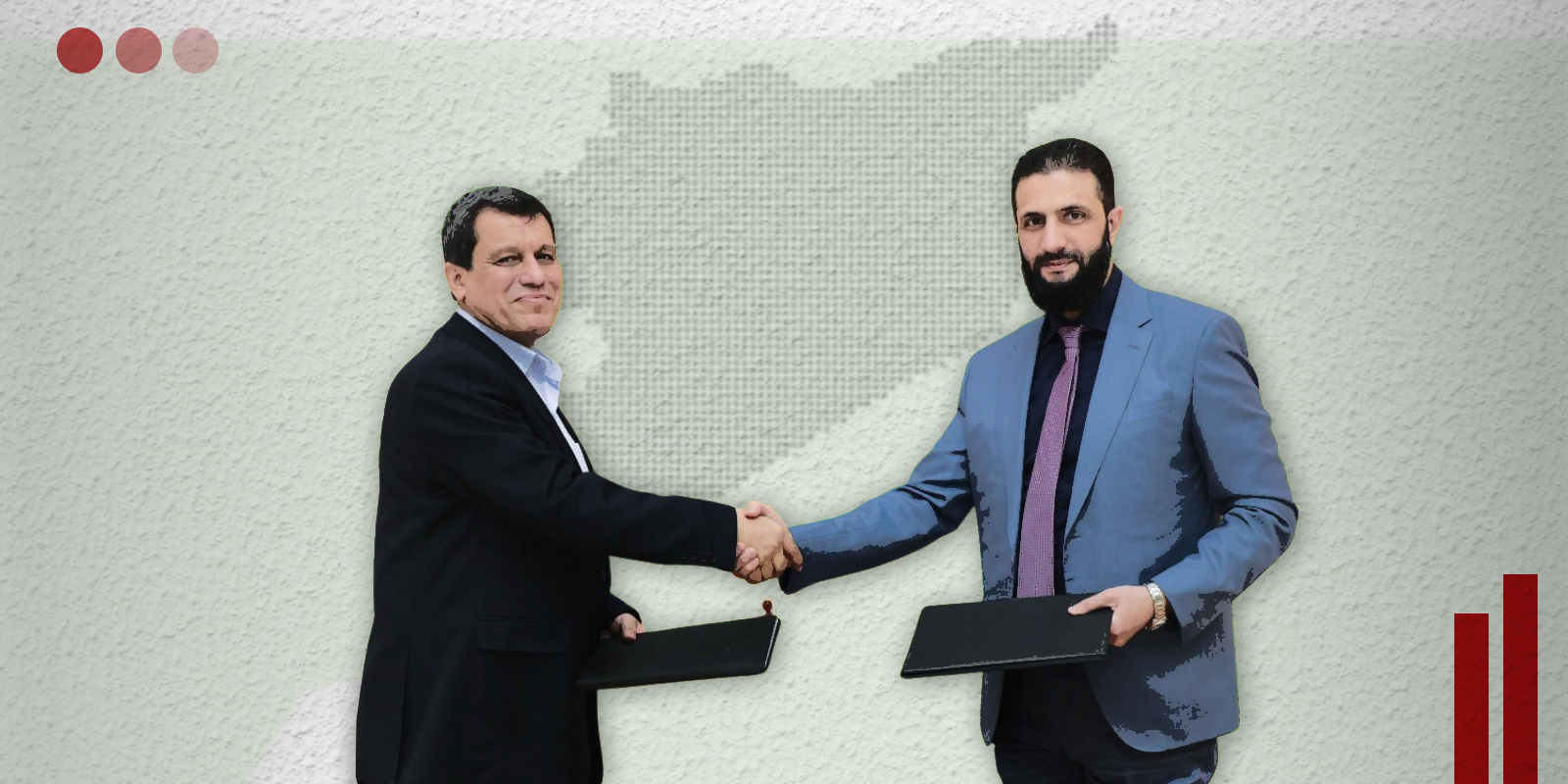
As the end of 2025 approaches, the 10 March agreement between Syria’s interim government, led by Ahmad al-Sharaa, and the Syrian Democratic Forces (SDF), headed by Mazloum Abdi, stands at a critical turning point. The deal, which received broad regional and international backing when it was signed earlier this year, aimed to integrate the SDF’s military and civilian structures into Syrian state institutions. Yet months later, implementation has stalled, tensions on the ground are rising, and the agreement’s fate remains uncertain.
Signed in March, the agreement was intended to form a cornerstone of Syria’s post-Assad political order. However, repeated delays and shifting power balances have cast doubt over its future. With the deadline set for the end of the year, several scenarios are emerging – each carrying significant implications for Syria’s fragile transition.
Security escalation and how violence shaped negotiations
The trajectory of the 10 March agreement cannot be understood in isolation from the crises that have unfolded since the fall of Bashar al-Assad’s regime in December 2024. In practice, major security escalations have repeatedly acted as catalysts for renewed engagement between Damascus and the SDF. The agreement itself was signed amid the coastal massacres of March 2025. Later, during the violent events in Suwayda in mid-July, the Syrian capital found itself once again compelled to revive talks and extend a ceasefire with the SDF.
From the SDF’s perspective, the post-Assad order has been approached with caution. The group views the new Syrian administration as fragile and heavily shaped by military forces with sectarian and jihadist roots. For SDF leaders, this raises doubts about Damascus as a reliable partner – concerns that deepened after al-Sharaa pushed through a constitutional declaration and formed a government unilaterally, moves seen as contradicting the spirit of the 10 March agreement.
At the same time, the SDF is seeking to consolidate its position within Syria’s emerging political landscape. Its goals include securing a recognised status within the new Syrian army, gaining constitutional acknowledgment of Kurdish rights, and ensuring that north-eastern Syria is treated as a political and administrative unit within a broadly decentralised system. Yet the group is also aware of the mounting challenges ahead, including growing US support for Damascus, shifting Russian and Israeli calculations, and intensified Turkish–American coordination on Syria.
Al-Sharaa’s political and strategic constraints
From Damascus’s viewpoint, the core weakness of the agreement lies in the fact that its implementation depends entirely on negotiations with the SDF. This has limited the government’s ability to resort to military pressure, especially after it agreed to a US-backed ceasefire in April.
The situation became even more complicated after the events in Suwayda. Al-Sharaa now finds himself trapped between two conflicting realities. On one hand, he cannot afford to offer political concessions to the SDF without risking backlash from his support base and key regional allies, foremost among them Turkey. On the other hand, his capacity for military escalation has diminished following political losses in Suwayda and the growing weight of Israeli threats.
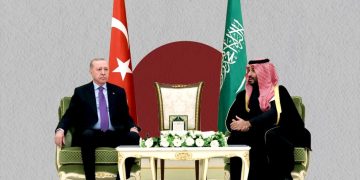
In response, Ankara has strengthened its alliance with Damascus, signing several military agreements and signalling readiness to help restructure the Syrian army with American backing. Turkish officials have simultaneously escalated their rhetoric against the SDF, warning against any steps that could lead to Syria’s fragmentation.
Turkey had initially hoped that Al-Sharaa would immediately align with its long-standing campaign to dismantle the SDF. While both sides share an interest in weakening the group, Al-Sharaa’s room for manoeuvre is constrained. He needs Turkish approval, but he cannot ignore sustained US backing for the SDF or the risk that internal escalation could be exploited by Turkish-backed factions within the Syrian National Army to expand their influence at the expense of the nascent Syrian army.
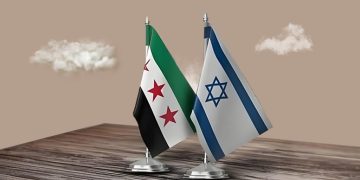
Following the Suwayda crisis, Al-Sharaa has also grown uncertain about Israel’s position regarding any joint Syrian–Turkish operation against the SDF. Israel has rejected a return to the 1974 disengagement agreement, citing concerns over Turkey’s expanding footprint in Syria. Israeli air strikes on sites Ankara had planned to use militarily forced Turkey to seek military communication channels with Tel Aviv, further weakening Damascus’s leverage.
Possible paths ahead
As the 31 December deadline approaches, Abdullah Öcalan, the imprisoned leader of the Kurdistan Workers’ Party (PKK), has reportedly put forward a proposal to integrate the SDF into Syria’s Ministry of Defence while preserving its internal structures. The plan aligns closely with both SDF leader Mazloum Abdi’s vision and the group’s broader push for decentralisation.
However, Damascus and the SDF remain deeply divided over the issue of centralisation. Unless a compromise is reached, this dispute risks reigniting conflict.
For the Syrian government, regaining control over Raqqa and Deir ez-Zor represents a final step in consolidating al-Sharaa’s authority. These areas are economically vital, holding key oil, gas, land and water resources, and their recovery would significantly reduce prospects for future decentralisation – particularly at a time when both the SDF and Druze actors are pressing for greater autonomy. For the SDF, losing these territories could severely weaken, if not effectively end, its decentralised project.
Al-Sharaa’s administration is eager to stabilise the political system as quickly as possible, a goal that aligns with the interests of several regional and international powers. While reconciliation between Damascus and the SDF is far from easy, it remains a shared American and regional objective.
From Washington’s perspective, al-Sharaa represents an unprecedented opportunity for cooperation, while the continued presence of the SDF offers a potential counterbalance within Syria’s future power structure. The US approach remains pragmatic – viewing the SDF as a tool to contain extremist groups, Turkish-backed factions as a means of limiting SDF expansion without provoking Ankara, and Al-Sharaa’s government as a legitimate political umbrella for its regional strategy, including relations with Israel.
Gulf states, meanwhile, see Syrian stability as a way to strengthen their regional influence and rebalance relations with Turkey, Israel and Iran. This makes them likely supporters of reconciliation between Damascus and the SDF.
Four scenarios
In recent days, pressure on the SDF has intensified. On 6 December, Turkish Foreign Minister Hakan Fidan warned that the group showed “no intention” of honouring the agreement and threatened military action if it failed to comply by year’s end. A day later, Syrian Information Minister Hamza Mustafa echoed the warning, hinting that the United States might eventually abandon the SDF.
Against this backdrop, four scenarios dominate discussions around Damascus–SDF relations. The most optimistic envisions a comprehensive agreement allowing Kurds and other Syrian communities to participate in drafting the constitution and sharing power. This scenario, however, appears unlikely given deep divisions and regional rivalries.
A more realistic option involves limited, gradual steps – partial implementation of the agreement, increased oil exports, modest economic improvements, and the gradual transfer of facilities such as al-Hol camp and border crossings to government control, with American support.
A third scenario foresees continued stalemate – managing tensions without resolution while waiting for broader understandings involving Ankara, Damascus, the SDF and Tel Aviv.
The darkest scenario involves escalation and collapse, potentially leading to renewed fighting and even a joint Syrian–Turkish operation against the SDF, though this remains the least likely outcome.
Ultimately, the most positive outcome would see gradual implementation of the agreement, culminating in the integration of SDF forces into the Syrian army through a negotiated form of political decentralisation. Post-Assad Syria is too fragmented and actor-heavy to produce a fully centralised “Sharaa’s Syria”, just as it is unlikely to meet all of the SDF’s demands.
The views expressed in this article do not necessarily reflect those of +963.