

Officials from Syria, Iraq, the United States, and Europe have issued warnings that the organisation may be reactivating its presence in both countries.
According to a Reuters report citing 20 sources, including security officials and politicians from Syria, Iraq, the United States, and Europe, ISIS has begun reactivating its fighters across Syria and Iraq.
The sources stated, “The organisation has started identifying potential targets, distributing weapons, and intensifying recruitment and propaganda efforts,” adding, “There is a possibility that ISIS will exploit the fall of Assad’s regime in Syria to return not only to the country, but also to Iraq and other neighbouring states.”
Security operatives in Syria and Iraq who have monitored ISIS for years told Reuters they had foiled at least 12 major plots in 2025.
Five counter-terrorism officials in Iraq told the agency that ISIS leaders, currently hiding near Raqqa, the former de facto capital of the organisation during its control over large areas in Syria and Iraq, had dispatched two envoys to Iraq. This development came in conjunction with recent advances by Syrian opposition forces against the former regime.
According to the officials, the envoys were carrying verbal instructions directing followers to launch attacks. However, they were intercepted and arrested at a checkpoint in northern Iraq on December 2.
Based on intelligence obtained from the detained envoys, Iraqi forces were able, 11 days later, to track a suspected ISIS suicide bomber who was en route to a crowded restaurant in the town of Daquq, located in Kirkuk Governorate in northern Iraq. Authorities tracked the suspect’s mobile phone, intercepted him, and shot him before he could detonate his explosive belt.
Colonel Abdul Amir al-Bayati of the Eighth Division of the Iraqi Army, which is stationed in the area, said the thwarted attack validated Iraq’s suspicions regarding the group’s resurgence. He stated, “ISIS elements have begun to reactivate after years of inactivity, taking advantage of the chaos in Syria.”
Reuters reported that ISIS claimed responsibility for 38 attacks in Syria during the first five months of 2025, according to data from the SITE Intelligence Group, which monitors extremist activity online. The data suggests the organisation is on track to claim responsibility for just over 90 attacks by the end of the year, roughly one-third of the attacks it claimed in 2024.
In Iraq, the group claimed responsibility for four attacks in the first five months of 2025, compared to 61 in all of 2024.
A United States defence official and a spokesperson for Iraqi Prime Minister Muhammad Shiaa al-Sudani stated that ISIS’s operational capabilities have significantly diminished. The group has not controlled territory since it was expelled by a United States-led coalition working alongside the Syrian Democratic Forces (SDF) in 2019.
ISIS had once controlled vast areas of Syria and Iraq between 2014 and 2015, nearly one-third of both countries. Officials have warned of the risks of excluding the group from future strategic considerations, noting that ISIS has proven to be a resilient enemy capable of exploiting any security vacuum with alarming efficiency.
Read more: Rebuilding Syria: Investment Deals Ignite Hope and Caution
Regional and European officials have also expressed concern that foreign fighters may travel to Syria to join extremist groups.
Two European officials told Reuters that intelligence services have, for the first time in years, detected the arrival of a limited number of suspected foreign fighters from Europe to Syria in recent months. However, it remains unclear whether these individuals were recruited by ISIS or another organisation.
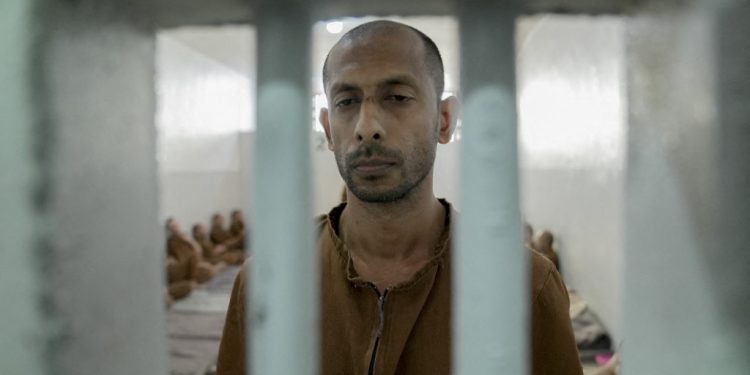
The potential withdrawal of United States forces from Syria has raised concerns among American allies that ISIS could exploit the resulting power vacuum to free approximately 9,000 of its members and family members, many of them foreign nationals, currently detained in prisons and camps under SDF supervision.
The Syrian Democratic Forces reported that at least two prison break attempts involving ISIS members have occurred since the collapse of the Assad regime.
In response to Reuters’ request for comment, a United States State Department spokesperson said, “Countries must take back their detained citizens from Syria and bear a greater portion of the burden of securing the camps and their operating costs.”
A United States defence official told the agency that Washington remains committed to preventing ISIS’s resurgence. The official said the United States continues to rely on trusted Syrian partners, referring to the SDF, and that it is closely monitoring the transitional government in Syria led by Ahmed al-Sharaa.
Another American defence official and two Syrian officials told Reuters that the United States continues to share intelligence with Damascus in limited instances.
Read more: Israel Launches Large-Scale Attack on Iran, Targets Top Security Officials
Three security sources and three Syrian political officials informed Reuters that ISIS has reactivated sleeper cells, distributed weapons, silencers, and explosives, and monitored potential targets following the regime’s collapse. The group has also moved fighters from the Syrian desert, previously targeted by coalition air strikes, to urban areas including Aleppo, Homs, and Damascus.
Iraqi officials believe ISIS has seized large quantities of weapons abandoned by the ousted regime’s forces, and they fear some may be smuggled into Iraq.
The United Nations estimates that ISIS maintains between 1,500 and 3,000 fighters in Syria and Iraq, although SITE Intelligence data suggests the group’s most active branches are now in Africa.
On Thursday, the SDF arrested members of the ISIS organisation in the Deir ez-Zor countryside in eastern Syria.
A security source told +963 that the SDF, with support from international coalition aircraft, conducted an operation in the town of al-Shuhail that led to the arrest of ISIS operatives Ahmed al-Afin, Hani al-Hassan, and Asad al-Afin.
On Wednesday, the SDF announced another operation in Tal Kujar (al-Yarubiyah), in the far northeastern countryside of Hasakah Governorate, targeting an ISIS cell.
In a statement, the SDF said that its teams, with coalition support, carried out a special operation on May 22 targeting Wadah Marwan al-Taysan, also known as al-Awodah, in Tal Kujar.
According to the SDF, the operation followed extensive monitoring of al-Taysan’s movements. After confirming his location, forces imposed a tight security cordon.
Al-Taysan reportedly admitted to being active in ISIS propaganda and media operations, using multiple Telegram accounts to promote and disseminate the group’s ideology.
Last Tuesday, a small delegation of the international coalition to fight ISIS met in Madrid, Spain, to discuss the organisation’s ongoing threat in Syria.
The United States State Department stated that the meeting addressed the risks posed by detained ISIS fighters and their families in northeastern Syria. It noted that participants reaffirmed their commitment to continuing the fight against ISIS during the post-Assad phase.
Participants also stressed the need to enhance border security, share intelligence, and facilitate the repatriation of Syrians, Iraqis, and third-country nationals as part of efforts to stabilise areas formerly controlled by ISIS.
The meeting concluded with a call to disrupt ISIS’s ability to conduct international travel and external attacks, and welcomed the establishment of a new coalition working group dedicated to monitoring terrorist movements.