


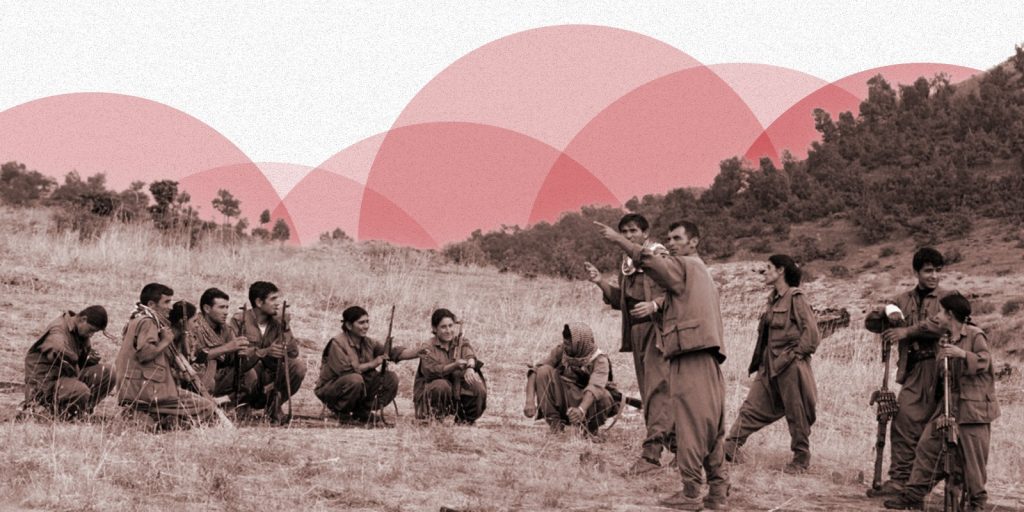
In a landmark and unprecedented move, the Kurdistan Workers’ Party (PKK) announced on Monday, May 12, that it is formally dissolving its organizational structure and ending its decades-long armed struggle against the Turkish state. The announcement was made in a statement released by Firat News Agency, which is closely affiliated with the group, following the PKK’s 12th Congress, described as a direct response to an earlier peace appeal by the group’s imprisoned founder, Abdullah Öcalan.
From Armed Struggle to Democratic Engagement
In its official statement, the PKK declared:
“The 12th Congress of the Kurdistan Workers’ Party, held successfully across two separate locations for security reasons and attended by 232 delegates, has resolved to dissolve the party, end its activities under the PKK name, and cease armed conflict with Turkey.”
The congress reportedly tackled several critical issues, including leadership, the legacy of fallen fighters, veteran militants, the future of armed resistance, and the creation of a democratic society. The party claimed it had fulfilled its historic role of resisting the systemic erasure and oppression of Kurdish identity, a struggle rooted in the century-old Treaty of Lausanne and Turkey’s 1924 constitution.
Related: Kurdish PKK Disbands Armed Wing, Declares End to Armed Conflict with Turkey
The execution of this decision will reportedly be overseen by Abdullah Öcalan himself, whose message earlier this year laid the groundwork for this transformation. On February 27, a letter from Öcalan was read out on behalf of the pro-Kurdish “Peoples’ Equality and Democracy Party” (DEM) before Turkish media, in which he stated: “There is no alternative to democracy in the pursuit and realization of a political system. Democratic consensus is the fundamental way.”
Öcalan emphasized that “The language of the epoch of peace and democratic society needs to be developed in accordance with this reality.”
Turkish and Regional Responses
The ruling Justice and Development Party (AKP), led by President Recep Tayyip Erdoğan, responded by describing the PKK’s decision as a potential “turning point” toward a terror-free Turkey. A government spokesperson stressed that the dissolution must be fully and genuinely implemented, adding that the process would be “closely monitored on the ground by Turkish state institutions.”
In neighboring Iraq, Kurdistan Region President Nechirvan Barzani welcomed the move, calling it “historic” and a sign of “political maturity.” He expressed hope that the decision would open the door to meaningful dialogue and long-term stability for both Turkey and the broader region.
“We see this as the beginning of a new chapter,” Barzani said in a statement, urging all parties to take positive and constructive steps toward lasting peace and reconciliation.
Read also: Kurdish PKK Disbands Armed Wing, Declares End to Armed Conflict with Turkey
Historic and Grounded Decision: Kurdish Perspective
Kurdish academic and researcher Tareq Hamo, of the Kurdish Center for Studies, called the PKK’s decision “both historic and realistic.” Speaking to +963, he noted that the move directly echoes Öcalan’s appeal and reflects profound shifts in regional and global dynamics, most notably, the end of the Cold War and the decline of militant leftist ideologies.
According to Hamo, the decision may also have been influenced, at least indirectly, by nationalist politician Devlet Bahçeli, leader of the far-right Nationalist Movement Party (MHP), who recently hinted at the possibility of Öcalan playing a political role through Turkey’s parliament. Hamo believes the road ahead depends heavily on Turkish state actions, including the release of Öcalan and political prisoners, general amnesty, and comprehensive constitutional and legal reforms aimed at a peaceful resolution.
Implications for Syria
While the PKK’s move may not directly affect Kurdish-led autonomous regions in northeastern Syria, Hamo suggests it could help ease Turkish tensions with local Kurdish administrations, especially if Ankara adopts a more conciliatory tone following domestic reconciliation.
Kurds, who make up an estimated 26 million people in Turkey, around 7 million of them in Istanbul alone, are seen as an integral part of the country’s demographic and political fabric. The next logical step, Hamo argues, is strengthening the parliamentary representation of the pro-Kurdish DEM party to ensure peaceful political transformation and constitutional recognition of Kurdish identity within a democratic Turkey.
Affirmative Signals from International and Regional Partners
In his final remarks, Tareq Hamo stressed that Turkey now stands before a historic opportunity to resolve the Kurdish issue through peaceful means. He pointed out that the armed conflict has cost the country over $2 trillion, and that “this moment marks a fresh beginning, one in which the language of politics replaces the sound of gunfire, and peace, justice, and democracy become the guiding principles for Turkey’s future.”
The United States also expressed its position. National Security Council spokesperson Brian Hughes described Öcalan’s message as a “significant development” that could help reassure Ankara about Washington’s Kurdish partners in the fight against ISIS, particularly the Syrian Democratic Forces (SDF).
Iraqi Kurdish leader Masoud Barzani echoed the sentiment, stating that “peace is the only correct path to resolving conflict” and expressed hope that the PKK’s initiative would mark the beginning of a new era beneficial to all sides.
In Turkey, Efkan Ala, deputy chair of the AKP, reiterated that the core of Öcalan’s message lies in the decision to disarm and dissolve the PKK, an act he said would have a profoundly positive impact on Turkish domestic politics.











