


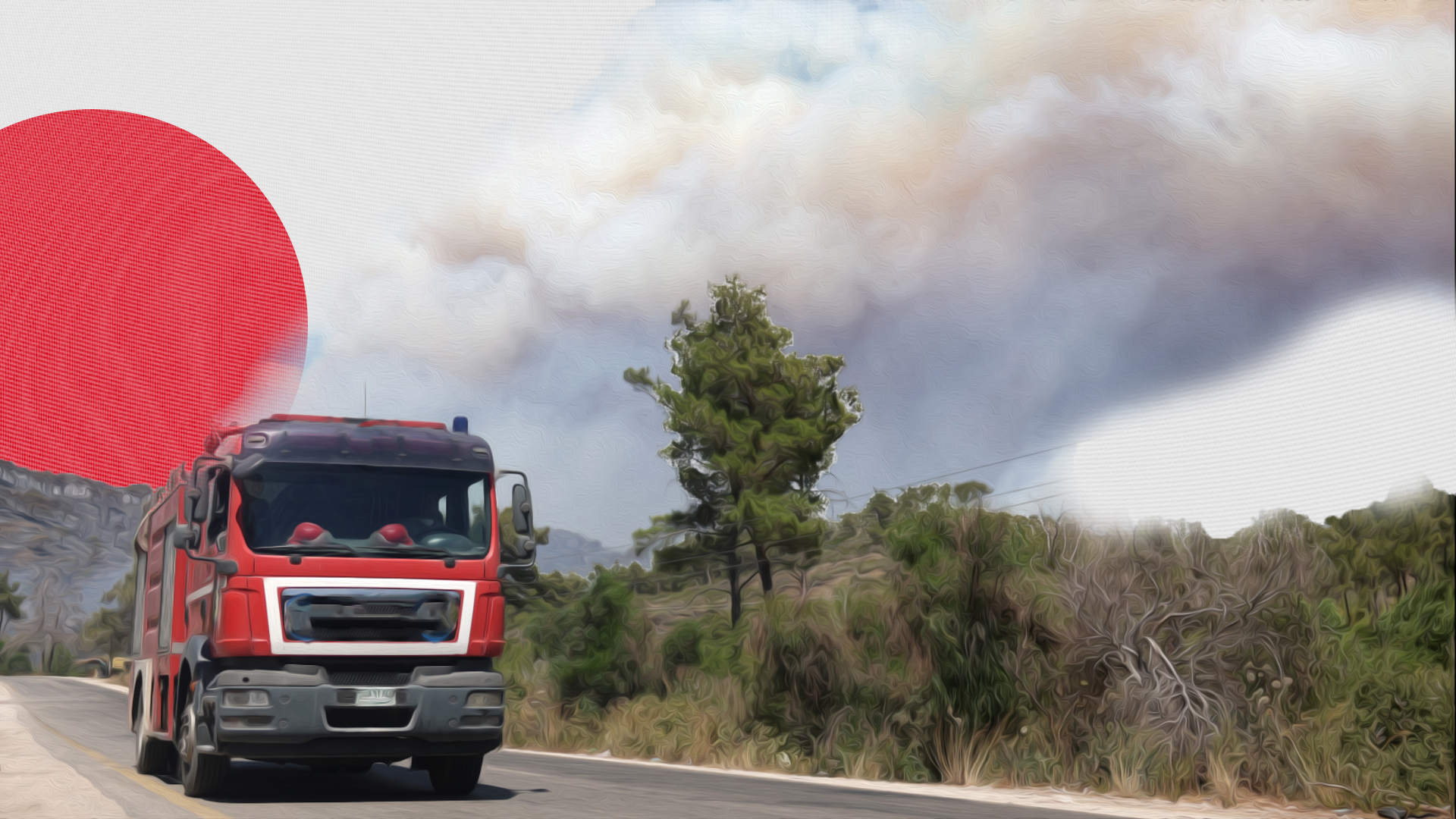
More than 15,000 hectares of forests and woodlands have been reduced to ash in northern Latakia countryside, as massive wildfires continue to burn since the start of last week in three main areas: Ras Al-Baseet, Qastal Maaf, and Rabia, according to the Ministry of Emergency and Disaster Management.
Around 150 field teams supported by 300 firefighting vehicles are battling the flames through a joint operations room run by the Ministry of Emergency and Disaster Management, with assistance from units of the Syrian Ministry of Defense, military helicopters, and firefighting crews from Jordan, Turkey, and Lebanon.
The Syrian Ministry of Defense also announced that, in coordination with EU member states, countries including Italy, Greece, and Cyprus are helping fight the Latakia fires using aircraft deployed from Cypriot airports.
Firefighting teams are working around the clock to prevent the fires from reaching the Kassab area, home to Syria’s largest forest reserve. But they face major on-the-ground challenges, strong winds, rugged terrain, and the presence of landmines and remnants of war.
Read also: EU Activates Copernicus as Latakia Wildfires Burn for Eighth Day
A Devastated Resource
After more than a decade of conflict that ravaged Syria’s social, economic, cultural, and political fabric, these coastal wildfires add a new layer of environmental destruction. Vast stretches of vegetation, once vital for maintaining ecological and climate balance, have now gone up in smoke.
Environmental engineer Sabah Attar, deputy director at the Agricultural Institute at the University of Aleppo, told +963 that “forest fires in Syria have caused severe environmental damage, destroying biodiversity by burning large swaths of forest, wiping out natural habitats for countless species, stripping vegetation cover, boosting greenhouse gas emissions, degrading air quality, and disrupting water resources.”
She adds: “These fires release huge amounts of carbon dioxide and other greenhouse gases, worsening climate change. They also produce vast quantities of smoke and pollutants that threaten air quality and the health of both humans and animals.”
According to Attar, the ongoing changes brought by these fires may lead to permanent shifts in the region’s plant makeup, potentially transforming the entire ecosystem.
As for the causes, Attar explains: “Climate change, rising temperatures, and longer droughts make forests more vulnerable to ignition. Add to these certain human behaviors, such as deliberate arson or negligence; like throwing lit cigarette butts or burning crop residues and fields.”
Read also: How Greenhouse Gases Have Redrawn Syria’s Climate Map
Development Plans
Earlier last week, Syria’s Minister of Emergency Raed Al-Saleh stated on X that “hundreds of thousands of trees covering around 10,000 hectares at 28 sites have turned to ash because of these fires,” noting that 80 teams from civil defense, the emergency ministry, and the disaster management agency are making intensive efforts to contain the blazes.
To mitigate the damage and prevent future disasters, Dr. Ahmad Al-Sheikh Qaddour, professor at the Faculty of Agriculture, University of Aleppo, says, “It’s crucial to establish forecasting centers to assess wildfire risks and build firebreaks to isolate forests from populated areas and prevent large-scale destruction of vegetation.”
He tells +963: “Effective solutions include planting tree species that are fire-resistant, some plants don’t ignite easily, even in extreme heat. We could also set up nurseries to grow seedlings that help rehabilitate rangelands and reforest damaged areas using diverse plant systems – like cypress, oak, and Atlas pistachio – alongside drought and poor-soil-tolerant plants like Wormwood and Atriplex.”
Dr. Qaddour concludes: “Planting heat-tolerant species like wild olive and laurel along roadsides is another practical solution the Syrian government could adopt in various regions. Expanding roadside greenery between cities can help improve the climate overall, while creating dedicated agricultural complexes for native, resilient plants would ensure these efforts are sustainable.”











