


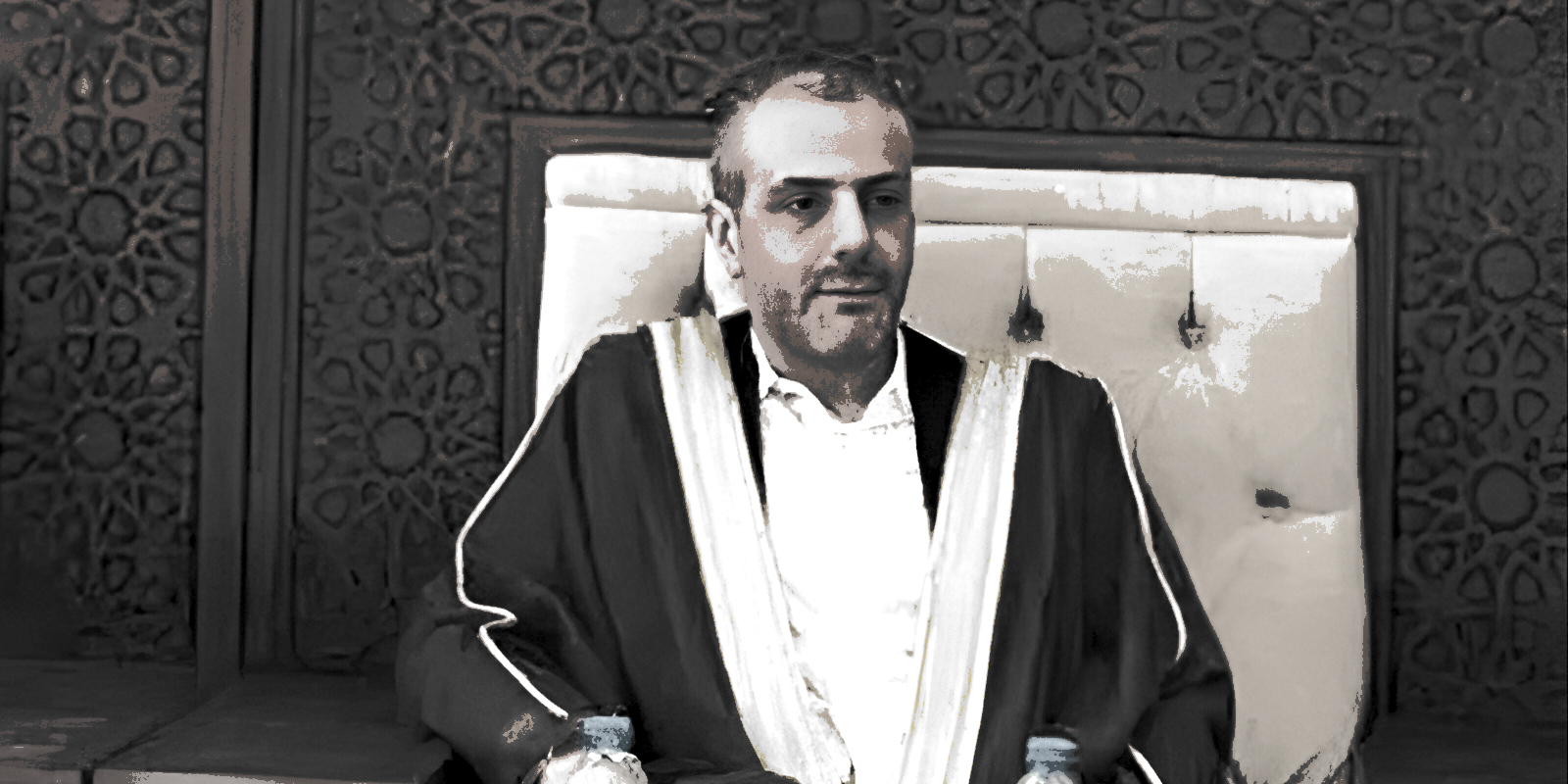
A Reuters report last month on business and investment activity by Jamal Al-Sharaa, brother of interim Syrian President Ahmed Al-Sharaa, and the measures taken by Ahmed Al-Sharaa, has raised fears among Syrians of a return to a culture of influence and privileged figures. Concerns centre on the spread of power among close associates of the state, similar to what occurred under the previous regime – where dozens of reports documented that figures close to the ruling family, holding no official position, wielded wide influence in state institutions and established what can be called a “shadow economy”, parallel to the official government or private economy. This often included passing laws or decisions to legalise certain activities and monopoly over specific areas of the national economy.
Al-Sharaa Acts
Reuters reported at the end of last month that Ahmed Al-Sharaa ordered the closure of a commercial office in Damascus, believed to belong to his brother Jamal, and issued orders preventing Syrian government bodies from dealing with him. He also held a family meeting attended by his father, Hussein Al-Sharaa, warning them against using the family name for personal gain, according to relatives present at the meeting. Jamal Al-Sharaa later posted on Facebook denying any office closure, saying he “does not own an office in Damascus, has no business activities, and holds no official government position, and that every citizen has the right to carry out business within the law, which should not be used as a pretext for defamation.” His father also released a statement denying that Jamal had used his brother’s position for gain, explaining that he “has been in trade since a young age and had his own business before the fall of Bashar Al-Assad’s regime.”
The report also noted that Al-Sharaa held a closed meeting in Idlib province in August, attended by over a hundred civil officials, many arriving in luxury cars, where the interim president reportedly criticised the displays of wealth and ordered the handing over of car keys or risk investigations into illicit gains. However, Damascus countryside political affairs director, Mohammad Dib Tamma, said on Facebook that “the Reuters report is incorrect. I attended the Al-Sharaa meeting in Bab Al-Hawa in Idlib countryside, and the matter referred to in the report was not discussed.”
Regardless of the accuracy of the Reuters report, the case highlights the economy in the post-war phase, a key issue due to its direct impact on politics and security, foreign investment, reconstruction, investor confidence in economic laws, and governance – crucial to prevent abuse of power in this sensitive period as economic laws and strategies are being prepared.
Read also: Syria 2026: Ambition, Reality, and Rebuilding
A Heavy Syrian Legacy
Samir Kaakarly, secretary of the political office of the Syrian Democratic Left Party, said: “It is normal for Syria to have a shadow economy – a heavy legacy from the previous regime and long years of war, where drug trade, fuel smuggling, control of crossings, black market grain trade, currency trade, chaotic licensing and weak law enforcement prevailed.” He noted that “there are signs of major deals and investments concentrating around figures close to Ahmed Al-Sharaa during the transitional phase.”
Kaakarly stressed the need to distinguish between rumours and facts, saying that while there is no direct evidence of involvement, “even circulating these stories raises concern. Shadow economies grow where transparency is lacking and the law is weak. This distorts competition, impoverishes the middle class, and undermines public trust. To prove the interim government is different from the previous regime, all deals and contracts must be openly monitored and officials required to declare their assets. Lack of transparency is the quickest route for the past to return in a new form.”
Money and Power – Intertwined
Syrian politician Kamal al-Labwani, living in Sweden, said: “The Syrian system, unchanged since independence, treats money and power as one – whoever holds power controls wealth and vice versa. Initially real estate capitalism ruled, then the army, dominated by other classes, reversed it, monopolised power and wealth. Hafez Al-Assad tried to dominate wealth via the shadow economy through his son-in-law Mohammad Makhlouf or his children, creating networks and partnerships with all economic actors – now being renewed by the new Syrian regime.”
He added: “The totalitarian system naturally centralises wealth – there is no hope of separating political power from wealth. Syria’s economic problem is primarily political, rooted in the system, its methods of governing, producing power and accountability. Trying to separate economy from politics in a totalitarian system is doomed to fail – rulers evade it and create a secret shadow economy.”
Shadow economy culture dominated under the previous regime from Hafez Al-Assad to Bashar, with Mohammad Makhlouf controlling major investments, followed by Rami Makhlouf taking over telecom and other companies, and eventually Asma Al-Assad and business figures like Mohammad Hamsho and Samer Foz rising during the crisis years.
Political activist and rights lawyer Nizar Al-Samadi, based in Damascus countryside, said: “Anywhere there is a shadow economy, it entrenches corruption and concentrates wealth in those close to power, deterring investors – as occurred under the previous regime. The shadow economy raises fears among Syrians and foreign investors alike. The people will not allow its return after the fall of the regime.”
He added: “Authoritarian regimes institutionalise corruption and shadow economies – Hafez Al-Assad did this from the start, surrounding himself with relatives and loyalists. There is now evidence of seriousness from Syrian authorities to confront those close to power, as President Ahmed Al-Sharaa closed his brother Jamal’s office in Damascus and warned officials about investment abuses.”
Kaakarly noted: “There are fears among Syrians of the return of powerful figures and the shadow economy, as decades under a loyalty-based system opened the way for it and corruption to grow. If the Damascus authorities rely on loyalty over competence, they will not be serious about combating this type of economy. President Ahmed Al-Sharaa appears committed – he acted to curb family members’ involvement, as with his brother Jamal. Creating a real economic government is possible but requires time and political courage.”
Al-Labwani added: “If authorities impose a one-third share on every investor or producer, only short-term, fast-profit businesses will grow, lacking a stable production base. This deepens and complicates the economic crisis. Nations then cannot recover, which requires long-term investment in infrastructure and production, demanding a fundamentally different environment.”
Reuters also reported earlier this year on a radical restructuring of Syria’s economy led by an undisclosed team known as the “Shadow Committee”, headed by Hazem Al-Sharaa, Ahmed Al-Sharaa’s older brother, with Australian Ibrahim Sukkaria, under Australian sanctions. The committee acquired assets worth over $1.6bn through purchases and seizures, including a major share in the main telecom operator, aiming to dismantle the networks and monopolies left by the previous regime and redistribute resources as part of a comprehensive restructuring plan.
The agency noted that the committee negotiated with major businessmen, including those under US and European sanctions, reaching settlements requiring them to give up portions of their companies or pay sums to continue operations. For example, Samer Foz gave up about 80% of his assets, worth $1bn, for immunity, and Mohammad Hamsho handed over most of his companies, exceeding $640m, including a metal smelting plant in Adra industrial city.
On 9 July, the President announced the creation of a sovereign fund under his brother Hazem’s direct supervision, alongside a development fund, aimed at privatising some companies or establishing public-private partnerships. The committee’s broad influence sparked concern among businessmen and diplomats, who fear the old oligarchy may be replaced by a new economic elite operating behind closed doors.











