Nour Al-Din Omar
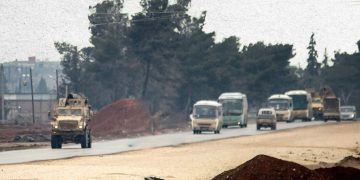
A preliminary agreement was reached on Tuesday, April 1, between the Syrian Interim Government and the Civil Council representing Aleppo’s Sheikh Maqsoud and Ashrafiya neighbourhoods, areas predominantly inhabited by Kurds. The agreement includes 14 provisions, the most prominent of which states that the two neighbourhoods will fall under the administration of the city of Aleppo while preserving the cultural and social identity of their residents. In addition, Syrian Democratic Forces (SDF) units, along with their weapons, are to withdraw from the neighbourhoods and relocate to northeastern Syria.
A few days after the agreement was announced, both sides began releasing detainees, and SDF units carried out a partial withdrawal. The full implementation of the agreement is expected to proceed in phases until all terms are fulfilled.
In an exclusive interview with +963, Hevin Suleiman, Joint President of the Local Council for the Sheikh Maqsoud and Ashrafiya neighbourhoods, discussed the negotiations with the Syrian Interim Government, the connection between the Aleppo Agreement and the broader SDF-Interim Government deal, and what lies ahead.
-
What are the details of the negotiations that led to the agreement with the Syrian Interim Government, and how long did they take?
- The negotiations between representatives of the Sheikh Maqsoud and Ashrafiya neighbourhoods and the Damascus Government lasted more than a month, during which several meetings were held. Ultimately, the two sides reached a 14-point agreement. Both parties signed the deal and committed to protecting the residents of Sheikh Maqsoud and Ashrafiya, as well as upholding all provisions of the agreement, which is to be implemented in stages.
A few days ago, dozens of detainees were released in what was considered the first step toward implementation. The goal is to fully clear detention facilities on both sides. We call on the other party to approach the process with seriousness and mutual trust to fulfil all terms of the agreement. This will help reinforce civil peace between Sheikh Maqsoud and Ashrafiya on one hand, and the rest of Aleppo on the other. What’s needed now is a political and diplomatic phase, one that fosters peace, security, stability, and shared life among all Syrians.
-
Following the release of the initial group of detainees and the partial withdrawal of the SDF forces from the agreed area, what are the next steps? Is there a set timeline for full implementation?
- The agreement stipulates that all prisons operated by either side are to be cleared, and further releases will take place in two additional stages. Regarding the timeline, committees have already been formed to oversee the implementation of the remaining provisions, and this will take some time. We are now entering a phase in Syria that must be shaped by peace, moving beyond the conflict and war that have endured for over 14 years. We aim to work in unity with all Syrians to resolve internal disputes. This agreement is just the beginning of restoring trust among Syrians themselves.
-
The preamble to the agreement mentions “the need to protect and respect the social and cultural privacy of the inhabitants of the Sheikh Maqsoud and Ashrafiya neighbourhoods”. Could you elaborate on what that entails?
- This clause guarantees the preservation of the social and cultural character of the two neighbourhoods, while also ensuring the continued operation of institutions that were established over the past several years. All of this is meant to serve the local population. Furthermore, the government is required to provide financial and public service support to these areas, which suffered greatly from years of siege and destruction during the conflict.
-
Were there any gains for the local council, or the military and security forces in Sheikh Maqsoud and Ashrafiya, as a result of the agreement?
The agreement assigns responsibility for security in the two neighbourhoods to the Internal Security Forces (Asayish), working in coordination with the Ministry of Interior. There was no provision for joint forces within Sheikh Maqsoud and Ashrafiya.
The withdrawal of military forces from these areas reflects shifts in the broader Syrian context and aligns with the central agreement signed between Mazloum Abdi, Commander-in-Chief of the SDF, and Ahmed al-Sharaa, President of the Syrian Interim Government in Damascus. That broader deal includes a nationwide ceasefire, a transition to diplomacy and peacebuilding, and efforts to promote coexistence. The Sheikh Maqsoud and Ashrafiya agreement represents the first practical step in implementing that wider accord.
-
Would you like to add any final thoughts?
- Our vision has always been democratic and rooted in co-existence. For the past 14 years, we have championed Syrian-Syrian dialogue and the inclusion of all ethnic, cultural, and religious groups in the drafting of a new constitution for a democratic, decentralized Syria.
- The agreement signed between the SDF and the Syrian Interim Government is historic. It lays the groundwork for stability and security across the country. Aleppo, as a key industrial and strategic hub, has the potential to lead Syria’s broader recovery. We have long believed that Aleppo can be the starting point for a national breakthrough. We hope that all Syrians will come together to build a future free from terrorism, violence, racism, and discrimination, and to reunite Syria across its full geography at this critical moment in its history.