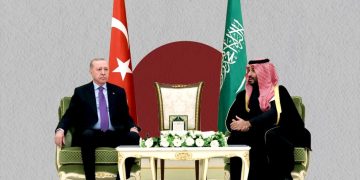


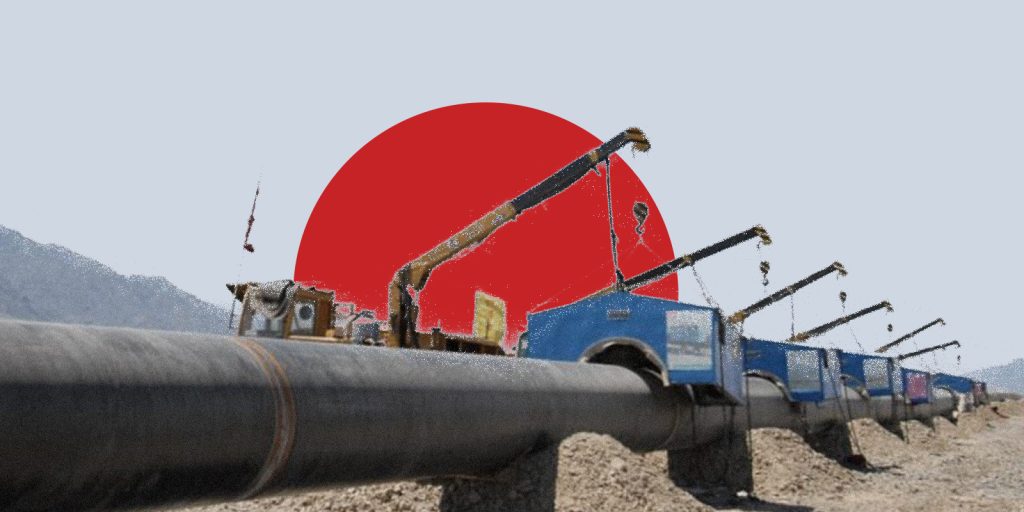
Energy in the Eastern Mediterranean has shifted from a technical issue to a language of influence, reshaping regional power balances. Turkish Energy Minister Alparslan Bayraktar recently announced Ankara’s intention to sign an agreement with Syria for oil and gas exploration in 2026, highlighting the Syrian coast as a sensitive zone where Turkish ambitions intersect with Russian interests and US strategic oversight.
Estimates suggest extractable gas reserves of approximately 3.5 trillion cubic metres, of which roughly five per cent may lie within Syrian waters. If effectively exploited under favourable investment conditions, this could raise Syria’s GDP by 8–12 per cent over the next decade. ORSAM, a Turkish research centre, notes that Turkish companies are prepared to invest between USD 1.5–2 billion in energy and infrastructure projects, including gas and electricity provision and network integration, contingent upon agreements with Damascus. These developments prompt questions regarding Syria’s future economic sovereignty.
Deferred Wealth or New Leverage?
Economic expert Adnan Al-Saadoun observes that regional geological estimates suggest potential offshore gas reserves off the Syrian coast ranging between 250 and 700 billion cubic metres. ”While this does not position Syria among major producers, it grants the country a strategically functional role in Eastern Mediterranean dynamics, where geography may outweigh resource size,” he told +963, arguing that the value of Syrian gas lies not in its volume, but in its location and export pathways.
The Syrian coast’s geopolitical significance stems from its Mediterranean access, proximity to potential European supply routes, and a longstanding Russian military and economic presence that rendered the area a quasi-closed zone of influence for decades. However, according to Al-Saadoun, this implicit “monopoly” is beginning to fracture post-conflict, as international priorities shift. The total potential value of Syrian gas over the next two decades is estimated between USD 30–50 billion. Realising this value, however, depends on Syria’s capacity to negotiate from a position of sovereignty, diversify partners, and decouple economic investment from political leverage.
Al-Saadoun concludes that Syria’s coastal energy sector constitutes an early test of the country’s post-war economic model: it may either become a measured developmental lever or a conduit for externally directed influence.
Turkey’s Expanding Role and Syrian Sovereignty
The recent Turkish announcement regarding a seismic survey off the Syrian coast in 2026 cannot be viewed in isolation. According to political analyst Najm Al-Abdallah, while energy support carries economic and humanitarian significance, it also carries long-term strategic implications. This initiative could lead to the establishment of a joint economic zone between Damascus and Ankara, potentially undermining the Eastern Mediterranean Gas Forum led by Egypt and Greece, with Israeli participation.
Experience indicates that energy investments are rarely neutral; control over gas routes extends influence from the economic to the political and security realms. The expansion of Turkish involvement therefore raises critical questions: who controls investment decisions, and who determines export routes? Al-Abdallah emphasises that the central question is not merely who will invest in Syrian gas, but whether Syria can maintain its economy as an instrument of national interest rather than as an extension of external influence.
Economic Partnership or De Facto Oversight?
Turkish researcher Mahmud Danish stresses to +963 that Ankara’s objective is not to dominate Syria, but to establish partnerships that serve mutual interests while securing safe energy corridors to Europe. By supplying gas and electricity, Turkey enhances its negotiating position in future projects and ensures transit routes pass through its territory. Given the prohibitive costs of rebuilding Syria’s energy sector, Turkey cannot fund reconstruction alone, limiting the scope of any potential economic oversight. The arrangement is intended to balance competing global actors, with contracts and preferential pricing possible, but with the long-term outcome remaining uncertain.
Russia’s Quietly Eroding Influence
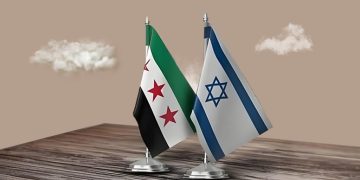
Even unconfirmed Syrian gas reserves are sufficient to spark competition. In the Eastern Mediterranean, gas has historically precipitated maritime boundary disputes, exclusionary alliances, and a race to establish facts on the ground. The potential of Syrian gas raises sensitive questions about indirect confrontation between Turkey and Israel.
Political analyst Saeed Fouda notes in a statement to +963 that Turkey positions itself as a key Eastern Mediterranean actor, while Israel seeks stable export routes to Europe. Any changes in Syrian gas could disrupt existing pathways and provoke latent competition among Washington, Moscow, Ankara, and Tel Aviv. Syrian offshore resources could yield profits but remain fraught with risks, potentially transforming the Syrian coast into a locus of quiet economic rivalry. Despite Moscow’s military and economic presence, sanctions and financially capable competitors threaten to reduce its influence unless partnerships are restructured.
The United States continues to manage the file from behind the scenes, leveraging strategic tools to enhance investment feasibility while mitigating Russian expansion. Syria’s position remains delicate: it must accept regional roles without becoming a proxy battleground. Economic gains from Turkish or Russian projects may take years to materialise, whereas political risks are immediate. Fouda concludes that Syrian gas could rejuvenate national revenues, facilitate reconstruction, and serve as a diplomatic tool, but only if decisions are made with strategic clarity. “Mismanaged contracts risk converting sovereign resources into instruments of foreign leverage; the true challenge lies not in extraction, but in governance,” Fouda concludes.