


Recently, convoys of trucks carrying light armoured vehicles entered Syrian territory through the Nasib border crossing with Jordan. These vehicles, manufactured locally by a Jordanian company, are designed specifically for military and security purposes, enabling the safe transport of personnel in high-risk environments.
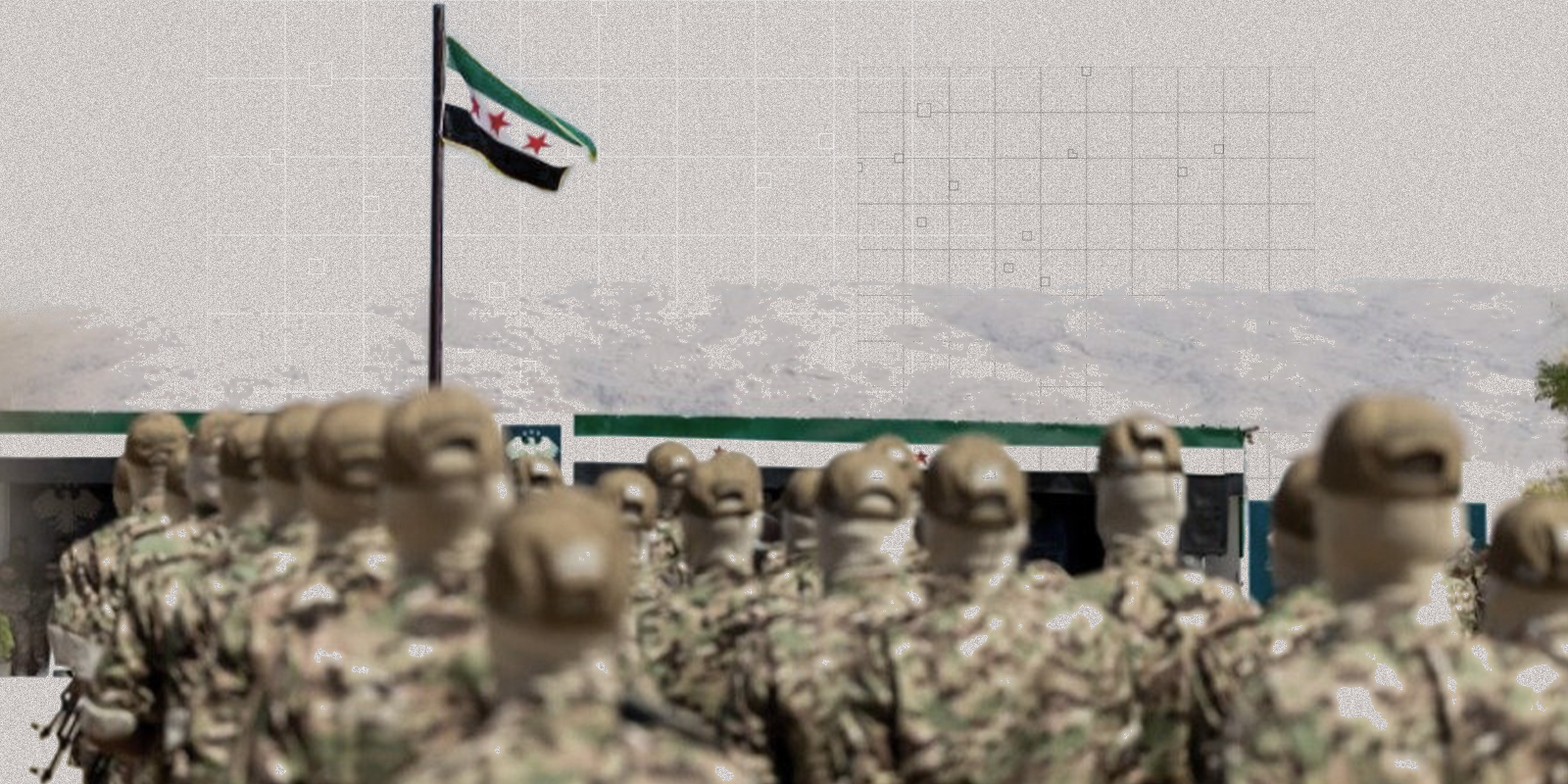
This development comes within the framework of forming the new Syrian army, which brings together armed factions opposed to the former regime along with new volunteers. The new Syrian leadership plans to build an army of 300,000 fighters. However, the old regime’s leftover arsenal is insufficient to equip such a force, creating an urgent need to acquire new weapons, vehicles, and equipment. This process faces multiple challenges that constrain Damascus’s ability to engage militarily with neighbouring countries and the wider world.
A Legacy of Weakness
The collapse of the ousted Syrian regime brought about an almost total disintegration of the former army. Most military equipment was abandoned in barracks. Opposition factions were unable to make full use of captured weapons because of sustained Israeli airstrikes, which targeted hundreds of military sites after the regime’s fall. Israel continues to track and strike at any emerging military activity in Syria.
The Assad regime once held an arsenal of Iranian, Chinese, and North Korean weapons. But how much of this stockpile survived more than a decade of war and Israeli bombardments remains unclear. Major obstacles now surround the effort to arm the new army, given internal fragility and external pressures facing the current Syrian government.
Rearming requires a comprehensive strategy defining the nature of threats and shaping relations with regional and global powers. International arms-market regulations, as well as the political sensitivities of working with the old regime’s traditional suppliers, add further complexity.
A key challenge is choosing sources of weaponry, whether to align with the East or the West, a decision that will largely define the new state’s military doctrine. While there is an inclination toward NATO cooperation, this option is contingent on broader political orientations and financial capacity.
Other options include acquiring mid-generation Western arms or importing regionally produced equipment. Rebuilding Syria’s domestic military industry, however, remains extremely difficult. Years of war destroyed factories and research centres, and Israeli surveillance severely constrains any attempt to revive such capabilities.
Also read: Ankara Arms the Syrian Army: Support Comes With Subordination
Restructuring Challenges
Munzir al-Diwani, a former Syrian officer now based in Austria, told +963 that the 2011 revolution and subsequent mass defections across all military ranks, coupled with the Assad regime’s reliance on auxiliary forces such as the National Defense Forces, severely undermined the army’s institutional cohesion and weapons maintenance capacity.
He explained that after the regime’s fall and the formal dissolution of the Syrian army, opposition factions filled the vacuum. Yet, while some fighters had prior training on specific weapon systems, al-Diwani believes this training “falls far short of what is required to build a strong, modern army capable of operating and maintaining a wide spectrum of weapons.”
This situation has drawn foreign intervention to help rebuild the army. Turkey, as the strategic ally of the new leadership, has taken the lead, working alongside Saudi Arabia and Qatar. According to al-Diwani, these countries provide weapons, training, and logistical support, all with the approval of the United States and France.
However, he added, “reconstruction cannot be completed without Russia,” noting that both the legacy of the former regime and international arrangements may necessitate Moscow’s involvement.
Al-Diwani observed that initial rearmament will likely focus on light and medium weapons, combat vehicles, and armoured transport. This cautious approach reflects lingering concerns, given the new army’s past association with Hay’at Tahrir al-Sham, which is still remembered internationally as a designated terrorist group.
Foreign presence is also decisive. With both the U.S. and Russia entrenched in Syria under different pretexts, Moscow at the request of the former regime and Washington under the banner of counterterrorism, as well as Turkey’s plans to establish bases under a joint defence pact with Damascus, external powers will inevitably shape training and support. France and the U.K., al-Diwani argues, hold de facto political guardianship over the Middle East, and their consent will be required for any military restructuring to succeed.
International Conditions and Interests
Al-Diwani stressed that as military aid increases, so too will conditions and constraints, since each supporting state seeks to secure its present and future interests. He suggested that Western backing aims to reposition Syria within the global order, specifically as a forward base against Russian and Chinese expansion, given Syria’s critical geostrategic location.
On international pressures, he explained that partner states have the political and diplomatic cover needed to justify their role, with multiple workarounds available to sidestep restrictions. Concerning the impact of foreign aid on the army’s ideology, he cited Gulf armies as examples: soldiers freely practice their religion, but doctrinal limits remain tightly enforced.
Ultimately, he argued, “foreign training can significantly improve the combat readiness of Syria’s new army by instilling military discipline, teaching proper weapons handling, and ensuring forces maintain permanent operational readiness.”
Also read: The Syrian Army’s Weak Doctrine and the Threat to National Stability
Premature Step
Khaled Hamadeh, director at Regional Forum Consultations and Studies, told +963 that efforts to arm the new Syrian army are premature, given the unsettled state of Syria’s borders, its unresolved electoral process, and the uncertain trajectory of political authority.
He believes rearmament is inseparable from achieving internal stability, securing the Syrian-Lebanese border, halting Israeli incursions, and resolving tensions with other domestic actors, most notably the Kurdish-led Syrian Democratic Forces (SDF).
Hamadeh also emphasized that Russian support will form the backbone of Syria’s rearmament, while dismissing the likelihood of U.S. opposition. In his view, Washington’s position will hinge primarily on clarity around the type of weapons Moscow supplies to Damascus.











