


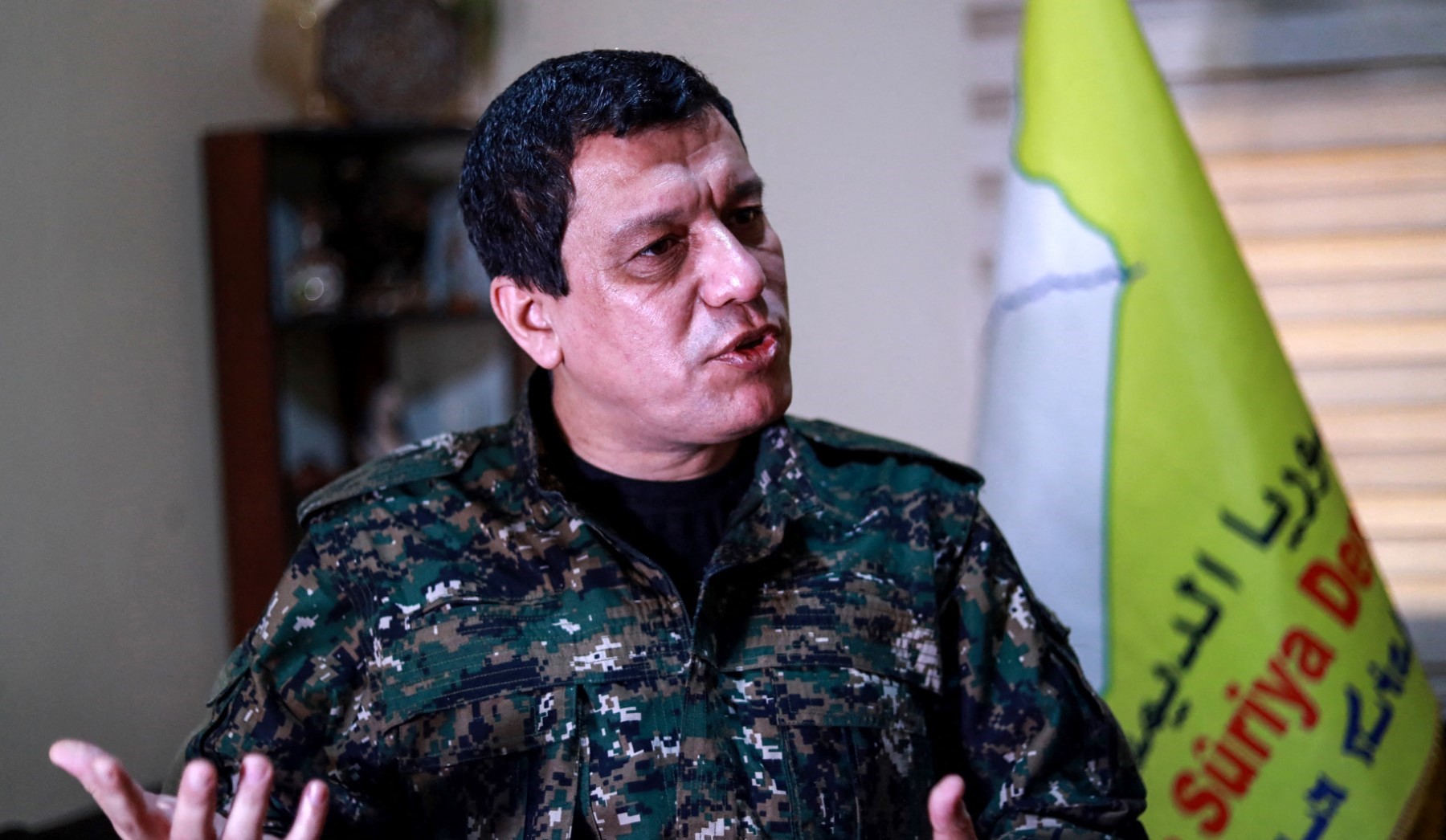
Hasakah, northeast Syris – General Mazloum Abdi, the Commander-in-Chief of the Kurdish-led Syrian Democratic Forces (SDF), said on Friday that the March 10 agreement faces challenges related to arrangements for decentralization as well as religious and cultural rights.
Speaking to India’s The Indian Express, Abdi described the March deal as crucial for integrating the SDF into the Syrian army.
He explained that “the collapse of the Baath regime after 13 years was a development that all Syrians were happy about and a cause for celebration for all of us. At the same time, this moment has created a huge security and administrative vacuum… Syria now has a greater chance of moving towards democracy and a decentralised system.”
Read more: Kurdish-Led SDF Commander: One Army, One Flag, with Decentralized Governance
Abdi stressed the importance of introducing a new system that ensures all Syrian communities rights and variety “Syria now has a greater chance of moving towards democracy and a decentralised system. A society like Syria can only ensure democracy with a decentralised system.”
He emphasized that a unified Syrian army must have a national identity and serve all Syrians, clarifying that neither the SDF nor the Autonomous Administration of North and East Syria poses any threat to Turkey’s security.
The SDF leader also noted that international coalition support remains essential to fight ISIS and to prevent militants from exploiting the security vacuum.
In a separate interview with Saudi Arabia’s Al Hadath TV on June 29, Abdi said the SDF and Damascus share an understanding on the need for “one army and one flag”, affirming support for a decentralized political model that preserves Syria’s territorial integrity. “We have officially asked Damascus to reinstate government institutions in the provinces of Raqqa, Hasakah, and Deir ez-Zor,” Abdi said at the time.











