
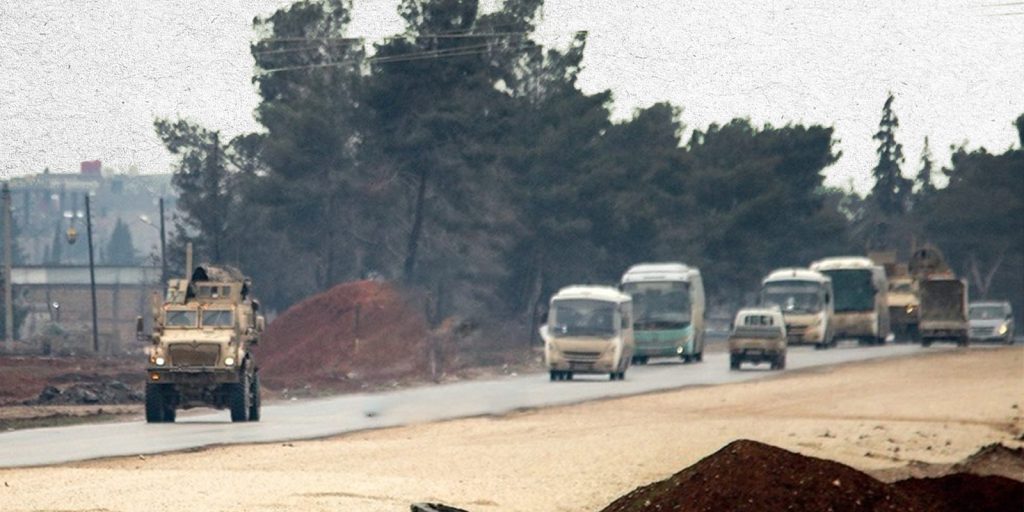
The repatriation of ISIS members from camps and prisons beyond Iraq’s borders is no longer a routine security procedure. It has become a real test of the Iraqi state’s capacity to manage one of its most complex and dangerous files.
The transfer process – conducted through precise security coordination with the Syrian side – highlights the heavy burden Baghdad is carrying on behalf of the region and the wider international community. Iraq is reclaiming individuals implicated in cross-border crimes and placing them in high-security facilities in an effort to contain the threat and prevent the recycling of violence.
Yet this effort, significant as it is, raises profound questions about the cost Iraq is bearing alone – in human, security and logistical terms – at a time when many states continue to evade responsibility for repatriating their own nationals involved in terrorism.
A heavy financial burden
The strain deepens with the legal and financial challenges of detaining thousands of prisoners within Iraq’s prison system, which requires substantial operational expenditure, reinforced security and infrastructure capable of accommodating both their numbers and the level of risk they pose.
A comprehensive solution, observers argue, depends on the international community assuming its responsibilities – repatriating its citizens and prosecuting them in their home countries – so that Iraq does not remain an open prison for the world’s terrorists, nor a state permanently paying for the security of others at the expense of its own stability and economy.
In this context, Professor Hassan Abdullah Al-Da’jah, Professor of Strategic Studies at Al-Hussein Bin Talal University, highlights the scale of the financial and administrative burden borne by Iraq in managing ISIS detention facilities. He estimates the number of detainees at between 7,000 and 9,000.
Speaking to +963, Al-Da’jah explains that operating these prisons requires extensive daily resources covering security and guarding, food provision, healthcare, maintenance, as well as rehabilitation and administrative programmes.
He estimates the daily cost per prisoner at between $35 and $50. This places Iraq’s total daily financial burden at roughly $245,000 to $450,000. Monthly costs range between $7.3 million and $13.5 million, while annual expenditure reaches approximately $89 million to $164 million. Security and guarding alone account for the largest share – between 45 and 55 per cent of total spending.
Al-Da’jah argues that repatriating these prisoners to their countries of origin requires a multi-track strategic approach combining security, legal and diplomatic efforts. States concerned must be obliged to retrieve their nationals, alongside rigorous security and judicial vetting mechanisms prior to transfer, and effective monitoring and rehabilitation programmes thereafter.
Risk management, he adds, requires integrated policies: geographically distributing detention centres to ease pressure on any one region; enhancing technical and security measures; classifying prisoners according to risk level; developing ideological and psychological rehabilitation programmes; and involving local communities in development plans to reduce tensions and reinforce trust in the state.
Last Monday, the head of Iraq’s Security Media Cell, Lieutenant-General Saad Maan, announced an increase in the number of ISIS prisoners transferred from Syria to Iraq. He clarified that those received include Iraqis, Syrians and other nationalities.
The previous week, Maan confirmed the transfer of 2,250 ISIS detainees from Syrian territory to Iraq by land and air, in coordination with the international coalition. They were placed in fortified detention centres.
Security sources also told the newspaper Asharq Al-Awsat that some ISIS prisoners threatened Iraqi guards during their transfer from Syria, vowing to kill them after escaping from prison. This coincided with Iraq’s receipt of a new group of detainees – a move the government described as pre-emptive to safeguard national security.
Sovereignty and tensions with armed factions
Political analyst Milad Malek Al-Atrash, based in Latakia, argues that Iraq’s decision to repatriate and prosecute ISIS detainees domestically represents, politically, a clear attempt to reinforce state sovereignty and strengthen judicial institutions. Trying terrorism suspects within Iraq’s legal system aims to convert “military victory” over the organisation into a “legal victory” that consolidates state authority and restores the principle of justice.
However, Al-Atrash notes that the move is not without complications. Some security factions that fought ISIS still consider themselves stakeholders in managing this file, particularly in areas that witnessed extensive military operations. This creates an overlap between security and political decision-making, turning the detainee issue into part of sensitive internal balances between formal state institutions and non-state armed actors.
In this sense, managing ISIS detainees extends beyond a purely judicial matter – it becomes a question of redefining the relationship between the state and arms operating outside its framework.
Societal wounds and justice
Al-Atrash points out that cities once controlled by ISIS continue to carry open wounds. Victims’ families demand swift and severe trials as part of transitional justice. At the same time, there are real fears that flawed trials or mass arrest campaigns could reproduce the grievances that originally contributed to extremism.
Iraq’s experience, he stresses, has shown that security measures alone are insufficient. The absence of trust between the state and local communities can create fertile ground for renewed radicalisation. The success of these trials should therefore be measured by whether society feels justice has been achieved – not simply by the number of verdicts issued.
On the issue of foreign fighters, Al-Atrash describes the matter as a heavy international burden placed on Iraq’s shoulders, particularly as many countries refuse to repatriate their nationals who joined ISIS. This imposes significant security, financial and legal responsibilities on Baghdad, requiring sophisticated infrastructure, high-security prisons, precise judicial procedures, international intelligence cooperation and substantial funding.
Simultaneously, Iraq faces pressure and criticism from international human rights organisations regarding trial procedures, the death penalty and detention conditions. The government thus confronts a difficult equation – balancing domestic security requirements against international scrutiny.
Al-Atrash warns that prisons themselves could become a new security front. Concentrating large numbers of ISIS members in single facilities increases the risk of unrest, network reorganisation and the spread of extremist ideology among inmates. International experience has shown that prisons can become “schools of extremism” if not managed with effective monitoring and rehabilitation programmes. The detainee file, therefore, represents a long-term national security challenge rather than a temporary judicial procedure.
Economically, he adds, the cost of war against ISIS did not end with the conclusion of military operations. Iraq continues to shoulder financial burdens linked to prison management, trial proceedings, securing facilities and documenting crimes – even as it seeks to redirect resources towards development and reconstruction. In this sense, the detainee issue constitutes a financial extension of the war itself.
Between domestic security pressures and international scrutiny
Al-Atrash concludes that Iraq’s real challenge lies in striking a delicate balance between three core tracks: delivering justice to victims of terrorism; maintaining political and security stability; and avoiding economic exhaustion. Any imbalance risks unintended consequences – leniency threatens security, while excessive severity could destabilise society.
For his part, Munich-based political analyst Salah Suleiman argues that transferring ISIS detainees from Syria to Iraq represents a pre-emptive measure aimed at protecting the national security of both Iraq and Syria. He notes that although the move carries risks, Iraqi officials emphasise that the decision was carefully studied, reassuring the international community that all suspects – regardless of nationality – will face Iraqi courts and due legal process.
Suleiman adds that Iraq is also signalling to the world that it is an active international player, capable of handling one of the most sensitive and exhausting files confronting the global community. Beyond security considerations, Baghdad may also be seeking political gains that enhance its regional and international standing.
Members of the Global Coalition to Defeat ISIS, meeting recently in Riyadh, praised the sacrifices of the Syrian Democratic Forces in the fight against ISIS and commended Iraq’s continued leadership in joint counter-terrorism efforts.
The coalition reaffirmed coordination with both Damascus and Baghdad and stressed the importance of accelerating the transfer and repatriation of ISIS detainees to their countries of origin. Member states were urged to provide direct support to Syrian and Iraqi efforts and welcomed the Syrian government’s assumption of responsibility for detention facilities and displacement camps housing ISIS fighters and their families.