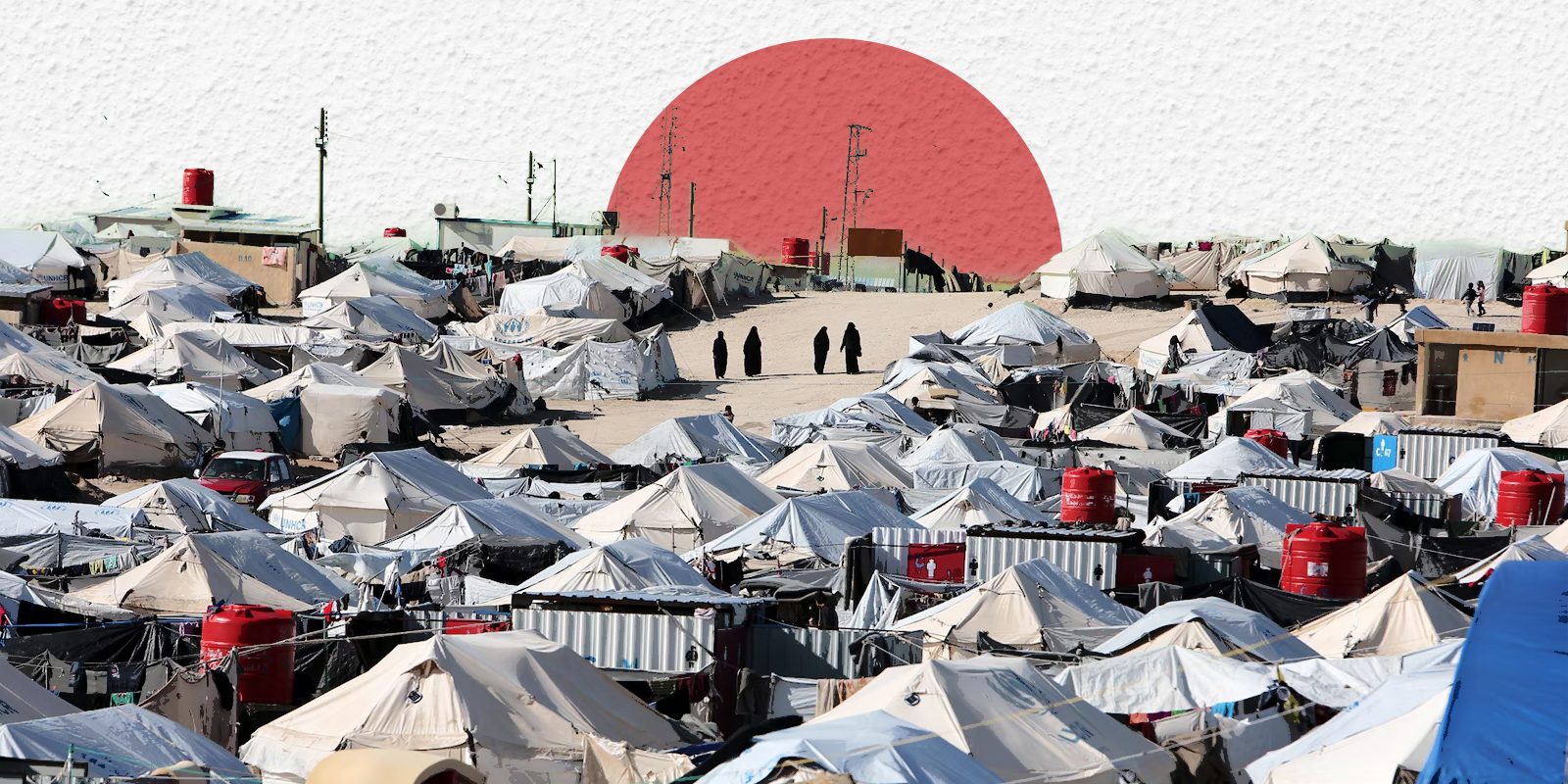
Recent weeks have witnessed significant political, security and humanitarian shifts inside Al-Hol camp in north-east Syria, unfolding within a broader context of on-the-ground changes following the withdrawal of the Syrian Democratic Forces (SDF) from managing the camp and the gradual assumption of control by the interim Syrian authorities over parts of it. These developments have triggered widespread concern both inside and beyond the camp, signalling the start of a more complex and sensitive phase in one of Syria’s most intractable files.
In parallel with the administrative transition, reports have emerged of escape attempts by families linked to the so-called Islamic State (IS), reflecting a growing security vacuum following the erosion of SDF oversight and the disruption of previous control mechanisms. These incidents have prompted Syrian authorities to declare their readiness to re-establish order and stabilise the situation inside the camp.
At the same time, repatriation and voluntary return operations for Syrian and Iraqi families continue, particularly to Iraq, where Baghdad has begun dismantling parts of the camp and reintegrating approximately 19,000 Iraqi nationals after screening and rehabilitation processes. These efforts are framed as part of a broader strategy to prevent the camp from remaining a breeding ground for extremism or a platform for the resurgence of radical networks.
Yet despite these steps, the United Nations and international humanitarian organisations have repeatedly warned of worsening living conditions inside Al-Hol, highlighting persistent humanitarian fragility and deep-seated security vulnerabilities. Women and children, who constitute the overwhelming majority of the camp’s residents, remain the most affected, particularly in the absence of sustainable, long-term solutions for families associated with extremist groups.
These developments come at a time when the international community remains preoccupied with wider regional security and political crises, further complicating coordinated efforts to address Al-Hol in a comprehensive manner. As a result, the camp continues to represent one of the most sensitive and unresolved dossiers in Syria and the region – where humanitarian responsibility, security concerns, and political reluctance intersect.
A delayed bomb
Hassan Abu Hanieh, an expert on Islamist movements at the Politics and Society Institute in Jordan, told +963 that the population of Al-Hol has significantly declined since the camp was established following the fall of IS’s last territorial stronghold in Baghouz in March 2019.
“At its peak, the camp hosted more than 65,000 people,” Abu Hanieh explained. “Today, that number has dropped to around 24,000, most of whom are women and children from Syrian and Iraqi families.”
He argued that one of the camp’s most serious problems during its time under SDF administration was the severe lack of basic services, including healthcare and education, coupled with the absence of any meaningful rehabilitation or deradicalisation programmes. “The situation was extremely dangerous,” he said, adding that rights organisations had repeatedly described the conditions as a disgrace and a humanitarian failure.
Following the transfer of oversight to Syria’s new authorities, Abu Hanieh noted that security incidents have declined compared with previous periods. However, he stressed that residents should not be treated as criminals by default. “We are talking primarily about families and children, many of whom have no individual criminal responsibility. Reintegration into society must be the core solution.”
According to Abu Hanieh, many states have already repatriated their nationals, contributing to the reduction in the camp’s population. “But others continue to delay,” he said, urging Iraq to complete the return of its citizens and calling on Syria to pursue local reintegration for Syrian families. “The remaining foreign nationals must also be treated in line with humanitarian and human rights principles.”
“The only realistic options,” he concluded, “are either to dismantle the camp entirely or to radically transform it by providing education, healthcare and gradual reintegration. Leaving it as it is, is simply not sustainable.
Ambiguity that risks serious repercussions
Ahmed Sultan, a Cairo-based researcher specialising in regional security and counterterrorism, told +963 that recent military and political developments have pushed the Syrian government towards assuming a more direct role in managing Al-Hol, in coordination with the United States.
“Such a transition is rarely smooth,” Sultan said. “The current authorities lack sufficient experience in managing a camp of this scale and complexity. Without careful handling, the consequences could be severe.”
He explained that while potentially dangerous individuals are being transferred to detention facilities or repatriated to Iraq, tens of thousands of women and children are likely to remain in place for the foreseeable future. “At present, there is no clear plan to dismantle or close the camp. What exists are temporary, stop-gap measures.”
Sultan warned that international disengagement has only deepened the crisis. “Many states continue to refuse responsibility for their nationals, whether fighters or family members. This has been the case since IS was defeated in 2019 – and the policy of postponement has now reached its limits.”
He described Al-Hol as a “ticking time bomb”, stressing that mismanagement could lead to renewed instability not only in Syria and Iraq, but far beyond. “ISIS may be weakened, but it has not disappeared. Mishandling this file could easily generate the next wave of radicalisation.”