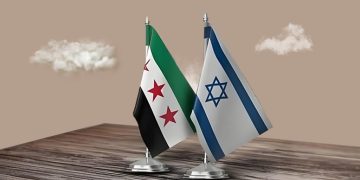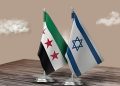



In recent weeks, indications have emerged of a new trajectory taking shape along the Damascus–Tel Aviv axis, driven quietly by the United States and framed publicly around notions of “de-escalation” and “regional stability”. This trajectory has involved the reopening of security and diplomatic communication channels that had long remained dormant. Yet despite the outward appearance of movement, sharp disagreement persists over the true nature and ceiling of this process – whether it represents the groundwork for broader understandings and potential regional peace, or merely a calibrated effort to manage the conflict without altering its political foundations.
A security-first track
The Israeli outlet i24NEWS cited a Syrian source speaking of undisclosed diplomatic activity aimed at arranging an imminent meeting between Syrian and Israeli officials under American sponsorship, with the stated objective of reaching a security agreement. According to the source, Paris has once again been proposed as the venue for these talks, which are expected to extend beyond narrow security coordination to include discussion of strategic and economic projects, likely to be implemented within the buffer zones separating the two sides.
However, this reading is contested by former Syrian diplomat Bashar Al-Haj Ali, who argues that such developments do not necessarily signal a substantive shift in the nature of the Syrian–Israeli conflict, but rather reflect a change in how it is being administered. Speaking to +963, Al-Haj Ali maintains that the issue is now being handled primarily as a security file intended to be contained and stabilised, in line with a broader American approach to reducing open flashpoints across the region, rather than as a mature political process aimed at comprehensive settlement or normalisation.
This assessment is reinforced by the same source’s claim that the Syrian plan envisages an initial, limited security agreement, followed by the opening of an Israeli liaison office in Damascus without full diplomatic status. The pace of this process, according to the source, could accelerate under direct American pressure – particularly from President Donald Trump.
Yet Al-Haj Ali cautions that such acceleration should not be mistaken for political authorisation on either side. In his view, this remains technical security communication designed to prevent miscalculation and contain field-level tensions, a pattern seen repeatedly in earlier stages of the conflict without producing formal negotiations or durable political outcomes.
Speculation versus constraints
The source further spoke of optimism surrounding the possible opening of an Israeli embassy in Damascus before the end of the current year, as well as “significant progress” towards Syria’s inclusion in regional peace agreements. Among the more ambitious ideas floated was a proposed “compromise” involving the leasing of the Golan Heights for a 25-year period and its transformation into a “peace park” hosting joint economic projects.
Al-Haj Ali regards these proposals as largely theoretical. In the absence of a clear legal and international framework, and without a comprehensive political resolution to the conflict, he argues that any such arrangements would remain limited in scope, duration, and resilience, and would be highly vulnerable to disruption by shifts in political or security conditions.
At the level of publicly confirmed developments, the Paris meetings held in early January marked a notable moment. These talks brought together Syrian, Israeli, and American officials over two days and concluded with a joint trilateral statement published on the US State Department’s official website. The statement described “productive discussions” focused on Syrian sovereignty, Israeli security, and the prosperity of both states, and announced understandings on security arrangements, including the establishment of a joint coordination mechanism under US supervision. This mechanism would encompass intelligence sharing, military de-escalation, diplomatic coordination, and exploration of commercial opportunities.
Redrawing influence maps
For Syrian politician Kamal Al-Labwani, based in Sweden, these outcomes cannot be understood in isolation from a wider effort to redraw Syria’s internal balance of power. In remarks to +963, Al-Labwani argues that the Paris meetings were not merely a diplomatic exercise, but part of a structured plan to regulate the roles of external actors – particularly Israel and Turkey – following what he describes as Ankara’s direct influence over decision-making in Damascus at the end of last year. From this perspective, the publicly declared security-diplomatic framework masks a deeper strategic recalibration.
Al-Labwani points to the creation of a US-supervised coordination cell and the deliberate linking of security and diplomatic tracks as aligning with proposals for a “demilitarised economic zone”, potentially enabling civilian cooperation in sectors such as energy, agriculture, and healthcare. However, he contends that this model effectively grants Israel long-term oversight of southern Syria extending towards the al-Tanf area, without requiring corresponding concessions on Israel’s core security demands.
In his reading of the Paris outcomes, Israel remains firmly committed to maintaining a “sanitised” security environment in southern Syria, with arrangements stretching towards the outskirts of Damascus, while the status of Mount Hermon remains unresolved. This, he argues, consolidates a fait accompli created by force following Israeli advances into the buffer zone stipulated under the 1974 disengagement agreement, in the aftermath of Bashar al-Assad’s fall in December 2024.
Syrian discourse and regional repercussions
Al-Labwani also analyses the official Syrian narrative, particularly Foreign Minister Asaad Al-Shaibani’s statements excluding the Golan file from negotiations while demanding Israeli withdrawal to positions held prior to 8 December 2024. He interprets this stance as an attempt to demonstrate Syrian seriousness and secure an American green light for military action against the Syrian Democratic Forces (SDF), a move he links directly to Turkish conditions.
According to Al-Labwani, this trajectory subsequently stalled after the United States imposed a ceasefire under the pretext of combating ISIS. Initially set at 15 days, the ceasefire was later extended to six months, with expectations that it may evolve into a permanent arrangement.
From his perspective, the practical outcome of this sequence has been to reinforce the SDF’s position, consolidating it into a more cohesive Kurdish entity operating under international protection and expanding its territorial interface with the Turkish border. Al-Labwani argues that the Paris arrangement has ultimately undermined Turkish national security rather than advancing it. As a result, he anticipates renewed obstacles on the Israeli negotiation track and warns of the potential for a broader Israeli–Turkish escalation should disputes over influence in northern and eastern Syria remain unresolved.