


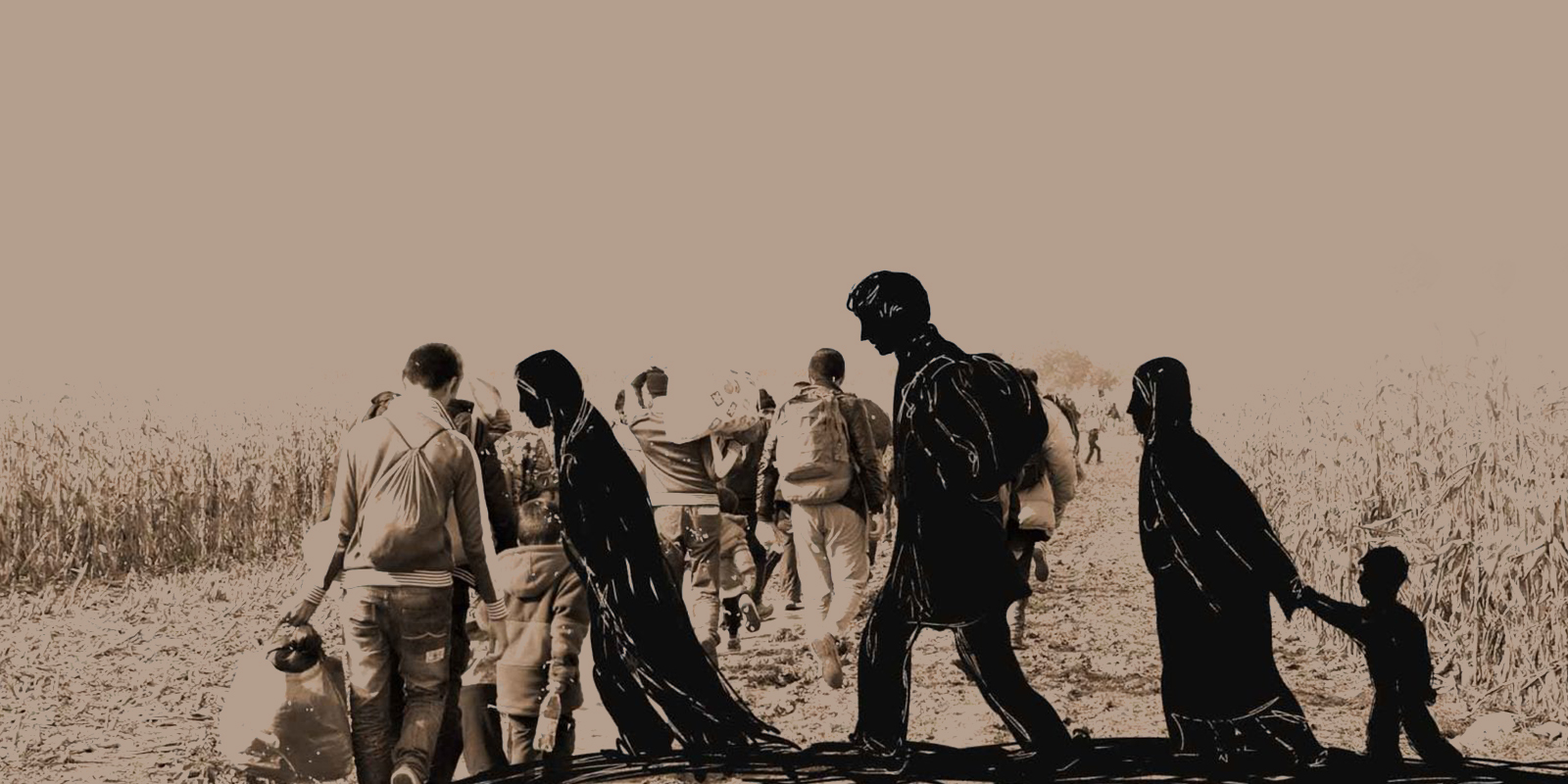
For a large segment of Syria’s young people, thinking about the future is no longer a luxury but a daily burden weighed down by questions and disappointments. Conversations in popular cafés, on the edges of farmland, and inside workshops increasingly revolve around unemployment, falling wages, and the search for irregular migration routes – commonly referred to as smuggling – despite the growing risks involved and costs that exceed the capacity of most families.
Most of the young people discussing smuggling today are in their twenties or early thirties. They have no real memory of Syria before 2011 and have known only years of revolution, war, siege, and economic collapse. Whether they grew up in areas once controlled by the former regime or in regions that experienced repeated fighting, bombardment, and constant shifts in security and living conditions, instability has defined their lives.
As one young man describes it, this is a generation that “grew up before its time”. Many were deprived of stable education and normal employment opportunities, only to find themselves today facing an economic reality that offers few viable choices.
Samer, 27, from the countryside of Damascus, works in a small tailoring workshop. “We are a generation that has never known stability,” he says. “We lived through one crisis after another. Today, we work only to eat – nothing more.”
Speaking to +963, Samer explains that the work available to him offers no sense of security. His wage is insufficient to cover rent and does not allow him even to consider starting a family or building a future. This persistent sense of helplessness, he adds, is what pushes many of his friends to think seriously about leaving Syria, even through irregular and dangerous routes.
Low Wages and Insecure Work
In both cities and rural areas, most young people are employed in daily or temporary jobs – in agriculture, construction sites, or small retail shops. These positions do not provide stable income and are subject to seasonal fluctuations and market volatility. With prices continuing to rise, wages have become increasingly unable to keep pace with basic living costs.
Khaled, 30, from the Idlib countryside, tells +963: “I don’t have a fixed income, and what I earn barely covers food. I can’t save anything, and I can’t even plan for tomorrow.”
This situation is not significantly different in major cities. In Damascus, Mohammed, 28, works in a small shop and explains that his monthly salary covers only part of his rent. “Everything is expensive – housing, transport, food,” he says. “The salary never changes, but prices keep rising.”`
Leaving Again
Not everyone thinking about migration today is leaving Syria for the first time. Some who previously migrated and returned – driven by nostalgia or a desire for family stability – found themselves confronting economic conditions far harsher than expected.
Ayman, 34, from Damascus, returned from Egypt several months ago after working in the restaurant sector. “I left my job and came back because I missed my family and thought the situation had improved a little,” he says.
Speaking to +963, Ayman explains that his return was far from easy. “I didn’t expect rents to be so high, and salaries so low. I felt like I was starting from zero again.”
Despite the money he had previously spent to migrate, he now finds himself thinking once more about leaving. “After seeing my family and reassuring myself about them, I started thinking about leaving again. Emotion alone is not enough to live on,” he says.
Read also: Demographic Engineering in Syria: Old Patterns, New Realities
Why Smuggling?
Amid the clear and widening gap between income and living costs, migration has increasingly become a means of survival rather than a search for comfort or opportunity. Many young Syrians believe that smuggling, despite its high cost, is less complicated than attempting legal travel.
Obtaining a visa requires documentation and financial guarantees that most do not possess, in addition to high fees and the strong possibility of rejection after long waiting periods. In contrast, irregular routes, though dangerous, appear more accessible.
Increasingly Dangerous Routes
In recent years, smuggling routes have become significantly more difficult. The Turkish border has seen unprecedented tightening, with walls and intensive surveillance making crossing attempts far more dangerous and leading many to abandon this route altogether.
The Lebanese border, meanwhile, remains an option for some, but it carries its own risks, including arrest, forced return, or exploitation by smugglers. There are no precise statistics documenting the number of Syrians who have lost their lives during smuggling attempts. However, global data on irregular migration illustrates the scale of the danger.
Over recent years, thousands of deaths have been recorded along migration routes worldwide, whether by land or sea, underscoring that these paths remain among the most dangerous globally. According to a report by the International Organization for Migration (IOM), more than 63,000 people were documented as dead or missing along irregular migration routes worldwide between 2014 and 2023 – most due to drowning in the Mediterranean Sea. Among them were at least 1,270 Syrians identified as killed or missing during these journeys.
Fourteen Years of Smuggling
Since the outbreak of the Syrian revolution in 2011, and throughout the years of rule of the ousted Bashar al-Assad regime, irregular migration became a widespread path taken by millions of Syrians – first to escape fighting, and later to flee economic collapse and the loss of livelihoods.
Over these years, smuggling routes were not merely individual choices but a phenomenon linked to the fragmentation of the labour market, declining wages, and the absence of any clear economic horizon, particularly for young people.
Although the fall of the regime in late 2024 marked a pivotal moment in Syria’s history, this political transformation did not immediately translate into improved living conditions. At the same time, Syria witnessed a significant return of refugees from neighbouring countries. According to estimates by the UN High Commissioner for Refugees, around 860,000 Syrians returned to the country via official crossings from Lebanon, Turkey, Jordan, Iraq, and Egypt by early September 2025.
Some estimates suggest that the number may be higher if unregistered returnees are included, potentially exceeding one million by the end of the year. Despite this notable return movement, returnees face major challenges related to high rents, low wages, and the ability to secure basic necessities, leading some to once again consider migration or alternative ways to improve their living conditions.
These figures reflect the complexity of Syria’s post-regime landscape, where return and renewed migration intersect with persistent economic hardship, making the question of stability at home an ongoing and deeply uncertain one.











