


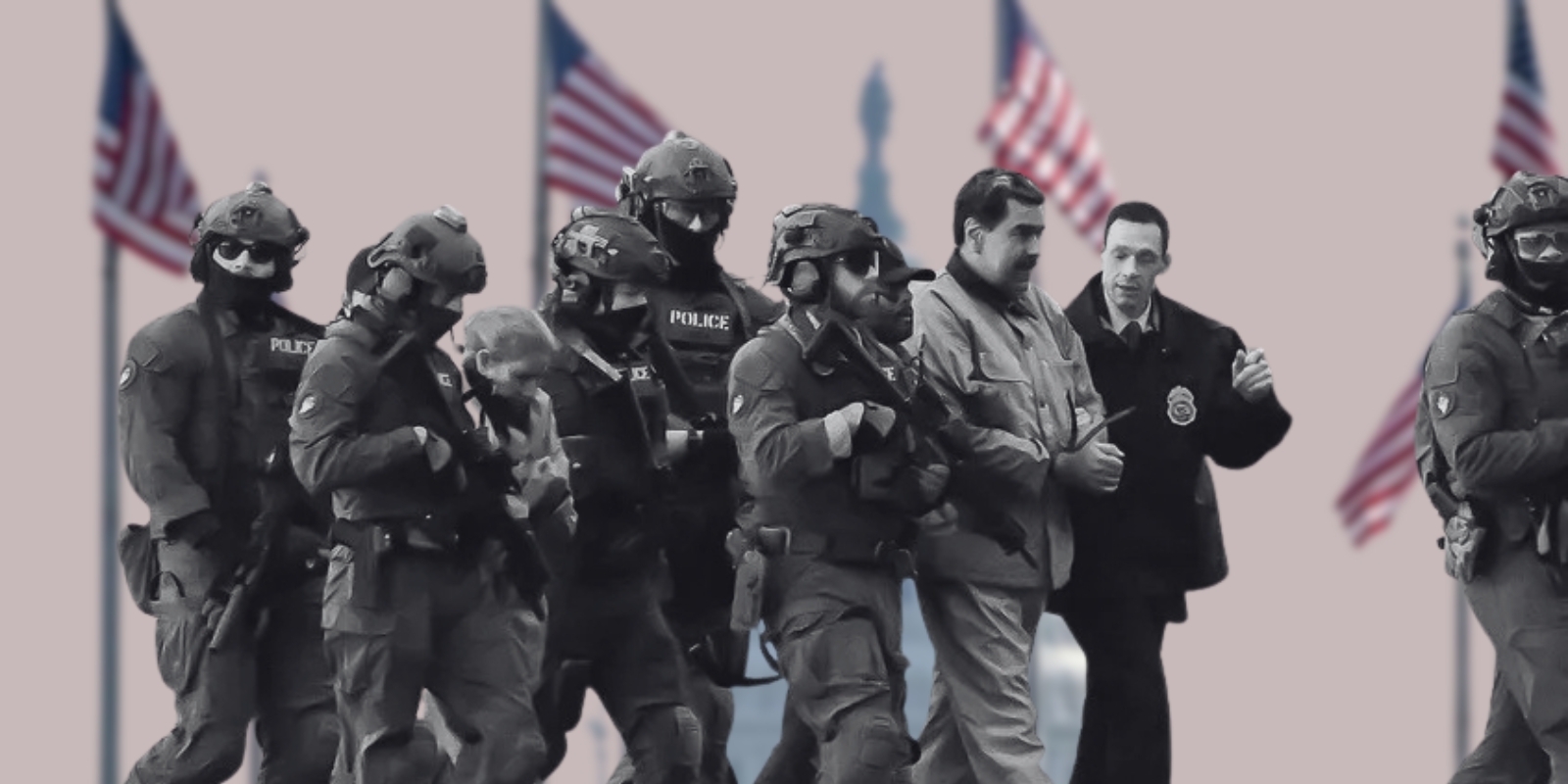
In the aftermath of the United States kidnapping Venezuelan President Nicolás Maduro, the Trump administration introduced a new term, the “Donroe Doctrine,” a direct reference to the Monroe Doctrine dating back to 1823. This invocation, however, is a false one and reveals a deliberate misunderstanding of the original concept. US Secretary of War Pete Hegseth is using the Monroe Doctrine as a legal cover to justify a military intervention that lacks any legal basis, whether international or constitutional. Does the Monroe Doctrine grant Washington the right to launch military operations against a sovereign state? The answer, quite simply, is no.
On December 2, 1823, US President James Monroe delivered a speech to Congress in which he issued a warning to European powers. This warning was not a law, nor a treaty, nor part of the US Constitution. It was merely a declaration of foreign policy, nothing more and nothing less. At the time, America was militarily weak. Its navy was not powerful, nor was its army capable of imposing its will on the continent. Britain was the dominant power. Thus, Monroe was articulating a diplomatic position, not implementing a military threat. After the end of the Napoleonic Wars in 1815, rumors spread that European powers were planning to reclaim their colonies in Latin America. The United States declared that any such attempt would be dangerous to American peace. There were no direct military commitments. It was a purely diplomatic tool to delineate the scope of political movement.
The real transformation came with President Theodore Roosevelt, who added the “Roosevelt Corollary” in 1905. This corollary affirmed the right of the United States to intervene in the affairs of Latin American countries to impose order. Roosevelt used it to justify American interventions in the Dominican Republic, Haiti, Nicaragua, and elsewhere, citing various pretexts such as foreign debt, instability, and the need to protect American property. The actual objective was clear: to entrench American influence and secure the economic interests of US corporations. Thus, the United States overthrew the elected president Jacobo Árbenz in Guatemala because his reforms threatened the interests of the United Fruit Company in 1954. It supported the military coup in Brazil that produced a dictatorship lasting 21 years in 1964. It worked tirelessly to overthrow Salvador Allende in Chile, paving the way for the brutal dictatorship of Augusto Pinochet in 1973.
Today, we are witnessing a revival of these old imperial policies under a new banner: Project 2025. This is a comprehensive document issued by the conservative Heritage Foundation, published across 1424 pages. It contains a clear strategy to “reassert and enforce the Monroe Doctrine,” identifying Venezuela as a “regional security threat” and a “leftist authoritarian dictatorship.” According to the document itself, the objectives are to restore American hegemony over the Western Hemisphere politically, militarily, and economically, to extract natural resources, to prevent China and Russia from expanding their influence, and to control migration and smuggling routes. None of this has anything to do with protecting democracy or human rights.
The central point ignored by Americans is that the Monroe Doctrine is not a constitutional law of the United States. Under the US Constitution, Congress, not the president, holds the authority to declare war or authorize large scale military operations against sovereign states. Whatever the flaws of Maduro, and there are many, they do not justify bypassing Congress in the decision to kidnap a head of state. Under the United Nations Charter, which the United States has ratified, the use of military force against other states is prohibited except with authorization from the Security Council, or in self defense against an immediate or imminent armed attack, or with the consent of the legitimate government of the targeted state. None of these conditions apply to Venezuela. Some may argue that “the Americans have done it before.” Indeed, in 1989, the United States invaded Panama and arrested its president, General Manuel Noriega, using the same justifications: protecting Americans, fighting drugs, and restoring democracy. As a reminder, the invasion of Panama was not authorized under international law and was condemned by the United Nations, exactly as is happening now with Venezuela.
The deeper problem lies in America, not in Venezuela. If Americans accept that their president has the authority to launch military operations against sovereign states based on his personal interpretation of an old political doctrine that has no binding legal force, they open the door wide to overwhelming constitutional chaos. This sets a precedent that can be repeated anywhere and at any time. What is happening is not new in essence, but it is alarming in its escalation and clarity. Trump was not ambiguous. He stated openly that he wants control over Venezuela’s oil and that he would govern Venezuela himself “until they can carry out a safe and proper transition.” This is not the language of democracy. It is the language of economic and military domination.
The views expressed in this article do not necessarily reflect those of +963.











