Hussein Omar
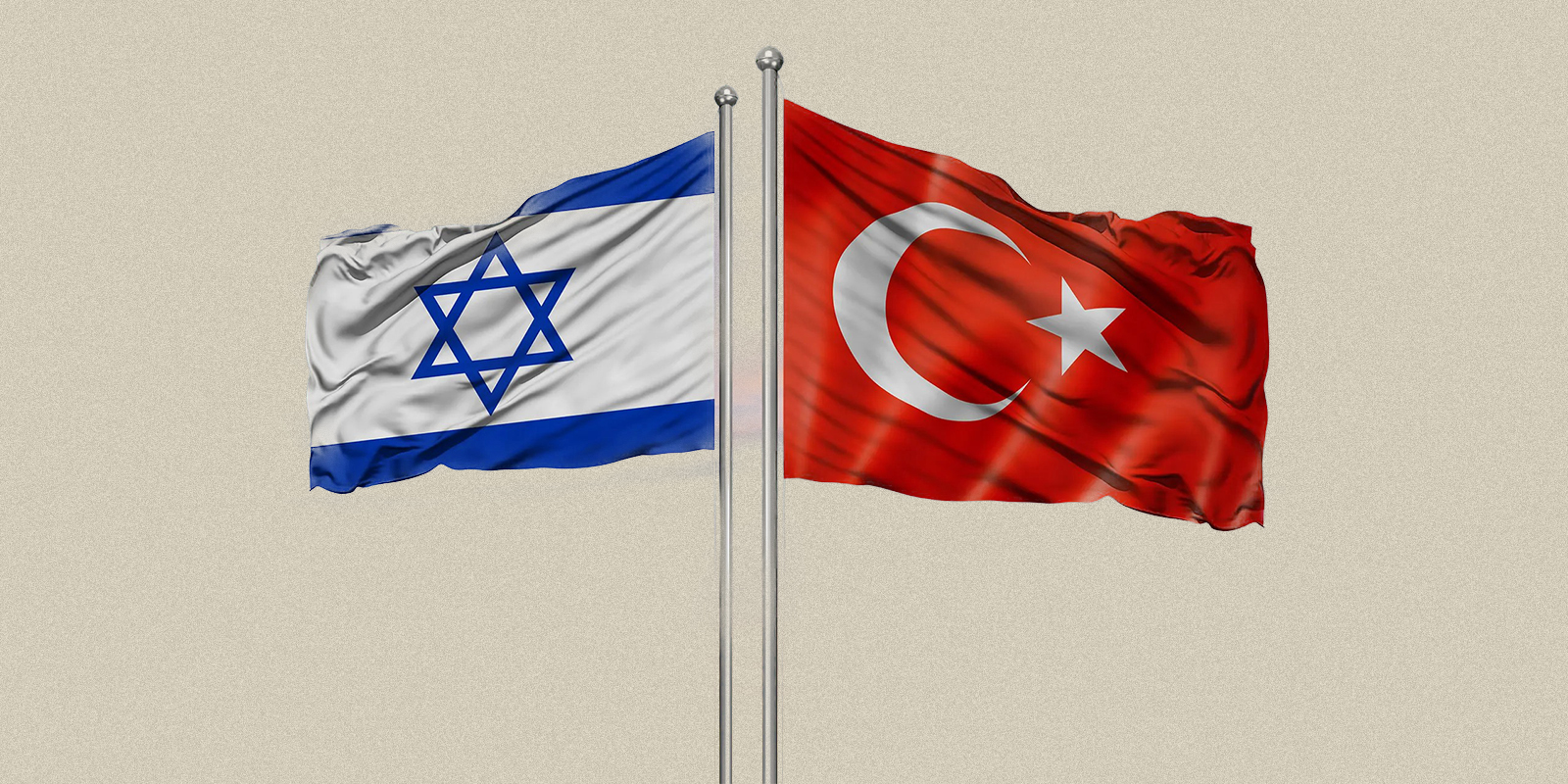
Since the establishment of the State of Israel in 1948, Turkish–Israeli relations have never experienced a rupture as sharp or as dangerous as the one unfolding today. For the first time in this long, often muted rivalry, it appears that Tel Aviv has lost patience and decided to burn the bridges that once connected it to Ankara, abandoning a policy of “quiet containment” that had endured for more than two decades. What we are witnessing is what might be described as a major decision – a choice in favour of comprehensive strategic rupture and a systematic effort to undermine Turkey’s regional and international role.
For years, Israel shaped its approach to Turkey around a hope that never materialised: that the political order which emerged from the ruins of Kemalist secularism would eventually settle into a workable balance with Israeli interests. The prevailing belief within Israeli security and political circles was that the Justice and Development Party, despite its Islamist rhetoric, would remain constrained by the calculations of a “deep state” that viewed Israel as an indispensable security and economic partner in the eastern Mediterranean.
Events, however, proved otherwise. President Recep Tayyip Erdoğan moved steadily towards what he calls an “Islamic depth”, attempting to revive the image of a lost empire by positioning himself as a leading defender of Islamic causes, foremost among them the Palestinian issue. This shift was not merely an exercise in domestic political mobilisation, but an ideological transformation that placed Ankara on a direct collision course with Israel’s regional vision.
A shift in Israeli doctrine
Today, Israel is operating according to a completely revised assessment. The objective is no longer to repair the relationship with Ankara, but to contain and weaken Turkish influence. In doing so, Israel is capitalising on the severe crises facing the Turkish state. An economy once presented as Erdoğan’s greatest achievement is now burdened by unprecedented inflation and a collapsing currency. This economic strain is compounded by a deepening crisis of confidence between the authorities and the opposition, as well as diplomatic failures across several arenas, from Libya to the eastern Mediterranean.
This structural fragility has effectively given Israel the green light to move from a defensive posture to an offensive one. The shift is no longer confined to diplomatic rhetoric but has taken the form of solid geopolitical alliances aimed at constraining Turkish ambitions. Most notably, the growing strategic partnership between Israel, Greece and Cyprus has evolved beyond technical cooperation in gas and energy. It has become a political and military barrier against Turkey, reinforced through joint military exercises and far-reaching security agreements that have turned the eastern Mediterranean into a space increasingly hostile to Turkish manoeuvres.
Israel understands that strengthening Greece and Cyprus inevitably weakens Turkey’s negotiating position in any future talks over maritime boundaries or the division of energy resources. The result is a suffocating geopolitical isolation that limits Ankara’s room for manoeuvre and raises the diplomatic cost of its regional policies.
Read also: Israel and Iran: Escalation Ahead or Enforced Restraint?
The Saudi and Syrian variables
Yet the scenario Ankara fears most may lie elsewhere. If Israel succeeds in reaching historic peace arrangements with Saudi Arabia, and if a political shift occurs in the Syrian file, Turkey could find itself entirely alone.
Saudi Arabia’s entry into a broader framework of regional peace with Israel would undermine Turkey’s long-standing effort to present itself as the leader of the Sunni Islamic world. A settlement in Syria that secures Israeli interests would further reduce Turkey’s influence in the north of the country and close the chapter on the “strategic depth” Ankara has relied upon for years. In such circumstances, Turkey would lose the key pillars of its regional policy, along with the international leverage it has used in negotiations with major powers.
An uncertain Turkish future
Against this backdrop, Turkey’s future appears increasingly uncertain. The domestic arena is no longer capable of absorbing the costs of confrontational foreign policies, and Turkish voters are becoming more concerned with economic survival than with cross-border slogans. If Israel continues down the path of strategic rupture and succeeds in consolidating its new alliance network, Turkey may be forced either to retreat inward or to confront a comprehensive strategic setback.
What is unfolding is a redrawing of alliance structures in the Middle East, in which Turkey is no longer seen as an indispensable actor. On the contrary, from the Israeli perspective, Turkey has become a regional burden that must be contained.
Israel has clearly decided to end the era of political courtesies with Ankara. This is not a reaction to passing statements, but a long-term strategy aimed at reshaping regional power balances in a way that isolates Turkey or at least forces it back within more traditional geographic and political limits. Between the hammer of economic crisis and the anvil of Israel’s expanding alliances, the question remains whether Turkey still possesses room to manoeuvre – or whether it has already missed the train of major regional transformations.
The views expressed in this article do not necessarily reflect those of +963