


The era of the Assad family has ended irreversibly, and Syrians in the new Syria today stand at a decisive crossroads between the state of the past with all its violations and crimes, and the hoped for state of the future. At this crossroads, Syrians must no longer look backward except to draw lessons, and they must, across all their political, religious, national, and ethnic affiliations, look toward a safe and sustainable future for all of Syria.
Yet this forward looking vision cannot reach a happy conclusion without the country passing through the crucible of accountability. The aspiration for justice and reconciliation is beyond doubt, as are the fears of all Syrians of once again sliding into a spiral of revenge and violence. The Syrian day of reckoning is the first day in the life of a state after killing, which makes addressing the file of transitional justice the most urgent issue today, politically and legally alike.
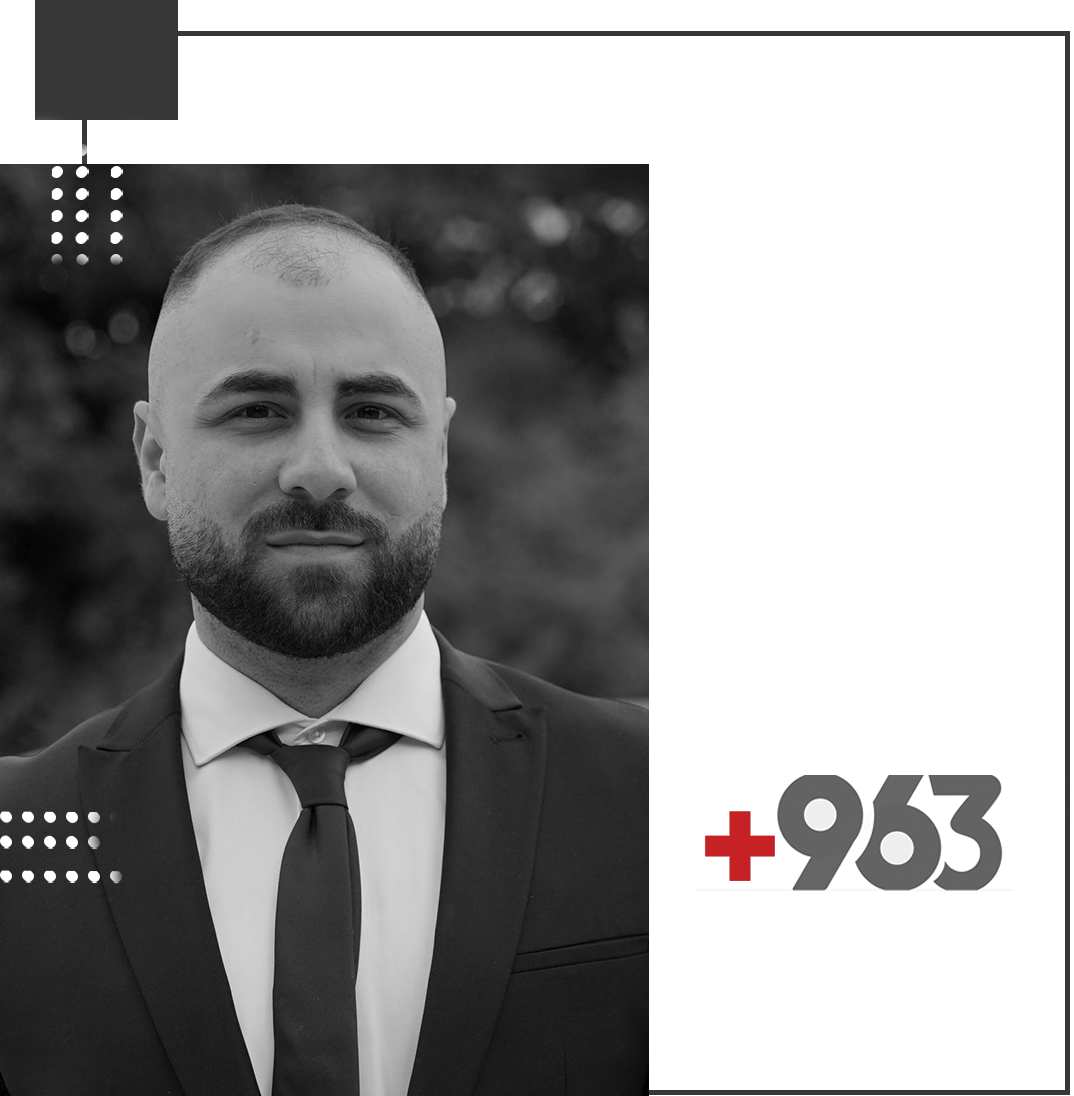
Dr. Samir Altaqi, a researcher at the Middle East Institute in Washington, emphasizes the idea that Syrian hope for tomorrow is tied to the issue of transitional justice, which has not yet been transformed into an actual national project, as he says in an interview with +963. He further warns in strong terms against leaving this file to the logic of the so-called right to blood and mutual revenge, as this threatens to return the country to open internal conflict. In his view, there can be no national reconciliation without official acknowledgment of massacres and accountability for those who ordered and carried them out, whether from figures of the former regime or from factions that still exist. Otherwise, ignoring the realization of transitional justice remains an ember beneath the ashes, warning of a delayed explosion similar to what happened in Iraq.
In this extended interview, Altaqi addresses the structural, legal, and political challenges that obstruct the path of accountability, foremost among them the absence of a firmly established independent judicial structure not subject to the dominance of a command based legal framework, and the privileging of ideological discourse over the concept of national loyalty.
Here is the text of the interview:
How do you view the file of transitional justice in Syria one year after the fall of the ousted regime?
Unfortunately, I can say that transitional justice in Syria has been suspended since the moment of the revolution’s victory and the fall of the regime. There were serious attempts by high level international judicial bodies that sought to help lay the foundations for a Syrian transitional justice experience designed by Syrian national sovereignty. However, this proposal was not accepted. After the new massacres on the coast and in Jabal al-Druze, the absence of any clear formula for transitional justice continues, which keeps wounds open and prevents the achievement of genuine national reconciliation. Worse still is leaving the handling of this complex file to what is called the right to blood, meaning the logic of revenge and counter revenge. This is a dangerous path that returns Syria to the furnace of internal conflict. Global experiences have also proven that the logic of domination and force is naive, and that ignoring the achievement of transitional justice exposes society itself to the risk of severe fragmentation.
In your opinion, what obstructs the achievement of transitional justice?
There is a clear absence of a historically rooted legal and institutional structure. It is true that the Court of Cassation has been partially revived, but those who dominate the judiciary today are command based religious figures who do not rely on civil or criminal law. Instead, authority lies with graduates of the Sharia faculty in Idlib, who practice judicial functions outside Syrian judicial traditions. While those traditions were indeed affected by corruption, that corruption originally served as a tool used by the defunct authority to suppress upright judges. The assumption by Sharia graduates today of a central role in judicial work alters the entire course of the judicial process, not only in matters of people’s rights, but also in the neutrality of the judiciary, its tools, and its methods of litigation. This neutrality is what guarantees the accused the right to be presumed innocent until proven guilty. This strongly affects the principles of transitional justice in particular, raising major questions about the ability of the current judiciary to assume this historic role.
What challenges face the political scene in Syria at the present time?
First, it must be acknowledged that Syria’s liberation from the defunct regime is a great victory for its people. However, it left behind a fragmented state with no army and widespread administrative and judicial collapse. Unfortunately, the transitional government has so far failed to integrate what remains of the Syrian bureaucracy into a comprehensive national project. The pretext of collective corruption is refuted by the experiences of all societies emerging from internal wars. Although Syria today has entered a completely different international alliance from the previous context that used the country as a proxy battlefield, the core mission of the transitional government should have been clear from the first moment, namely the achievement of transitional justice, in addition to securing civil peace on a negotiated basis, without returning to the logic of internal fighting.
What about foreign fighters in the file of transitional justice?
There are elements within the current Syrian military formations, including foreign officers and fighters who entered the country with jihadist backgrounds and did not change their ideological agendas. They view sectarian fanaticism as a tool to strengthen loyalty to their leaderships, which completely contradicts the concept of the national state. If we look at the military curricula and religious discourses delivered within some army units, we find that they are based on ideological mobilization that does not allow for national reconciliation and does not entrench loyalty to the homeland as a supreme value above ideological or sectarian affiliations.
In my view, the issue here is not a Sunni Shia sectarian divide. Historically, Syria has had an open and civilized Sunni majority that does not agree with extremist jihadist propositions. Rather, it is about extremist intellectual choices attempting to dominate the levers of the state.
Can the prosecution of those involved in the coastal events be considered a step completing the required legislative environment?
According to assessments by broad circles, including international bodies, the judicial mechanisms used in the coastal file were neither sufficient nor up to the level of the desired judiciary, even by transitional standards. They did not focus on acknowledgment of responsibility as much as they turned toward procedural measures. Moreover, the authorities did not officially recognize the massacres on the coast and in Jabal al-Druze, despite the fact that the perpetrators were organized and armed within clear operations, which makes the government responsible for their actions, or at the very least obligated to restrain and hold them accountable.
In reality, the trials did not address core issues such as the presence of foreign fighters, the continuation of armed factions, and the absence of building an independent national army, especially given the reliance of military sectors on external training and management.
How can transitional justice move in the right direction?
There is an important matter that the path of transitional justice must include the criminals of the defunct regime. No distinction can be made between one crime and another. All those who harmed Syrian society must be subjected to fair and transparent trials. Transitional justice does not mean revenge. It begins with acknowledgment, followed by legal accountability for the killers and those who issued orders and supervised crimes, whether they belong to the forces of the past or the forces of the present. This is the only path to building a real state that provides reassurance and opens the door to investment and stability. Ignoring this leads to the explosion of deferred crises, as happened in Iraq, where conditions remained controlled as long as American forces were present, then a devastating wave of violence erupted after their withdrawal, whose social effects still persist today despite political developments. The belief that matters are under control is an incomplete reading of history and a superficial understanding of the roots of conflict.
Compared to global experiences, which model today can achieve civil peace in Syria?
The Syrian people live in a state of daily anticipation of events, and this is a fundamental problem. Economic and political fears connected to the structure of the state and the spread of corruption and bribery are significant, which necessitates reconsidering the model of the state and the current constitutional declaration.
Based on an analysis of thirty six civil wars around the world after the Second World War, no civil peace was achieved in any state that adopted a presidential system, while parliamentary systems or various forms of administrative decentralization provided essential and effective conditions for recovery.
I am not saying here that Syria must move toward federalism. This is a matter for Syrians themselves to decide through a peaceful negotiated process that aligns with their national aspirations.











