


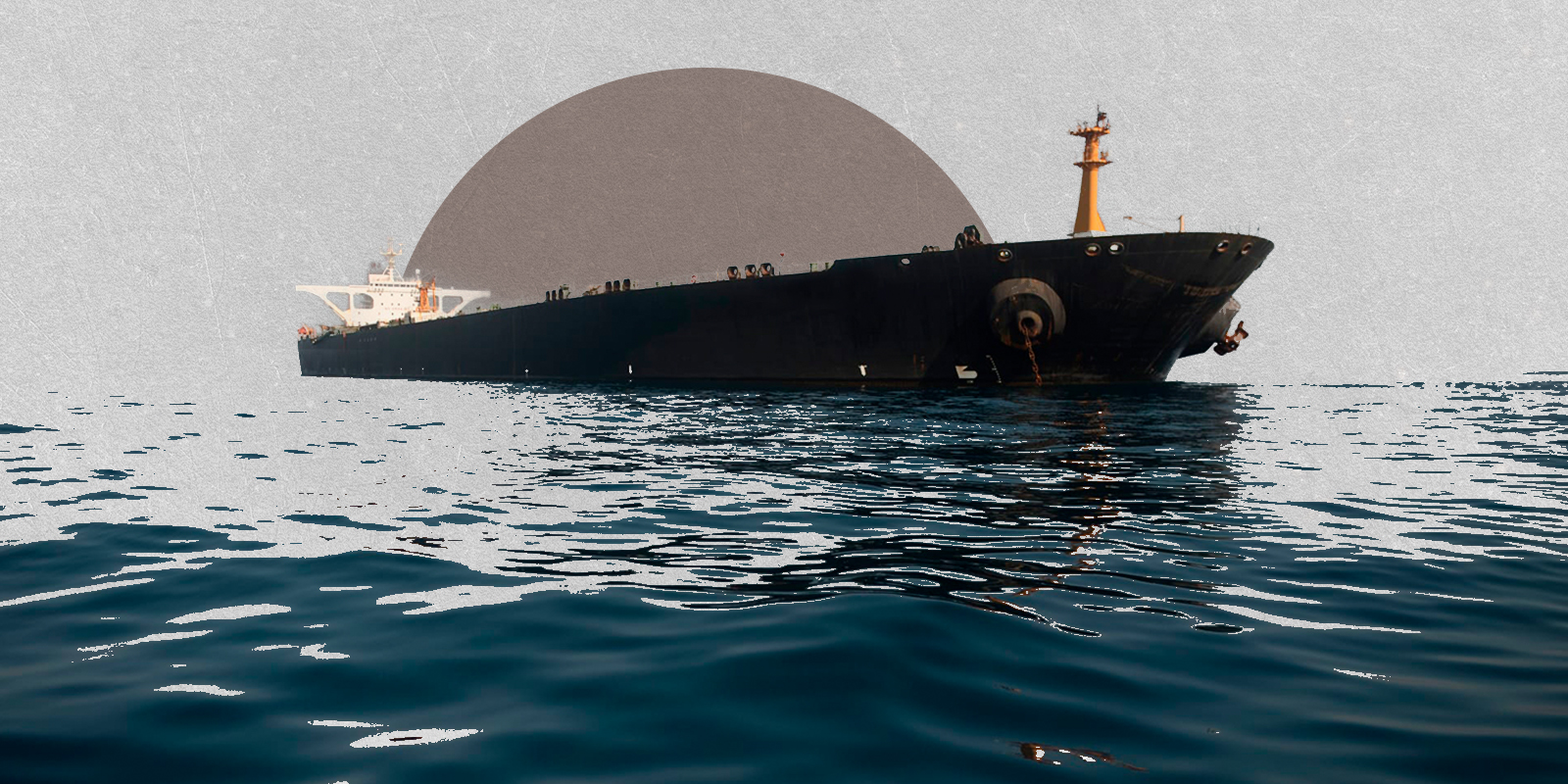
In a move described as political as much as economic, the meeting between Damascus and one of the largest American energy companies appeared to signal a deeper shift in international approaches toward Syria. Major companies do not operate in post-conflict environments without direct political cover, and energy files are never opened apart from geopolitical calculations. The meeting, according to intersecting interpretations, was not merely a technical discussion on oil and gas. It was a message about the beginning of a gradual dismantling of isolation and a wager on the economy as a gateway for international repositioning, with sanctions remaining tied to a political decision and the energy sector serving as a platform to test a new relationship that may redefine Syria’s place on the Eastern Mediterranean map.
The Envoy Before the Investor
Political analyst Najm al-Abdullah argues that what makes this meeting a pivotal event is not only the presence of Chevron, but the fact that American envoy Thomas Barrack was seated to the right of President al-Sharaa. In economic diplomacy, American companies of this scale never move in conflict zones or sanctioned states without a bright green light from the White House.
Al-Abdullah tells +963 that the participation of Thomas Barrack reflects Washington’s commitment to maintaining its influence in the Eastern Mediterranean, indicating that Chevron’s entry represents an American repositioning and an implicit suspension of sanctions, with the beginning of exceptions for the energy sector. It also sends a reassurance to markets that Damascus is becoming an investable environment. He stresses that the file is being handled as a sovereign matter, not a commercial one, and that the government is wagering on the economy to break political isolation by creating facts on the ground that generate their own international momentum and develop a lobbying force in Washington in favor of normalization.
He adds that communications began two months ago as part of the competition over Eastern Mediterranean gas and that the meeting served as a rehearsal for Syria’s return to the international map through an American gateway. This comes despite remaining legal hurdles linked to the Caesar Act and the potential for geopolitical complications with Russia, which views the coast as a strategic zone of influence.
Why Chevron, and Why the Coast?
Choosing Chevron and focusing on the Syrian coastline carries important strategic dimensions, says engineer Eyad al-Alwan, former director at the Syrian Ministry of Oil, in statements to +963.
He explains that selecting Chevron in particular was not arbitrary. The company, which exited the Syrian market in 2004, has an extensive portfolio of projects across the Middle East and the Eastern Mediterranean, especially in Israel, Egypt, and Cyprus. Its potential return to the Syrian coast reflects strategic interest in Syria’s offshore wealth, believed to hold significant untapped natural gas reserves that have remained undeveloped due to sanctions and internal conflict.
The United States, he notes, is fully aware of the scale of gas reserves in the Eastern Mediterranean. An American company entering this sector in Syria means securing a seat for Washington in the region’s future energy market and preventing Russia or China from monopolizing Syrian resources, which require advanced technology and capital. Syria’s oil sector suffers from severely degraded infrastructure, and Chevron brings not only capital but deepwater drilling technology unavailable to local companies or to Syria’s traditional allies.
Al-Alwan points out that the meeting comes as Damascus seeks to restructure an energy sector heavily damaged in recent years, amid declining local production and a growing import bill. Official estimates indicate that current production does not exceed seventy thousand barrels per day, compared to more than four hundred fifty thousand before 2011. The Syrian government hopes to attract foreign investment to restart gas and oil fields, leveraging the relative stability of the coastal region and its existing infrastructure, which can be upgraded at lower cost than building new facilities.
Geologically, the Syrian coastline lies within the Eastern Mediterranean gas-rich belt, where American and European companies already operate in Israeli, Cypriot, and Egyptian waters. Available information suggests that Syria’s offshore reserves may reach two hundred fifty billion cubic meters of gas, making any exploration project of strategic importance to major energy companies.
Investment Risks in Post-Conflict Zones
International relations expert Youssef al-Khayyat tells +963 that Chevron will begin with very small steps such as surveying, studying, and evaluating, and that full entry is unlikely unless the political file stabilizes. Chevron has raised questions about the legal and regulatory framework, since any agreement requires exemptions from American sanctions. This is legally possible but ultimately a political decision from Washington. Nothing is impossible when political will exists, yet American companies will not move without a full green light. The presence of the American envoy was the clearest indication that the issue extends beyond technical considerations and that the energy file is a platform for building a new relationship between the two sides. According to al-Khayyat, Washington selected the least sensitive door to reopen a channel with Damascus. The meeting between Damascus and Chevron is neither a routine technical encounter nor a fleeting economic event. It is a pivotal moment signaling a shift in regional dynamics and opening the door to scenarios that were once considered impossible. On the other hand, Syrian economist Husam Arnous tells +963 that any cooperation with an American company the size of Chevron will restore confidence among global firms. It represents both a political and economic breakthrough. Chevron never enters a region without deep political and commercial assessment, and its presence indicates it sees real potential along the Syrian coast. The company is demanding transparency and independent arbitration guarantees. Any agreement will pave the way for broader economic reforms, possibly through a joint committee to review legislation.
As for potential benefits, Arnous cites significantly higher electricity output, reduced import costs for petroleum products, new fiscal space for the treasury, job creation on the coast, and improved public services. He concludes: “The rigs may not arrive tomorrow, but the political economic moment that enabled this meeting is what will shape the future of the Syrian coast. He continues with the most prominent American commentary on the meeting between Damascus and Chevron circulating online: John MacPherson, former adviser at the US Department of Energy, said: “Chevron does not test the waters for no reason. Its mere approval to attend a meeting at this level means the company sees real commercial potential, but the final decision will depend on Syria’s ability to provide strong sovereign guarantees and investment protection.” Allison Parker, Middle East affairs specialist at the Brookings Institution, said: “The meeting reflects a shift in American political language toward Damascus. Washington does not wish to lose the Eastern Mediterranean to Russia and Turkey, and the energy file may be the entry point for a quiet American return.”
David Rowling, a geological analyst at an American exploration services company, said: “The key point is that the Syrian coast lies within a geological belt stretching from the Nile Delta to Cyprus and Lebanon. Prospects are medium to high, but it is difficult to estimate numbers without modern three dimensional surveys.”
Catherine Miller, an energy law expert at Georgetown University, said: “Any contract between the Syrian government and Chevron will require a complex pathway to bypass sanctions. Legally, it is not impossible, but it requires a clear political decision from the White House.”











