


In the period following the fall of the Syrian regime, the country appears to be entering an extremely complex political and geopolitical period, embodied in the overlap of regional influence struggles with the multifaceted challenges inside Syria. The general scene suggests that Syria has become an open arena for competition among regional powers that possess interests that are at times conflicting and at times intertwined, within a turbulent environment where energy corridors intersect with social divisions.
Various analyses rest on a central idea that Syria today is no longer merely a state emerging from a long conflict, but has transformed into a strategic anchor point attracting the attention of major regional powers, each according to its own political, economic and security calculations. The country’s sensitive geographic location, its potential resources in oil and gas, and its traditional role in energy corridors between East and West, are all factors that make Syria a center of a power struggle that extends beyond its immediate borders.
At the same time, an internal dimension emerges that is no less dangerous than the external competition, as the country suffers from the legacy of sectarian divisions and the daily practices that have accompanied them, leaving a deep impact on the Syrian social fabric.
This comes at a delicate historical moment in which the interim government faces a fateful test related to its ability to overcome sectarianism and build a fair relationship with the various components of society. The internal challenge lies not only in rebuilding state institutions, but also in containing the multiple militias and factions that possess different visions for the country’s future and whose calculations are at times tied to sectarian interests or fears.
This internal reality directly affects Syria’s ability to benefit from its strategic position, protect its resources or shape its regional role away from external influences.
Thus it becomes clear that Syria stands at the intersection of a regional struggle over influence and wealth and an internal struggle over the identity of the state and the nature of its social and political system. While regional powers seek to strengthen their presence in Syrian geography, whether through security influence or energy projects or the formation of zones of control, the country faces another deeper threat concerning the possibility of sliding into further division if the roots of the sectarian problem are not addressed.
Therefore the future of Syria is largely dependent on its ability to overcome internal tensions and achieve a minimum level of national cohesion, enabling it to avoid scenarios of fragmentation and division and allowing it once again to manage its vital position and resources in a way that preserves the independence of its decision making and prevents regional powers from exploiting its fragility. In this manner, a comprehensive framework emerges for understanding the nature of the current phase in Syria, where geopolitical considerations and internal social challenges come together to shape a future open to multiple possibilities.
Regional competition and the struggle over resources
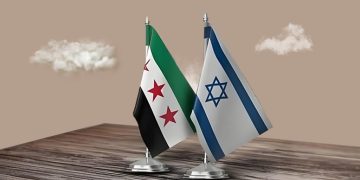
Dr. Akram Hossam, President of the Peace Center for Strategic Studies in Cairo, tells +963 that about a year after the fall of Bashar al Assad’s regime, Syria has become an arena of competition between two new regional power centers, Turkey and Israel. He believes that the Turkish and Israeli sides have become the most influential actors shaping the trajectory of events in Syria, whether with respect to internal developments or the broader external impact on Syria’s relations with its neighbors in general and perhaps with the international framework in particular.
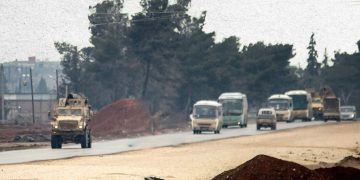
He continues by saying that within this axis of competition there are several dimensions. One pertains to Turkey’s attempt to control or move closer to northern Syria and establish a form of quiet dominance over these areas by continuing demographic engineering and enhancing its security and economic presence there, benefiting from its strong relationship with the current government in Damascus.
Israel, on the other hand, as he explains, focuses on southern Syria and capitalizes on its relations with certain Syrian communities there, such as the Druze and others in Daraa and Sweida. It seeks to expand the geographical area under its influence through the formation of so-called buffer zones and by influencing border lines or disengagement lines that had been defined under the 1974 Disengagement Agreement between Syria and Israel.
Dr. Hossam explains that within this competition lies a less visible axis that has not been clearly apparent to public opinion or to regional and international media, namely a Turkish-Israeli rivalry over Syrian resources, particularly the country’s oil and gas wealth.
Read also: Damascus and Its Neighbors After Assad: Security, Stability and Economic Stakes
Ambitions over energy
He notes that one must not forget that Syria is the only oil producing state among the Levantine countries of the Eastern Mediterranean. Therefore it is a relatively rich state in this regard. It also possesses gas reserves in Eastern Mediterranean waters and is expected to play a role in shaping or influencing the gas equation currently at play in the region, in which Israel and Turkey, alongside Egypt, Greece and Lebanon, constitute essential actors.
He continues that there is competition to reach current and potential areas of oil and gas production in Syria, whether in onshore regions, border areas, Syrian oil fields or even offshore zones. He expects that Israel may fear Turkey entering the ongoing or expected negotiations concerning maritime border demarcation between Syria and its neighboring states, as well as with Lebanon, given Syria’s known influence over certain dynamics in Lebanon for historical, sectarian and political reasons.
He adds that another dimension of this competition concerns Syria’s strategic location, which he describes as the core or axis of discussion. Syria’s current strategic position has long been ideal for energy transit routes running from East to Europe. This was on the table as early as 2004 through a number of regional projects, including the Qatar to Turkey gas pipeline via Syria, a project that at the time faced opposition from the Syrian government.
He explains that these projects have been revived after the fall of the Assad regime, giving Turkey the opportunity to complete or implement three energy transit lines. One of them is the Qatari Turkish project that would transport gas from Saudi Arabia and the Gulf states through Jordan, then Syria, then Turkey. Another project may extend from what is known as the Arab Gas Pipeline, which begins in Egypt and runs through Jordan, Lebanon and Syria. This project operated at one stage and later stalled due to events in Syria. Turkey could contribute to or benefit from it if the current line ends on Turkish territory, enabling Turkey to gain a significant place in the network of energy routes crossing Syrian soil into its own.
He also notes discussion of another project being contemplated by the Turkish government, a direct energy link between Turkey and Syria that would strengthen the Syrian government’s position and reduce its reliance on previous supplies from Iran and other states, reinforcing its internal standing.
Dr. Hossam argues that this inevitably intersects with Israeli interests, which seek to keep Syria weak, fragmented and unable to control its own resources. Moreover, these three Turkish projects, as he explains, directly affect Israel’s prospects of becoming a regional energy hub in the Eastern Mediterranean, including through the “Mid East” project that Israel is currently implementing with Cyprus, Greece and other countries.
He sees clear competition between the two states over energy corridors crossing Syrian territory. In his view, this competition will persist until some feasible political formula is reached between the two.
He says that this scenario is the most likely one, as cooperation between the two most influential regional powers in Syrian affairs has become necessary. Without such cooperation, none of the current projects can be implemented. Syria, Israel and Turkey are all major regional powers.
The United States, as he points out, does not want conflict between Israel and Turkey given its alliances with both, nor does it want conflict on Syrian soil. Therefore it will push toward a cooperative approach and endeavors to find middle ground solutions that allow for shared or partial benefits while preventing these projects from intersecting or clashing.
He explains that this is the essence of the current competition or the prevailing idea regarding the vital corridors in Syria, noting that the final shape of this competition will likely require more time to crystallize.
Internal danger
In contrast, Dr. Ahmed Yasin, an economist based in London, tells +963 that if the interim government fails to overcome sectarianism, treat all components of the Syrian people fairly and control the armed militias and factions, each of which has its own strategy and its own way of dealing with minorities, the result, as he warns, will be a calamity that will affect Syria and the entire world.
He adds that the absence of any viable strategy will be the inevitable outcome if this government cannot overcome sectarianism, noting that sectarianism is practiced today in a daily and alarming manner. He refers to recent incidents, asking how a state can rise under such circumstances.
Dr. Yasin continues by explaining that there are minority communities whose members die simply because they belong to a certain sect, considering this the primary and decisive point. If the government fails to address this imbalance, then disaster, as he sees it, will befall Syria and may take the form of a dangerous partition that Israel may directly encourage, according to his account.
He notes that he deliberately goes beyond the economic aspect and everything else in his warnings, stressing that the absolute priority is for the government to overcome sectarianism and gain full support from all components of the Syrian people. He concludes by saying that without achieving this, there will be no real hope of emerging from the crisis.