

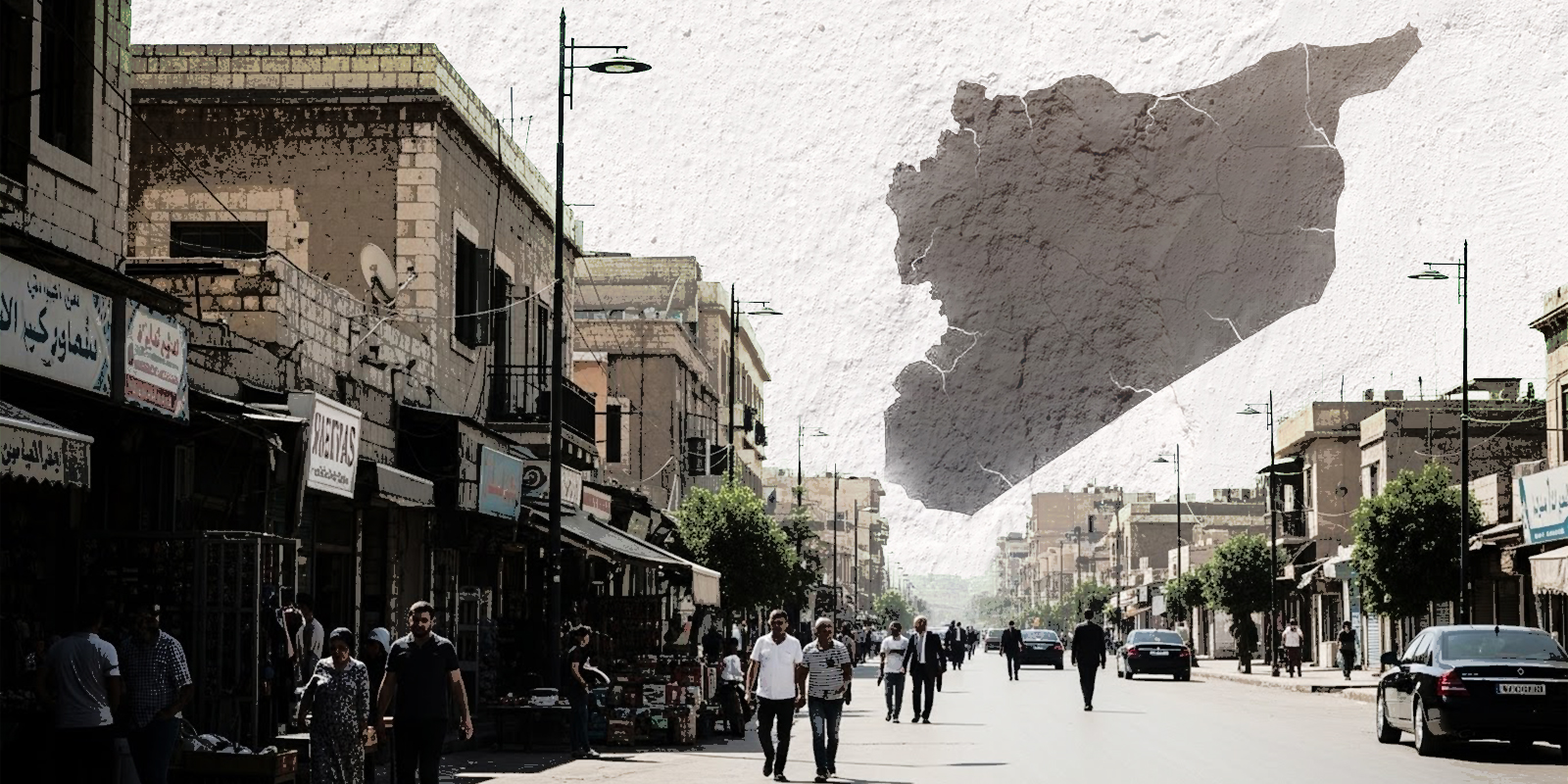
Nearly a year ago, specifically on November 26, 2025, the Syrian scene tended toward calm with the exception of some limited skirmishes. International Resolution 2254 was virtually frozen, and the Geneva and Astana tracks were halted, while lines of control remained almost unchanged. The field map showed a nearly stable “de-escalation” between the deposed regime on one side and the Salvation Government affiliated with Hay’at Tahrir al-Sham (HTS) at the time in Idlib and its countryside on the other, in addition to areas controlled by the Interim Government and the Coalition backed by Turkey in northern Aleppo countryside. In the east, the Syrian Democratic Forces maintained their authority east of the Euphrates, while the factions in the al-Tanf area remained within a framework of cooperation with the International Coalition.
In the south, the factions of Daraa were in a truce with the regime under Russian guarantee, alongside a popular movement in Sweida. Then suddenly, something most observers had not expected occurred: the “Deterring Aggression” offensive began on November 27, 2024, led by Hay’at Tahrir al-Sham (HTS), exploiting Hamas’s October Seven 2023 operation against Israel, which became the final straw that broke the camel’s back. It triggered major shifts across the region and carried the battle from Gaza to Lebanon, Syria, Iran, Yemen, and possibly Iraq in the future.
Amid these dynamics, it was clear that Israel, the United States, Europe, the Gulf states, and to some extent Turkey sought to deliver a decisive blow to Iran and its militias spread across the region. The defunct Syrian regime was granted, under Russian guarantees, an opportunity to return to the “Arab fold” and rejoin the Western American-Arab axis in exchange for expelling Iran from Syria, severing the corridor between Tehran and Beirut, and halting the export of Captagon to the Gulf. Yet the regime failed to meet those international conditions, prompting the Russians to abandon it under American-Israeli pressure. Washington then gave Israel free rein in the region to strike Tehran and destroy Hezbollah’s infrastructure in Lebanon, assassinating almost all of its top-tier leadership, foremost among them Hassan Nasrallah on September 27, 2024.
At that point, serious consideration began regarding the necessity of changing the Syrian regime through a military operation by Hay’at Tahrir al-Sham (HTS), under Turkish guarantee, advancing toward Damascus and toppling the regime.
Syrians and the world were stunned by the swift collapse of regime forces and the weakness of its fronts in Aleppo, Hama, and Homs, amid conspicuous Russian silence and no attempt to defend the regime after fighters of the “Deterring Aggression” operation entered Aleppo on December one, 2024. As chaos escalated, the tyrant fled to Moscow, leaving behind a country burdened with war and devastation.
At that decisive moment, the “Deterring Aggression” operations room, led by al-Shar’a, seized the Republican Palace and assumed power on December eight, 2024, one week after the liberation of Aleppo, supported by allied factions, backed by Arab and Turkish states, with explicit American approval and undisclosed Israeli endorsement.
These powers viewed the fall of the regime as the end of an Iranian ally that had endured for over half a century and served as a vital artery for Tehran’s influence stretching from Iran to Beirut through Iraq. It also marked the beginning of a new phase that could open the door to an authority hostile to Iran and Hezbollah, one that would halt Captagon smuggling to the Gulf and redraw Syria’s contours after many years of suffering.
A transitional authority with absolute powers
After Bashar al-Assad fled and his regime collapsed on December eight, 2024, the transitional president Ahmad al-Shar’a, who appointed himself ruler with Turkish support and that of its factions, had the opportunity to unite Syrians around a consensual constitution and take steps toward a new era long hoped for by Syrians of all ethnic, sectarian, and religious components without external interference. Yet he favored external relations and satisfying certain states at the expense of Syria’s authentic constituencies. He failed to manage internal affairs by convening a national dialogue conference from which he excluded Kurds, Druze, and Alawites in the south and the coast. He also issued a unilateral constitutional declaration that deepened the crisis, expanded his presidential powers, and transformed him into an absolute ruler beyond accountability. He then formed a one-color government devoid of political diversity or real representation for the Syrian people’s components, followed by what he called parliamentary elections through appointments and symbolic voting that mirrored the government and the constitutional declaration.
Turkish, Qatari, and Saudi support, combined with Trump’s promises to lift sanctions fully, and the glorification by tribal constituencies, along with his appointment of an adviser for tribal affairs to incite them against other Syrian components, did not prevent his repeated failures in the Syrian coast and in Sweida. Forces associated with tribes and certain military and security factions committed massacres that claimed the lives of hundreds of innocent people. His supporters called for tribal mobilization indirectly against Druze and Kurds, especially during celebrations marking the beginning of the “Deterrence of Aggression” operation, where sectarian slogans were chanted and some participants raised images insulting Druze and Kurds. This shook his image as a guarantor of security, stability, and the protection of minorities and diversity in Syria, deepening societal fragmentation.
A crossroads: between the Turkish project and the Israeli project
Israel, emboldened by its victories over Iran, Hezbollah, and Hamas and backed by Republican Donald Trump, is seeking major concessions from the Syrian transitional authorities, especially regarding the Golan, borders, demilitarized zones in southern Syria, and arms restrictions to guarantee its security.
Israel intervened to defend the Druze in Sweida, and its messages extended to strikes on the General Staff and military sites in central Syria.
On the other hand, al-Sharaa faces the Turkish project, which rests on supporting his authority under conditions aligned with Turkey’s strategic interests and its desire to eliminate fears of a strong Kurdish presence on its borders. Turkey is managing this issue with Abdullah Öcalan, the leader of the Kurdistan Workers’ Party, while also aiming for a unified Syria under the Turkish project to counter Israel and constrain Netanyahu’s military agenda. Caught between these two fires, Syria stumbles, and its crises remain unresolved.
Both projects carry opportunities and risks, but neither offers a clear answer to the essential question: How can a unified Syrian state be built that embraces all its ethnic, religious, and sectarian components, foremost among them the Kurdish people who constitute a fundamental pillar of the country’s future?
Toward a comprehensive solution: a federal democratic Syria
For a country as diverse in ethnicities, religions, and sects as Syria, the solution does not lie in changing names or replacing governments, but in formulating a new national project built on a consensual constitution that guarantees separation of powers and rotation of authority, limits presidential powers, and grants real authority to parliament and the judiciary. It should enshrine political decentralization and redesign provinces and administrative regions in a way that reflects the will and convictions of local communities.
Recognizing Kurdish rights:
Building Syria’s future requires constitutional recognition of the Kurdish national presence and granting Kurds their cultural, political, and administrative rights. Experience has shown that marginalizing Kurds or treating them as a security file invites foreign intervention and keeps Syria entrapped in endless conflicts. The same applies to granting Druze and Alawites in the coast the right to determine their status within Syrian geography.
The optimal solution is a federal or expanded decentralized system with new administrative divisions ensuring genuine participation for all Syrian components in managing their regions while remaining part of the Syrian state. A national army must also be rebuilt from all Syrian components, affirming that Syria’s future is not a state for one sect or one ethnicity, but a state of citizenship.
Fourteen years since the Syrian revolution should serve as a profound moment of reflection. International polarization and regional conflicts may shape the broader environment, but Syria’s fate ultimately depends on the ability of the transitional government and representatives of all genuine Syrian components to draft a new social contract.
The solution does not lie in relying solely on international legitimacy, but in building a democratic federal state that guarantees equal rights for all Syrians, especially Kurds who hold the key to balance and stability. Only then can Syria emerge from the cycle of proxy wars to become an active player in its region rather than an arena for score-settling.
The opinions expressed in this article do not necessarily reflect the views of +963.











