

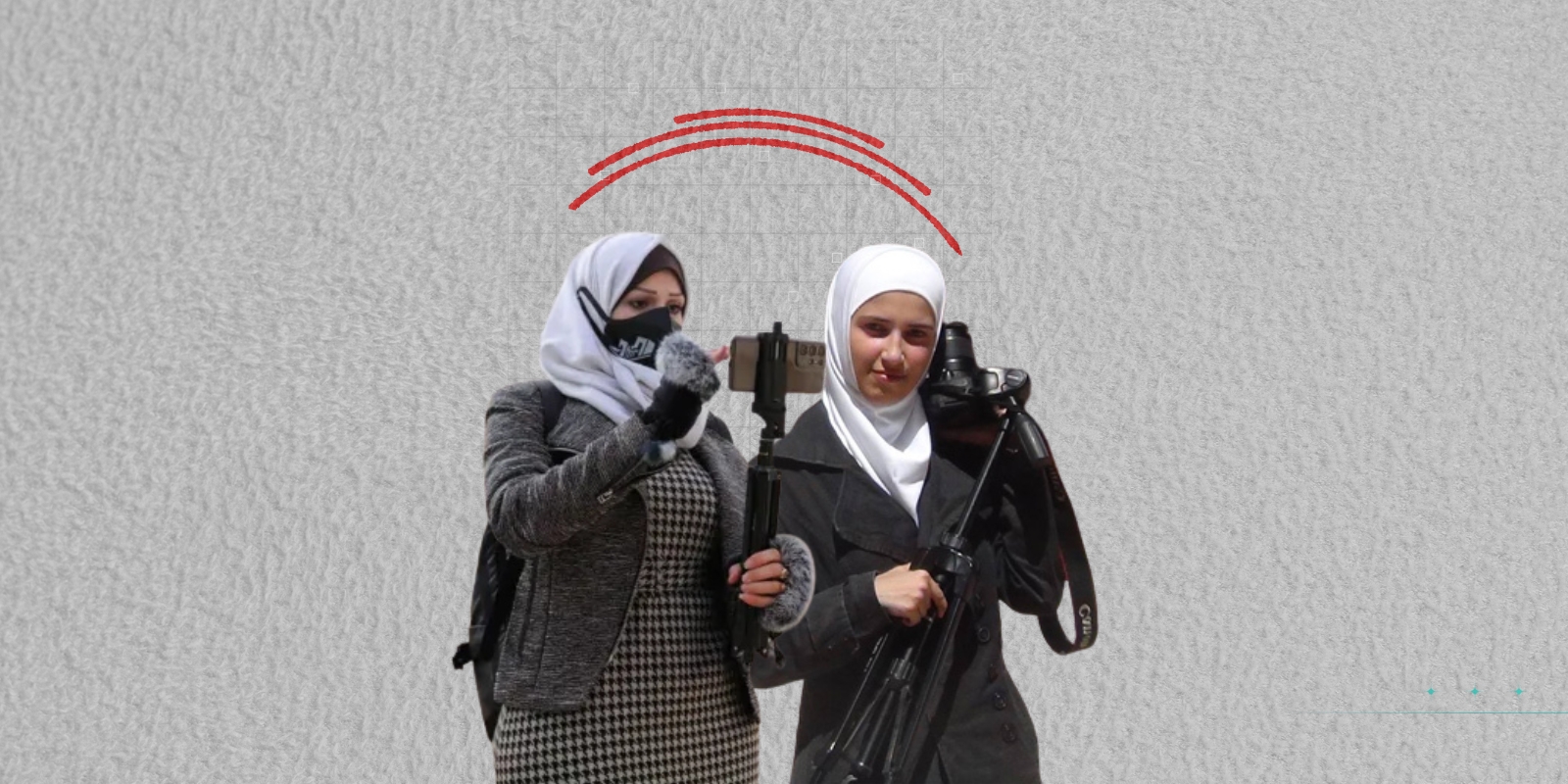
“The road was not paved with roses,” says journalist Narjis Suleiman, describing the journey of Syrian women in the media, a path marked by both challenge and persistence. At the beginning of the twentieth century, Syria was undergoing significant political and social transformation, and women were facing a society dominated by men.
Despite the heavy constraints surrounding them at the time, the determination of Syrian women to rise and break free from those restrictions proved stronger than every obstacle.
During that period, women’s journalism began to emerge in Syria, closely linked to the literary and social movements that were taking shape within literary salons. These salons became the launch point for women to assert their presence in cultural life.
The literary salons served as true incubators of culture and thought, where prominent intellectuals and poets gathered. They played a pivotal role in spreading cultural values that strengthened women’s ability to express themselves. Pioneers such as Mary Ajami and Nazik al-Abid illuminated the path for women’s journalism by launching magazines that boldly addressed women’s issues and publishing articles on social, cultural, and historical topics. Despite the difficult circumstances surrounding Syrian women, including social dominance and political censorship, these publications served as free platforms through which women proved their strength and ability to influence society.
Over the past decades, Syrian women have witnessed remarkable progress in the media sector. They have engaged across all its forms, visual, audio, print, and digital, thanks to social and educational transformations that encouraged them to enter a field once monopolized by men.
Read also: Syrian Women and the “Black Apps”
Journalist Narjis Suleiman, who has worked in several media outlets and agencies inside Syria, stated to +963 that Syrian women have made significant advances in this field. She emphasized, however, that “the road was not paved with roses,” as many challenges and difficulties have affected women’s work in Syrian media.
Narjis highlights that among these challenges are the pressures and persecution faced by journalists and media professionals in Syria, making the country one of the most dangerous places in the world for journalists.
She also points out that gender discrimination persists in some media institutions, where women still struggle to obtain equal opportunities with men.
Furthermore, Narjis notes that social and cultural pressures continue to limit women’s freedom of expression, affecting their ability to work freely in the field. The lack of institutional support and professional training for women in media has also hindered their development and exposed them to additional challenges in their careers.
For her part, journalist Maha Shahin told +963 that social media platforms have played a major role in empowering Syrian women. They have provided a space where women can freely express their social, political, and cultural concerns. Through these platforms, Syrian women have reshaped their public image, showcased their talents, and made their voices heard without constraints. This visibility has encouraged the rise of activists across various fields, including humanitarian work, journalism, and social engagement.
Maha adds that women’s involvement in journalism allows them to voice their issues, raise awareness of their rights, and strengthen their social, political, and economic roles. Through articles, investigations, and interviews, women journalists address essential topics such as equality, domestic violence, education, and participation in public life. Women’s journalism also contributes to sharing success stories of women across different fields, improving the public perception of women in society.
Maha believes that women’s journalism can play an influential role in shaping policies and laws related to women, family, and society, such as personal status or labor laws. Despite the major challenges facing media work in Syria, she foresees a promising future for Syrian women in media, driven by the development of media institutions and the growing opportunities provided by digital platforms.
Despite all the obstacles faced by female journalists in Syria, Syrian women have proven their influential presence in the media. They have effectively used communication platforms to amplify their voices, participate in shaping public opinion, and defend their rights. With the expansion of media outlets, better educational opportunities, and stronger institutional support, Syrian women are steadily moving toward a greater and more influential role in the future of media.