The Kurdistan Workers’ Party (PKK) has entered a new phase in its political path following the announcement of its withdrawal from Turkey to the “Medya Defense Areas” in northern Iraqi Kurdistan. This move comes in implementation of the resolutions adopted at the party’s twelfth congress and with the approval of its leader, Abdullah Öcalan.
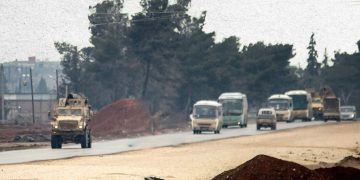
The party explained that the withdrawal will be conducted with precautionary measures in the contact zones to avoid any clashes, considering this step an important stage within a long process aimed at ending the armed conflict that has persisted for over four decades and shifting the focus toward political and democratic engagement.
The withdrawal takes place within the framework of a series of indirect understandings with Turkey. Practical steps from the Turkish side are expected to follow in order to build confidence, including the voluntary disarmament process and the opening of channels for political dialogue. The process has already witnessed symbolic phases, most notably the destruction of part of the party’s weapons in Sulaymaniyah, which was viewed as a sign of the PKK’s commitment to transition toward civil politics.
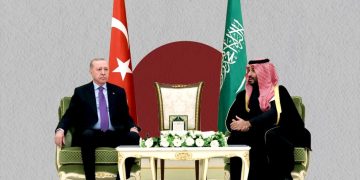
However, this step coincided with the Turkish parliament’s approval of extending the mission of Turkish armed forces in Syria and Iraq for an additional three years, following a proposal by President Recep Tayyip Erdoğan, who reaffirmed that the ongoing “terrorist threats” along Turkey’s southern borders continue to pose a danger to national security.
Dr. Zara Saleh, a researcher in peace and conflict resolution studies in the United Kingdom, stated that “the Turkish parliament’s decision to extend the military mission in Syria and Iraq reflects Ankara’s continued reliance on a military approach instead of pursuing a fundamental solution to the Kurdish question.” He added that this step raises doubts about Ankara’s seriousness in moving forward with the “domestic peace process,” noting that the continued presence of Turkish forces in northern Syria and Iraq constitutes a violation of both countries’ sovereignty.
Kurdish–Turkish Understandings
Saleh believes that the withdrawal of PKK fighters from Turkish territory comes within the context of understandings reached between the party, led by Abdullah Öcalan, and the Turkish government. Kurds refer to this initiative as the “peace project,” while Ankara insists on calling it “a terror-free Turkey,” a terminology that has sparked wide debate and contrasting views within Turkish circles.
In an interview with +963, he explained that the peace process remains in its early stages and will require considerable time to reach a final framework. He clarified that the PKK’s recent withdrawal represents part of this broader effort and that reciprocal steps are expected from the Turkish side. However, the absence of goodwill or initiative from Ankara could bring the situation back to square one. The success of any genuine peace process, he stressed, requires mutual measures from both sides rather than unilateral promises.
The researcher added that the Turkish government has not yet taken practical steps on the ground to demonstrate its desire for a comprehensive solution to the Kurdish issue, despite forming a parliamentary committee tasked with liaising with Öcalan and party representatives. He noted that the Kurdish question in Turkey is not merely a matter of individuals or organizations, but a national issue rooted in the history preceding the establishment of the Turkish Republic. The true solution, he argued, begins with constitutional recognition of the Kurdish people and guarantees for their political and civil rights.
Positive Impact on Iraq
Dr. Zara Saleh pointed out that any potential agreement between the PKK and the Turkish government would positively affect the situation in Iraq, particularly given the fragile sovereignty and the multiplicity of regional interventions from both Iran and Turkey. He added that Ankara uses the pretext of “fighting terrorism” to justify the presence of its military bases within Iraqi territory. A final settlement, he said, would give Baghdad an opportunity to demand the withdrawal of Turkish forces from northern Iraq.
He continued that the failure of peace negotiations or Turkey’s retreat from its commitments would complicate the political and security landscape in both Iraq and Turkey, especially with PKK fighters retreating to the Qandil Mountains in Iraqi Kurdistan. The resumption of hostilities in these areas would further undermine security and deepen the region’s political and economic crises.
He affirmed that the success of the peace project would open the door to wide economic and political stability in the region and positively influence the regional development project that is planned to extend from southern Iraq toward Turkey and Europe. This would improve bilateral relations and help resolve the water disputes over the Tigris and Euphrates rivers.
Saleh also believes that resolving the Kurdish issue in Turkey would directly impact the situation in Syria and relations between the Kurds and the Syrian interim government. Ankara, he said, has long used its influence over Damascus to obstruct any genuine dialogue or federal project in northern and eastern Syria. A fair and comprehensive settlement would mark a historical turning point toward lasting stability in the Middle East, provided it is radical and founded on mutual recognition of peoples’ rights to freedom and dignity.
Iraqi Concerns
These developments, however, have raised concerns within the Iraqi government regarding their impact on border security and the prevention of foreign interference, especially with the return of some Iraqi fighters who may take part in monitoring the implementation of the agreement and ensuring stability in border regions.
The Iraqi parliamentary committee on foreign relations warned of the risks posed by the PKK’s withdrawal toward the Kurdistan Region and sent a request to Prime Minister Mohammed Shia’ al-Sudani for clarification on the implications of this move.
Sabah al-Uqaili, director of the Al-Hadaf Center for Strategic Studies, stated that the PKK issue remains one of the unresolved files that could spark disputes between Iraq and Turkey. He noted that the party’s official announcement of dismantling its military wing and organization has not translated into practice, as its members continue to move from Turkish to Iraqi territory, constituting a “violation” of Iraqi sovereignty and contradicting the constitution, which prohibits the use of Iraqi land to target neighboring states.
Al-Uqaili told +963 that this development requires a clear stance from Iraq’s Ministry of Foreign Affairs and the government to address the spread of PKK elements. He emphasized the need to secure Iraq’s borders and the lands of the Kurdistan Region to prevent them from becoming safe havens for opposition groups.
He added that the presence of Turkish military positions in northern Iraq further complicates the situation, and resolving this issue represents a key step toward strengthening relations between Baghdad and Ankara. He noted that settling the PKK file might be linked to other critical matters, chiefly the water dispute. Reaching an agreement on this issue could contribute to determining Iraq’s fair share of water, especially amid the current scarcity that threatens national security, agriculture, and industry.
“The End of Armed Struggle”
In early July, PKK founder and leader Abdullah Öcalan announced what he described as “the end of the armed struggle against the Turkish state,” calling for a full transition to political activity.
In his first recorded address in decades, the Kurdish leader stated that a broad and responsible parliamentary committee is being formed in Turkey to oversee voluntary disarmament, emphasizing that “this matter is important.”
He explained that the disarmament mechanism would advance the peace process and voluntarily end the armed struggle, ushering in a phase of political and democratic engagement. He noted that “appropriate mechanisms will be determined to ensure rapid and practical implementation.”
Öcalan called for a full transition to democratic politics, stressing that “the PKK’s twelfth congress responded positively to our call, and this is a historic response.”
Earlier, in early March, the PKK’s executive committee issued a statement approving Öcalan’s call for disarmament, declaring: “As the PKK, we fully agree with the essence of the call and commit to fulfilling its requirements and implementing it from our side. However, political and legal conditions must be ensured to guarantee success.”
The committee further stated that “it is evident that a new historical process has begun in Kurdistan and the Middle East in conjunction with this call, one that will significantly influence the development of democratic governance and free life across the world.”