


Shams al-Din Mat’oun
The disorder that swept Syria during the years of conflict did not only destroy neighbourhoods and buildings; it also reached the official records that mark people’s lives and deaths. With the change in state administration after the fall of the regime, complicated legal problems began to appear, especially concerning inaccurately recorded deaths and the resulting disputes over inheritance and property ownership.
Delayed Registrations and Lost Properties
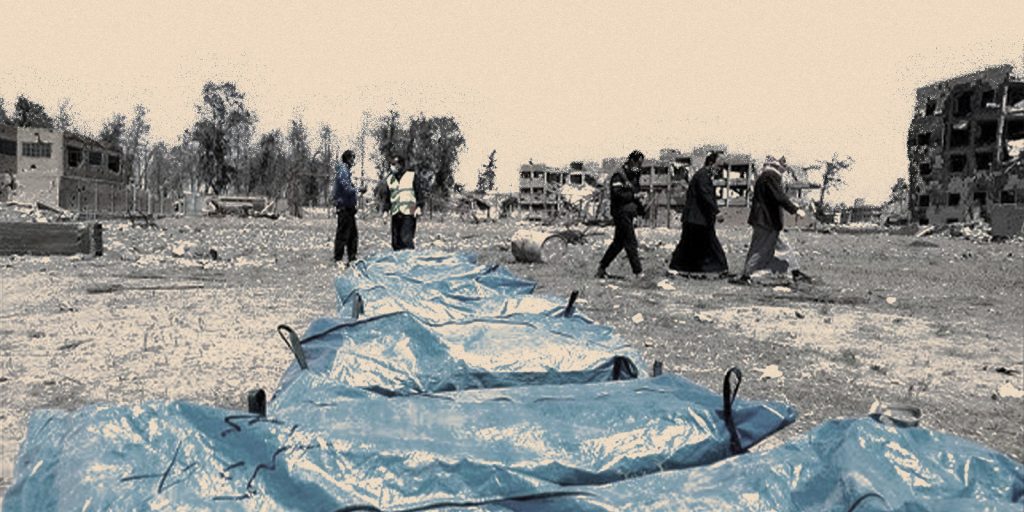
In rural Damascus, where several towns were under siege for years, residents faced great difficulties in registering civil events such as births and deaths.
With government offices closed and communication with official institutions cut off, many people recorded their data only after the sieges ended, or through intermediaries. This led to confusion in the dates of death – sometimes by mistake, and sometimes to complete urgent legal procedures.
Ahmed, who returned from Lebanon to his hometown Daraya, told +963 that when he went to obtain an inheritance certificate for his late father’s property, he was surprised to find the estate registered under his grandfather’s name and divided among many relatives.
“The mistake happened because my father’s death was recorded two months before my grandfather’s,” he said. “In reality, my grandfather died years earlier, but we could not register the death during the siege imposed on us at that time.”
He added that the civil registry official refused to correct the error without an “official death certificate”, which was impossible to obtain at the time. “A lawyer in the same building offered to solve the issue for 400 dollars, without asking for new papers,” Ahmed said.
Read also: Syria’s New Parliament: A Crisis of Legitimacy
Missing Documents and Frozen Inheritance
A similar situation occurred with Maher, 37, from Idlib. During inheritance procedures, he discovered that his father, who had been detained by the regime, was officially recorded as having died four years after his brother’s death.
“They asked me to bring a correct death certificate,” he said. “But my father was in prison, and we never knew when exactly he died, only the date registered by the regime.”
He added: “Now they want witnesses or written consent from the heirs, but our family is scattered across different countries, and each one has his own problems.”
Such mistakes have appeared in many areas once outside regime control, as well as in cases involving the disappeared. Without access to state registration, families relied on oral statements or estimated dates.
Wafaa Kamel, 47, whose husband was killed in the Daraya offensive in 2013, said: “I could not even see my husband before he was buried. He was killed on the front line, and his friends buried him there.”
She explained that she could not register his death at the time, delaying all legal procedures – inheritance, property registration, even family records. Years later, when she tried to correct the documentation, she was told: “You need witnesses and official papers from that time, but there were no hospitals, no local officials, nothing.”
With a quiet voice, she added: “My sons are adults now, all working to survive, but their father’s property is still under their grandfather’s name. According to the records, the grandfather died later, so everything went to someone else. We can’t even prove our right.”
According to a report by the Syrian Network for Human Rights issued at the end of 2024, the regime turned the process of obtaining civil documents from a basic right into a tool of control and blackmail. The report confirms that security forces interfere in issuing or denying death and inheritance documents, often demanding bribes and “security approvals”. This corruption has deprived millions of Syrians of education, healthcare, and property rights.
Land Registry Freeze After the Regime’s Fall
In December 2024, the Ministry of Justice in the interim government announced the suspension of all property registration and transfer procedures in order to review ownership records linked to the former regime.
However, this decision restricted citizens’ ability to prove or transfer ownership legally, even in well-documented cases. It also delayed legal appeals in property cases, leaving thousands of disputes unresolved, particularly in areas affected by displacement or the long absence of property owners.
The situation became even more complicated because inheritance cases require a financial clearance document, which has not been issued since the freeze. Although the ministry resumed property transfers in June 2025, inheritance and property division remain extremely difficult, especially with the loss of many ownership papers. Families are often forced to rely on the testimony of neighbours and local officials to prove their rights.
Read also: Syrian Women in Workforce: Will New Syria Deliver Justice for Its Women?
Complex Legal Procedures
Lawyer Jalal Shuaib told +963 that such problems first appeared in 2018, when some civil institutions began to function again.
“The legal process to fix these mistakes is called a ‘correction of death record’,” he explained. “It requires credible witnesses or official documents to prove the order of deaths, and this process is often slow and costly.”
He added that the main problem lies in the long separation between citizens and official institutions during the war, as well as the lack of coordination between civil registries and religious courts. “These issues need an independent judicial body to review war-affected records and to confirm deaths retroactively using local testimonies and factual evidence,” he said.
These stories reveal the deep chaos left by the war; not only in homes and cities, but in the official records that define people’s very existence: the right to have one’s death recognised, and to pass on what remains of one’s name and property in records that no longer reflect time or justice.











