


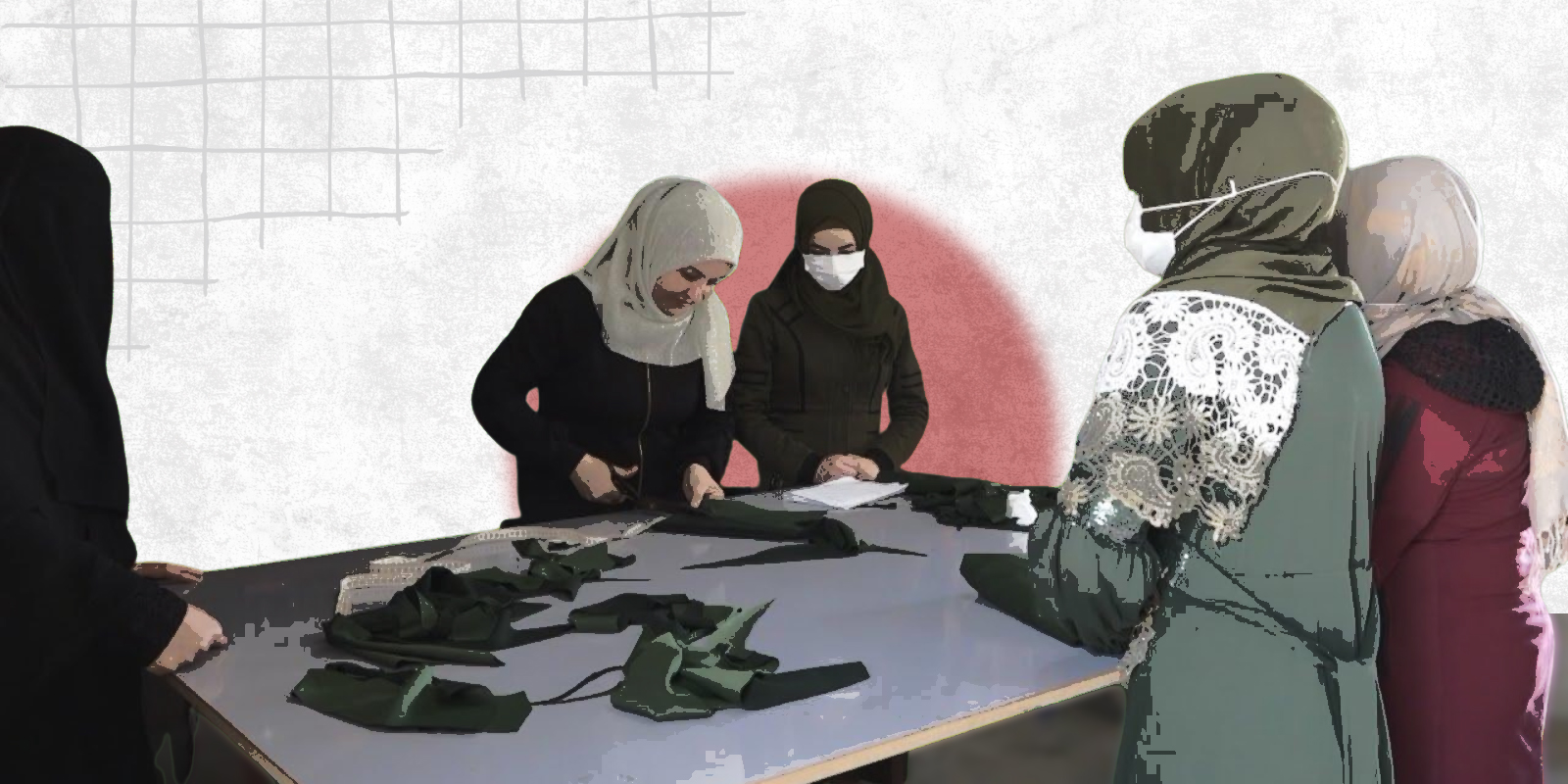
After long years of war that tore Syria apart and reshaped its society, Syrian women have remained present and active at the heart of the national scene. Thousands of women were forced to move from traditional domestic roles to the labour market after losing their breadwinners to killing, detention, or displacement.
Despite their courage and adaptability, Syrian women remain marginalised in the economic sphere due to restrictive laws and entrenched social norms. Today, in the post-Assad era, major questions arise about whether the new government can deliver justice for women; justice that goes beyond merely allowing them to work, extending instead to ensuring fair access to opportunities, protection from discrimination, and true economic empowerment.
Although Syrian labour laws theoretically allowed women to work in all sectors, the reality was very different. Women suffered dual marginalisation, legal and social. Female participation in the labour market stood at only 13% in 2010, according to some estimates, rising to 26% in 2024, a sign of both progress and persistent challenge.
Economists point out that official statistics underestimate reality, as they exclude women working in the informal economy, often for low pay, without contracts, and with no legal protection. To date, no accurate official data exist on female labour participation under the interim Syrian government.
Despite Progress, the Challenges Remain
Syrian human rights activist Mona Ghanem highlights the continued gender gap in the labour market, noting that the new government has yet to adopt a clear strategic vision for women’s economic empowerment.
“There are still no strong indicators of a genuine strategic plan,” she told +963. “We haven’t seen tangible legislative changes or direct support programmes targeting women. The structural and legal challenges remain largely unaddressed.”
Ghanem also points to women’s limited representation in government—there is only one female minister, Hind Kabbawat, Minister of Social Affairs and Labour. Early parliamentary election results show declining female representation, which she attributes to the influence of Islamist political currents on government policy.
“Governments driven by ideological agendas tend to impose conservative views on women’s roles,” Ghanem adds. “They often restrict women to domestic or educational functions and limit their participation in mixed sectors such as media, business, and law. This prevents women from attaining leadership positions and hinders feminist organisations and empowerment initiatives under the pretext of morality or social order.”
While the new constitutional declaration grants women fundamental rights, including political and economic participation, Ghanem stresses: “There are still no effective mechanisms to ensure genuine empowerment for women in the labour market, or to address inequalities in employment, wages, and protection from discrimination.”
An Unequal Labour Market
Economist Rabee Nasser argues that women’s participation in the workforce remains low, particularly in the formal sector, which offers limited access for women except in areas like education and healthcare.
He points to a range of barriers: professional discrimination, unequal pay, lack of job security, weak protection laws, limited career opportunities, inadequate maternity leave and childcare options, and restrictive social norms that discourage women from entering mixed workplaces.
According to Nasser, Syria’s fragile economy and damaged labour market have made women especially vulnerable to informal, unstable jobs without legal protection. During and after the war, many women worked in agriculture, domestic services, cleaning, childcare, small home-based enterprises, handicrafts, online marketing, beauty salons, informal factories, workshops, and the hospitality sector.
However, most of these forms of work are absent from official statistics, leaving a significant gap between the recorded data and the lived reality.
Read also: Syrian Women in the Transitional Phase: Symbolic Presence and Limited Participation
Empowering Women Economically: Lessons from Reality
Despite persistent challenges, Syrian women have achieved notable progress, particularly in flexible and informal sectors. Still, barriers such as professional discrimination, unequal pay, weak legal protections, and limited economic and political opportunities continue to obstruct full empowerment.
Ghanem believes the government continues to treat women’s issues symbolically rather than structurally.
“What’s needed,” she says, “is comprehensive legal reform and encouragement of women’s entrepreneurship, especially in the digital and remote-work sectors, which are growing in Syria. Agriculture and education also hold great potential if proper support and training are provided. Media and education must play a role in changing stereotypes about women.”
Nasser adds that the path forward requires bold legislative reform to guarantee equal pay, protect against unfair dismissal, and expand women’s access to official appointments and leadership positions. He also calls for investment in education and vocational training for women – particularly in conflict-affected areas – for the private sector to adopt flexible, women-friendly policies.
“Even opening public discussion about women’s right to work is a positive step,” Ghanem concludes. “It’s the beginning of real change.”
Two Stories, One Struggle
The Syrian experience can be summarised through two parallel stories of women’s resilience. The first is that of Syrian women during the war – forced to abandon traditional roles for informal, unstable jobs in order to survive, often without legal protection or social support. The second is the story of women in post-Assad Syria – fighting for their economic and political rights under a new government while facing ongoing discrimination, limited representation, and unimplemented laws.
In both contexts, women’s endurance and adaptability stand out. The difference lies in motivation: the first phase was driven by survival; the second, by the pursuit of justice, equality, and lasting empowerment. Both stories underscore one truth: the success of Syria’s new society will depend largely on how far it goes in empowering women and ensuring their equal participation in rebuilding the nation.











