


“Gradual participatory decentralization” serves as a middle-ground solution between rigid centralization and explicit federalism. It is currently being proposed within a Syrian context marked by conflicting zones of control, constitutional vacuum, and locally governed structures that lack formal recognition.
This proposal aspires to define a transitional framework that organizes local administrative and service-related authorities while keeping major sovereign issues under central authority or within jointly representative arrangements.
Politically, this idea derives its feasibility from its potential to provide a practical mechanism for managing Syria’s complex on-the-ground realities until a permanent constitutional settlement is achieved. Yet, its success remains contingent upon three interrelated conditions: acceptance by domestic actors, the availability of constitutional and legal guarantees, and the balance of interests among regional powers whose dealings are shaped more by the identity of the controlling forces than by the proposed administrative form.
Practically, there already exists a de facto alternative model of local governance embodied by the Autonomous Administration and other local entities in northern and eastern Syria. These have established institutions, an “internal constitution,” and local representation mechanisms, but they still lack official state recognition. Any transition toward a “participatory decentralized” model therefore requires a carefully calibrated legal and political arrangement.
Read also: SDF Commander: Preliminary Deal with Damascus on Army Integration
Dimensions and Demands
Gradual participatory decentralization represents an interim political option balancing centralization and federalism. It grants local administrations broader administrative and financial authority without severing their connection to the “state” as a legislative entity. Its aim is to reduce tension and gradually integrate local communities into national institutions. However, this model faces several risks if constitutional and oversight guarantees are absent.
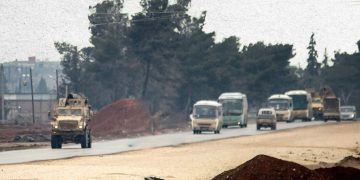
Militarily, integrating the Syrian Democratic Forces (SDF) requires a gradual and consensual approach that ensures stability and prevents clashes, whereas any hasty or coercive process could lead to security fragmentation. Administratively, the absence of constitutional and financial legislation regulating the relationship between the center and local administrations hinders progress, making a precise legal roadmap essential. Socially, divisions, conflict memories, and a lack of trust limit its effectiveness, making its success dependent on reconciliation programs and long-term rights-based and developmental assurances.
Although Damascus and the SDF, under U.S. sponsorship, signed the March 10, 2025 agreement aimed at integrating the SDF into Syrian state institutions including the army, implementation continues to face challenges. General Mazloum Abdi, commander of the SDF, confirmed the existence of “verbal coordination” with Damascus but insisted his forces would not withdraw from Raqqa or Deir ez-Zor. In October 2025, a ceasefire was reached in Aleppo after escalating clashes between the two sides.
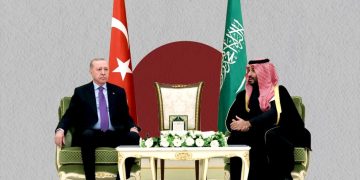
The SDF demands amendments to the constitutional declaration to ensure representation of all Syrian ethnic and religious groups and to enshrine political decentralization, including recognition of the “Autonomous Administration in North and East Syria.” Damascus, meanwhile, insists on national unity and centralized sovereignty while seeking to integrate the SDF within state institutions. Turkey closely monitors developments, emphasizing the need for SDF integration without any foreign or separatist elements in its ranks, according to official statements.
Gradual participatory decentralization could provide a window for building transitional trust between divergent parties if accompanied by a clear constitutional and transitional framework and a transparent timetable for resource distribution and representation. Yet, it offers no permanent guarantees. Without internal, regional, and legal assurances, it may freeze disputes instead of resolving them. Implementing any such model remains fragile, requiring international and regional sponsorship and clear political understandings between Damascus and the SDF, while accommodating the interests of influential regional and global actors.
Implementation Challenges
Alan Berry, a political writer and graduate of the University of Vienna’s Faculty of Political Science, views gradual participatory decentralization as a third option between federalism and centralization within Syria’s current context. “This proposal enjoys a key advantage today: the capacity to manage a transitional phase given the parties’ difficulties in reaching a comprehensive, lasting solution,” he told +963. “It can be understood within a framework where absolute centralization no longer exists, and decentralization applies to administrative, security, and economic matters such as public services, the army, police forces, and budget distribution, while participation pertains to political representation in legislative decision-making.”
However, strategic military expert Brigadier General Jalal al-Abadi told +963 that decentralization “has never been genuinely tested in the Arab world, as it requires mutual trust, a strong sense of national consciousness, and a civic culture far higher than what currently exists among Arabs.”
He added, “This model functions well in the West, clearly seen in the United States, where each region is roughly the size of an entire Arab state. Every entity in the federal system understands its limits and responsibilities within a participatory and decentralized relationship between local and federal governments. Each side knows its rights and duties.” According to him, neither limited nor extensive forms of participation, nor any type of decentralization or political convergence, can succeed in the Arab world. “The only viable solution is a unified central government.”
Diverging Assessments
While al-Abadi insists there is “no need to waste time experimenting with ideas like decentralization or participation, since they will not succeed in Syria or any other Arab country,” Berry counters that “administratively, the legal and constitutional challenges that may face a flexible administrative model allowing temporary decentralization remain significant, especially in the absence of a clear constitutional framework defining local authorities’ powers, weak legislative regulations between the center and peripheries, and conflicting legal systems across different regions.”
Socially, Berry believes that local communities within the Autonomous Administration’s territories are not yet ready to move from wide self-rule to a participatory model with the center. “This solution is currently an emergency measure to halt violence, build trust, and pave the way toward a more sustainable and coherent resolution.”
He notes that the relationship between the center and the peripheries is “at a critical juncture” following the massacres in the coastal region and Sweida and after some central forces suffered military defeats against the SDF. Nevertheless, he remains cautiously optimistic, suggesting that “developing this model into a more stable and transparent framework will require time, effort, and above all, peace, stability, and mutual trust.”
Read also: Marxism Fails to Explain the Syrian Reality
External Influence
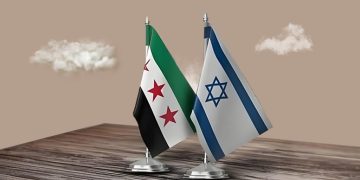
Diplomatically, Berry believes that regional powers, particularly Turkey and Russia, approach any “transitional decentralization” project in northern and eastern Syria through the lens of their interests. “These powers care less about the structure of governance itself and more about who holds power and how their policies intersect with regional agendas.” He explains that Russia no longer sees itself as responsible for all of Syria nor as aligned with one party against another. “Its current role after Assad’s fall, is limited to preserving what remains of its influence, primarily its military foothold. Turkey, meanwhile, is now more involved in Syrian affairs than ever, seeking control over all essential aspects. Yet its ambitions sometimes clash with Israeli and American policies in Syria.”
He concludes by noting that resolving the Kurdish issue within Turkey significantly influences Ankara’s stance toward the SDF. This dynamic makes any “transitional decentralization” project dependent on existing regional and international power balances. “Gradual participatory decentralization may offer a temporary way out of the Syrian crisis, but it still requires broad domestic and regional consensus and solid guarantees to prevent it from evolving into a permanent division within the state and society.”
Gradual Integration
Regarding the idea of integrating the SDF into the Syrian state, al-Abadi said, “The current situation should be accepted temporarily. The SDF can remain as it is now, but should be integrated into the Syrian forces within the first year. It currently defends Deir ez-Zor and eastern regions, perceiving itself as a quasi-state or decentralized government. In the second stage, the SDF should be incorporated into Syrian forces, with a large portion, around 50,000 fighters, redeployed across Syria in the north, south, Daraa, and the western regions, while other Syrian units are stationed in their areas over three years. This process would dissolve local and ethnic distinctions.”
Berry disagrees, arguing that gradual military integration of the SDF into state institutions could succeed to a limited degree only if managed within a consensual and phased framework that allows SDF elements to remain within a flexible security structure until trust is restored. “Forcing integration through coercion or without agreed-upon security arrangements could trigger widespread conflict and perpetuate de facto power divisions, thus entrenching an imposed federalism.”
Al-Abadi insists that the ultimate goal of integration is “to ensure that the eastern regions belong neither to the SDF nor to any other entity but to Syria, its army, and its people.” He stresses that this process must unfold in phases: “The first phase should involve one year of temporary self-governance, followed by a second phase in which SDF forces are reduced and merged with compatible units. In the third year, the remainder would be fully absorbed into the Syrian army, making the eastern region similar to other Syrian regions such as the coast. Military units would then move naturally across the country.”
He adds that, in the first phase, “the ethnic and sectarian composition of military brigades must be dismantled so that no unit is defined by its regional or communal identity, whether Kurdish, Druze, or otherwise. All these formations must merge into a unified national structure under the name ‘Syria,’ with the mission of defending Syria and its people under the slogan: Syria for all Syrians, and the Syrian army is the army of all Syria and the protector of all Syria.”