

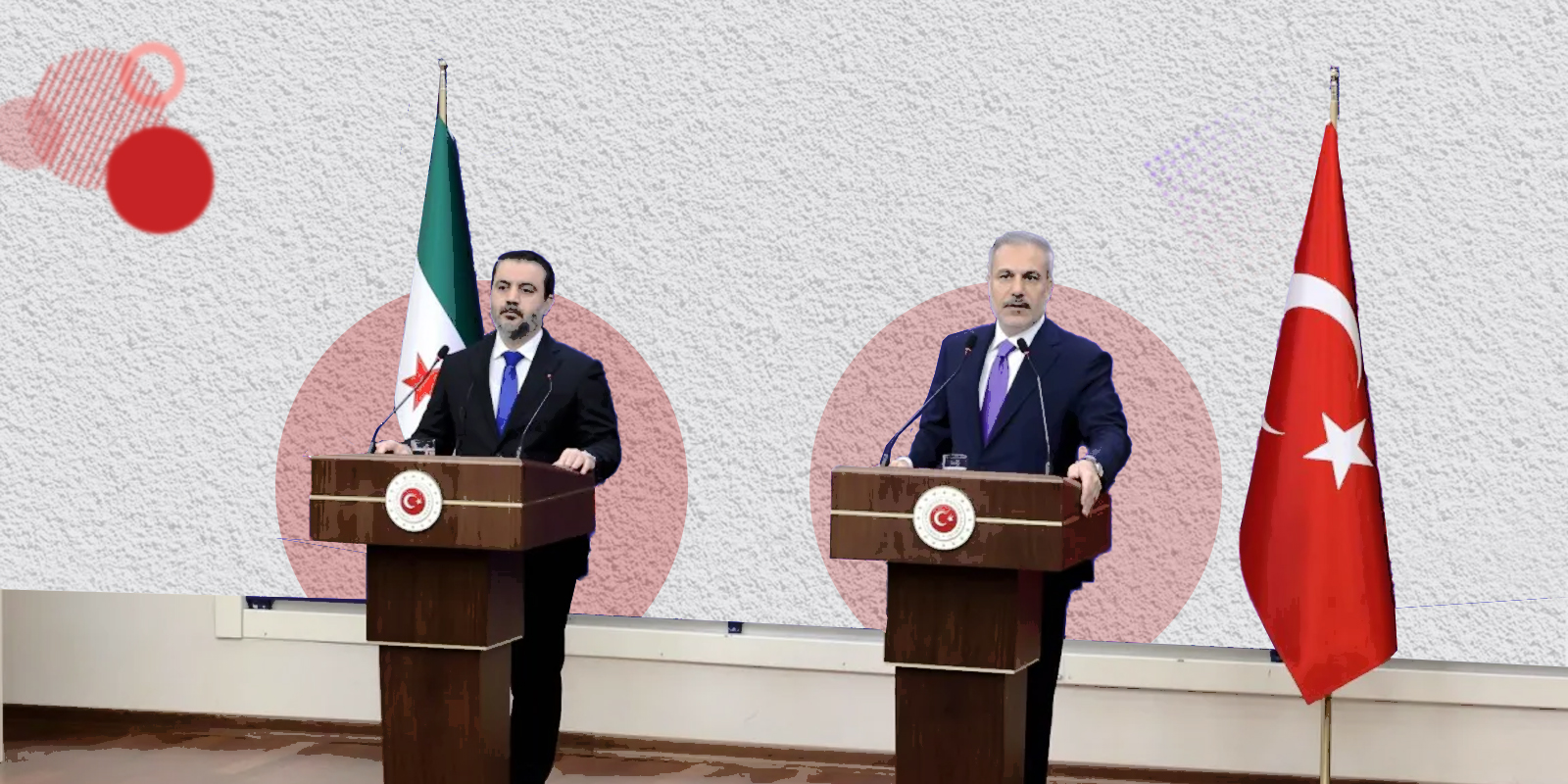
In a move reflecting a new phase of cautious openness between Damascus and Ankara, Syria’s interim foreign minister, Asaad al-Shaibani, paid an official visit to Turkey last Wednesday to discuss recent developments and strengthen bilateral cooperation. The visit, held in Ankara, carried notable political and security significance amid growing debate over the future of Syria’s northeast and the relationship between the interim government and the Kurdish-led Syrian Democratic Forces (SDF).
During talks with Turkish Foreign Minister Hakan Fidan, Shaibani discussed military and political issues, focusing on the SDF and the situation in the north-east. Speaking at a joint press conference after the meeting, he said dialogue with the SDF was based on the principles of “one state, one army, one land”, rejecting any form of division or separatism.
He added that the 10 March Agreement between the interim government and the Syrian Democratic Forces “remains ink on paper” due to what he described as the SDF’s “slow implementation”, urging full commitment to the national framework. Shaibani also praised Turkey’s role in supporting Syria during its transition, calling Syrian–Turkish cooperation a key element in addressing regional challenges and enhancing stability.
Shaybani also condemned repeated Israeli attacks on Syrian territory, calling on the international community to help stop them. He warned against foreign interference aimed at weakening the state and fuelling sectarian strife.
Analysts said Shaibani’s speech combined political realism with a firm commitment to national unity, seeking to balance sovereignty with regional engagement. Syrian analyst Hassan al-Naifi told +963 that this position “is not a shift but a continuation of a consistent strategy” since the transitional authority took power on 3 December. He said the centralised approach was a deliberate choice, rejecting any move towards political decentralisation, which Damascus views as a threat to state integrity.
Al-Naifi added that while Damascus maintains close ties with Ankara, it aims to project independence in decision-making. He said continued dialogue with the SDF was part of that independence, even if it did not fully align with Turkey’s position.
For Turkish political analyst Hisham Rustem, the visit reflected “a pragmatic effort to ease tensions and open communication after more than 14 years of conflict”. He said the Syrian leadership sought a negotiated settlement with the SDF rather than armed confrontation, to reduce civilian suffering and restore state control nationwide.
Rustem emphasised that Shaibani’s statements in Ankara largely matched Turkey’s position, particularly on maintaining Syria’s unity under a central government based in Damascus and rejecting any separatist ambitions in the northeast, Suwayda, or the coastal regions.
He noted that relations between Ankara and Damascus were already “very good”, citing continued coordination, official visits, and Turkish support in training, investment, and expertise exchange. He added that the visit “fits within the existing framework of cooperation rather than marking a new turning point”.
On the U.S. presence in northeastern Syria, Rustem said it remained a “shared concern” for both sides, though options were limited. Turkey, he added, continues diplomatic engagement with Washington, seeking to curb any separatist moves among Kurdish groups while maintaining coordination with Damascus.
Despite different perspectives, both analysts agree that Shaibani’s visit reflects two sides of the same policy: firmness in defending Syria’s unity and flexibility in managing regional ties. The trip sent a dual message:
to reaffirm Damascus’s red lines on sovereignty, and to signal readiness for pragmatic cooperation with Ankara built on mutual interests rather than dependency.