


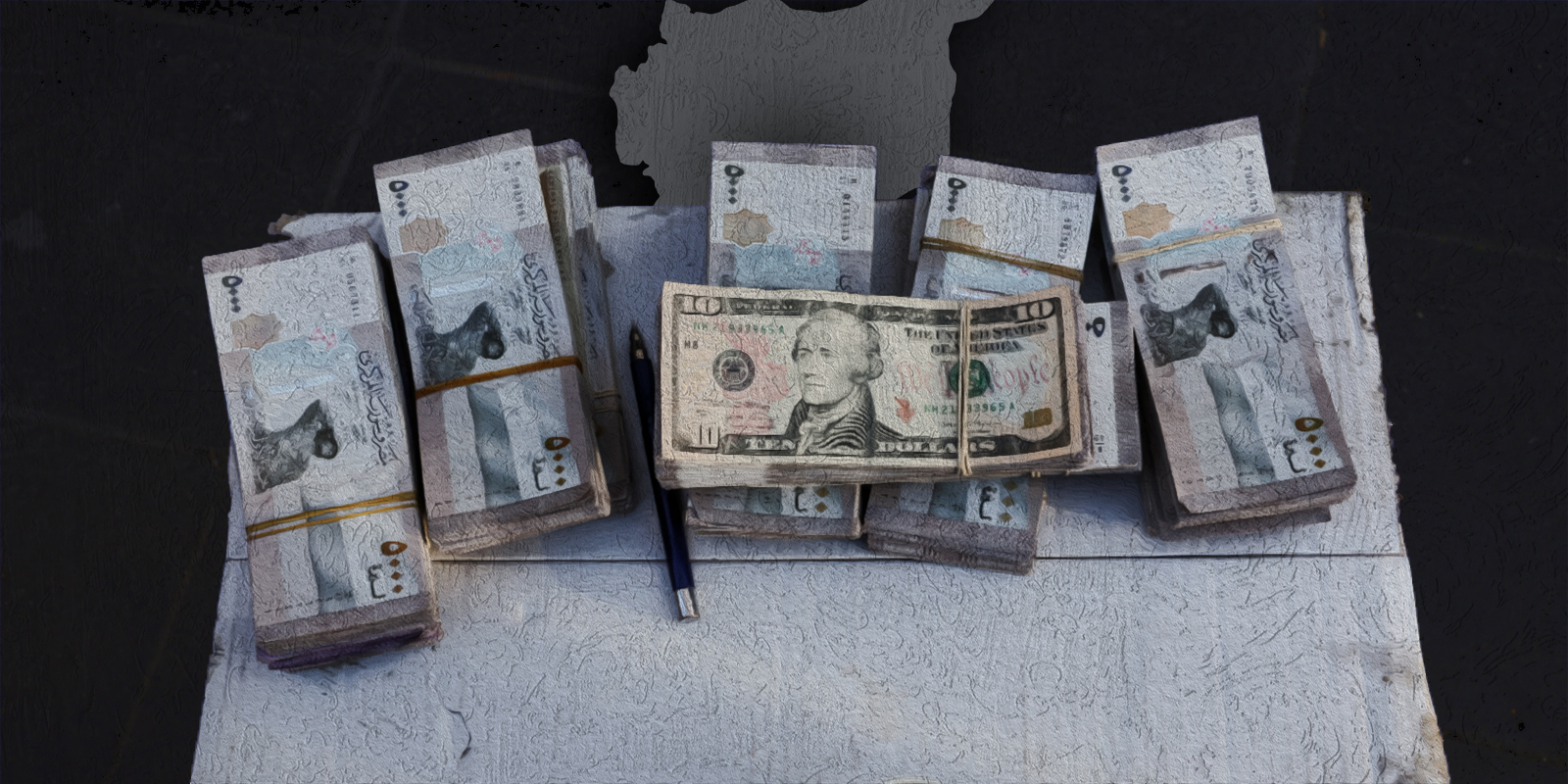
In an unstable economic environment, exchange rate risks have become a daily concern, with Syrians facing sharp fluctuations in the value of the dollar and other foreign currencies against the pound. The gap between the official rate set by the Central Bank of Syria and the rate in the parallel market is wide and often changes by the day. Clear discrepancies are evident between what the central bank announces and what is applied in markets and private exchange offices.
The proliferation of unregulated exchange offices means that the supply and demand for dollars and other foreign currencies are influenced not only by central bank policies, but also by the behavior of exchangers, speculators, and immediate market needs. This magnifies volatility in the exchange rate, even though the official rate has been fixed in the central bank’s bulletins for several months. Reports indicate that the parallel market experiences daily, and sometimes even hourly, changes in rates.
The sight of “exchange stalls” along Syrian city streets is no longer unusual. Young men sit in front of small offices or side shops, waving foreign banknotes or jotting down exchange rates by hand. In a country experiencing one of the most severe currency crises in its history, such scenes have become symbolic of a “monetary chaos” that threatens exchange rate stability and further burdens Syrians’ cost of living.
Why is Unregulated Exchange Spreading?
The spread of unregulated exchange offices is not a passing phenomenon. It has deep consequences for exchange rates, purchasing power, and economic stability. According to Dr. Abdullah Al-Zaher, an academic economist working in the stock exchange, who spoke to +963, the main reasons are:
- Lack of trust in official channels: Many Syrians see the rate set by the Central Bank as unrealistic compared to the market rate.
- Restrictions on foreign currency transactions: Transfer and withdrawal restrictions have driven citizens and traders to seek alternative sources for dollars.
- Daily financial needs: Buying currency, receiving remittances, and paying import obligations are hampered by liquidity shortages and delays in official banks.
- Inflation and loss of confidence in the pound: Rising inflation and the declining value of the local currency push people to convert their savings into more stable currencies.
- Weak oversight: The absence of effective regulatory bodies has made this phenomenon a semi-public activity. Unregulated offices have become part of the parallel economy, undermining official monetary policy and encouraging unlawful practices such as rate manipulation, circulation of counterfeit money, and regulatory evasion.
Read also: From Trauma to Illusion: Why Syrians Cling to ‘Saviours’
On the Ground
Gabi Shikrou, a clothing shop owner in Damascus, describes his struggle with currency volatility to +963: “If I want to buy imported goods, I cannot rely on the official rate, because it simply does not reflect reality. I always resort to exchangers in the parallel market. Even if their rate is much higher, it is closer to the actual market price. For me, relying on the official rate means losing money, since no one is willing to sell at it.”
Fares Al-Ahmad, a popular restaurant owner, told +963: “The problem is that we live in a daily cycle of fluctuations. Sometimes the rate changes between morning and evening, which makes it impossible to set a fixed menu price. Every time I want to buy food supplies, I find their cost has changed because of the dollar, so I am forced either to raise prices or absorb the loss. We work in a sensitive sector that deals directly with consumers, and any fluctuation disrupts us significantly.”
Meanwhile, university student Mona Said shared her frustration with +963: “Even simple things like buying books or electronic devices are no longer straightforward. Everything is tied to the dollar in the parallel market. When I go to buy a laptop, no one uses the central bank rate, only the black market rate. I feel like our studies and even our personal needs are now hostage to the game of exchangers.”
Reham Ali, a housewife receiving remittances from her son in Europe, expressed her disappointment: “The bank gives us transfers at a rate far below the market, with the difference sometimes amounting to thousands of pounds. For this reason, most of us turn to unregulated exchangers despite the risks, because we simply cannot afford the loss. These offices may be unlicensed, but for us they are the only option to secure a fair value for remittances.”
Local media reports confirm that the spread of exchange stalls has reached unprecedented levels, prompting authorities to launch crackdowns and seize counterfeit currency. Yet these campaigns have not eliminated the phenomenon. Instead, they have pushed it deeper underground, making it more complex and harder to control.
How Does the Spread of Unregulated Exchange Fuel Volatility?
Dr. Al-Zaher emphasizes that the presence of unlicensed offices creates a parallel market beyond official oversight. This opens the door to speculation, exploitation of rumors, and price variations between offices. Such practices widen the gap between the official and unofficial rates and make fluctuations nearly constant.
He explains: “Some exchangers raise or lower rates based on rumors or expectations in the absence of effective central bank intervention. Although the bank has announced the unification of bulletins to reduce the gap, the parallel market continues with higher rates, undermining the credibility of the official rate.”
He further notes: “This has fueled inflation. Each time the black market dollar rises, the prices of imported goods increase, which immediately impacts food, medicine, energy, and daily living costs. The volatility also prevents importers from predicting costs, which destabilizes local prices and harms both consumers and savers.”
Al-Zaher warns that the chaotic spread of exchangers amplifies instability by encouraging speculation, opportunistic behavior, sidelining official institutions, and creating price gaps that deepen uncertainty and erode trust in the national currency.
The Role of the Central Bank
Dr. Al-Zaher clarifies that the Central Bank is trying to regulate the market through unified official bulletins. Yet unlicensed exchangers often rely on higher rates reflecting immediate risks and demand, weakening the currency’s credibility and complicating matters for citizens.
He points to media reports in June 2025 that mentioned the Central Bank is studying the introduction of a “managed float” system, allowing limited fluctuations within a defined range, with interventions when necessary. The aim is to curb the influence of unregulated exchangers. However, success requires strengthening foreign currency reserves, attracting remittances through official channels at fair rates, and rebuilding public trust in the regulated market.
Otherwise, if high demand for dollars persists alongside foreign currency shortages and weak oversight, the situation may slide further toward collapse and inflation.











