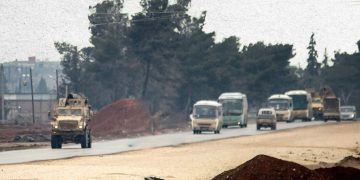


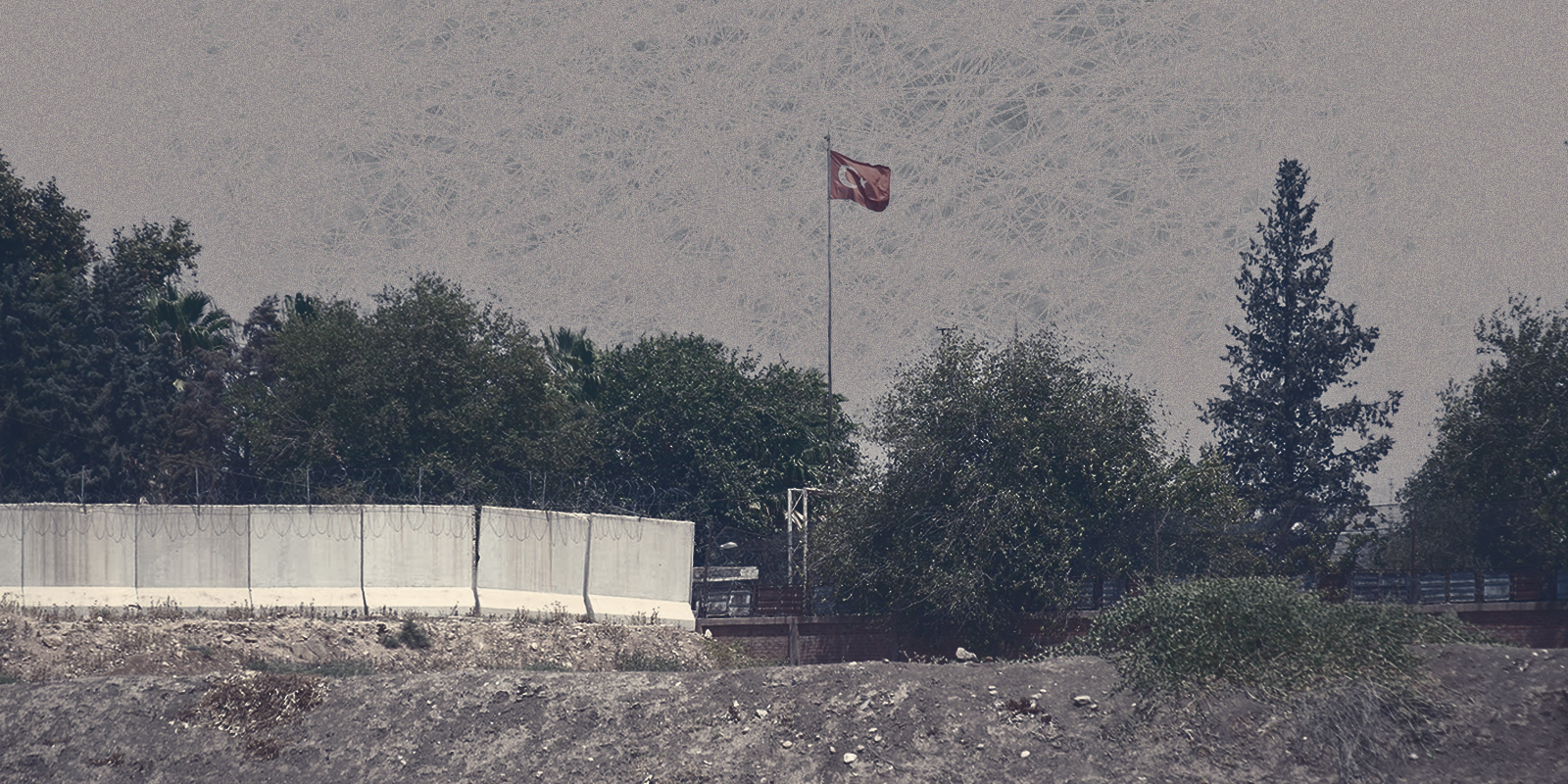
Spanning nearly 1,000 kilometers, the Syria-Turkey border hosts numerous crossing points. Yet, several key crossings connecting Turkey to northeastern Syria remain closed, some for years, creating significant economic, social, and humanitarian consequences. The closures are rooted in political, military, and security complexities, making the issue one of the region’s most sensitive.
Among the eleven main crossings along the border, the ones in northeastern Syria under the control of the Syrian Democratic Forces (SDF) include Murshid Pinar near Kobani in eastern Aleppo, Ayn Diwar in Al-Dirbasiya in northern Hasakah, and Qamishli–Nusaybin. There are also Ceylanpinar, opposite Ras al-Ain, and Akçakale, opposite Tal Abyad in northern Raqqa. These last two crossings, controlled by factions of the Turkish-backed Syrian National Army, were reopened in 2019.
Mohammad Hassan, head of the SDF’s political office (MSD), told +963: “We continuously raise the issue of reopening the border crossings. Neighbouring countries emphasize coordination with Damascus. During the recent meetings of the Autonomous Administration delegation in Damascus, attended by U.S. envoy Thomas Barrack, we discussed Qamishli and Kobani crossings, but no agreement was reached with Damascus. Turkey raised no objections, provided there was coordination with the central government.”
He added: “Border crossings are generally linked to central authorities worldwide. After the Arab Spring, some regions opened humanitarian or economic crossings based on neighbouring countries’ interests. This is what happened in Syria: several crossings opened with Turkey after opposition factions and ISIS controlled parts of the region.”
Political analyst Hassan Al-Naifi, based in France, emphasized to +963 that these crossings are part of a political process. “Ankara will not formally reopen them until there is a final political agreement between the Syrian government and the SDF, making the crossings a political bargaining chip.”
Although many of the newer, non-essential crossings were initially used for humanitarian purposes and the return of displaced Syrians, the Turkish Interior Ministry transformed some into trade and import channels. For example, Al-Ra’i crossing was later used by the UN to deliver aid after the devastating 2023 earthquake in northwestern Syria.
Hassan explained: “Turkey opened informal crossings to advance its interests through local factions and strengthen its influence in Syria. Once the SDF took control, Turkey had no direct relations with them. The crossings previously open with opposition factions were never officially sanctioned by Damascus, they were based solely on shared interests.”
U.S. envoy Thomas Barrack confirmed on August 29 that continuous talks were taking place between SDF General Commander Mazloum Abdi and Turkish Foreign Minister Mevlut Çavuşoğlu, involving senior Turkish figures such as Intelligence Chief Hakan Fidan, and supported directly by President Recep Tayyip Erdoğan. Barrack described these meetings as “a crucial step toward building trust between the parties, especially given the historically unstable border.”
In early June, the SDF held direct talks with Turkey under U.S. mediation to discuss several issues, including prisons holding ISIS members. According to Middle East Eye, which cited informed sources, these discussions addressed the broader question of Syria’s future, facilitated by Washington.