


Salah Qirata
Is the legitimacy of a majority in society measured by sect, ethnicity, and religion; or by political parties, unions, and economic and cultural interests?
This is not a purely theoretical question; it lies at the heart of the struggle to build a modern state. Whether a majority reflects pre-state divisions or emerges from a political–civil choice determines the fate of stability or fragmentation, renaissance or collapse.
Identity-Based Majorities: Dead-end
In many countries, politics is reduced to a numbers game among sects and ethnicities. Here, belonging is a destiny one is born into, not a political choice one makes.
This “identity majority” model has led many states into paralysis and conflict. Lebanon has remained hostage to sectarian quotas that have blocked meaningful reform, while Iraq after 2003 slid into bloody civil wars as demographic majorities turned into tools of political dominance. Bosnia and Rwanda showed the most brutal extremes of identity-based majorities, where sectarian and ethnic conflict escalated into genocide.
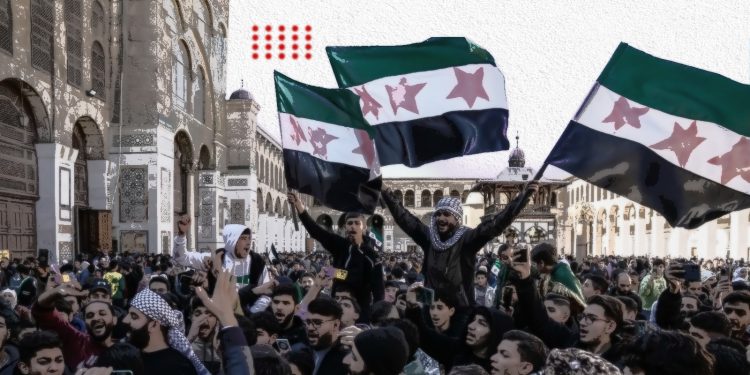
In Syria, some seek to pull the country into this very trap, believing that stability can be secured by practicing the same exclusion and replacement that they once suffered, clinging to a mindset rooted in the pre-state, even pre-human, order.
In all these cases, politics was not a marketplace of competing programs, but a battlefield for entrenching group boundaries and dividing power as spoils; transforming the state into a permanent arena of conflict, crippling reform, and halting progress.
Read also: Do Syrians Still Have the Luxury of Dreaming of a State of Law?
Civic Majorities: The Foundation of the Modern State
By contrast, a civic majority is forged when political life is built on parties, unions, and socio-economic interests. In this model, majorities are measured by programs, not bloodlines; by shared interests, not inherited identities. Political affiliation becomes a free choice, not an accident of birth.
Global examples show the effectiveness of this approach. Western Europe rebuilt itself after World War II through party-based democracy, replacing religious and ethnic divides with political ones; “left vs. right,” “liberal vs. conservative.”
India, despite its dizzying mosaic of faiths and languages, has remained the world’s largest democracy thanks to mechanisms that allow shifting political majorities. South Africa emerged from the nightmare of apartheid when trade unions and political movements built an inclusive civic majority, moving beyond a black-versus-white struggle.
The Ethical and Civilizational Dimension
The difference between the two models goes beyond politics into ethics and civilization. In the identity model, individuals are denied their right to free choice, pre-defined by sect or ethnicity, undermining citizenship and reinforcing dependency and isolation. In the civic model, citizens are treated as independent individuals capable of making political decisions based on their convictions and interests, not on their inherited identity.
Nobel awarded economist Amartya Sen warned against the “prison of singular identity,” arguing that reducing a person to their ethnicity or sect threatens freedom and individuality. Sociologist Ernest Gellner stressed that moving from “tribe” to “nation” is essential to building a modern, cohesive society that places the common good above narrow loyalties.
Read also: Can Official Investigations Heal Deep Sectarian Wounds in the Syrian Coast?
Which Model for Syria’s Future?
The lessons from other nations are clear: identity-based majorities lead only to fragmentation, offering a ready-made recipe for civil wars or quota systems incapable of reform. Only civic majorities can deliver genuine political stability, enable peaceful change, and build a state that embraces all its citizens without discrimination or exclusion.
Countries that have built stable democracies did not do so by counting heads in sects or clans, but by turning majorities into the product of political, union, and economic action. Only civic majorities can make the state a home for all, transforming diversity from a curse into a source of strength. Identity-based majorities, on the other hand, are a trap that reproduces the past and blocks the road to a unified national future.











