


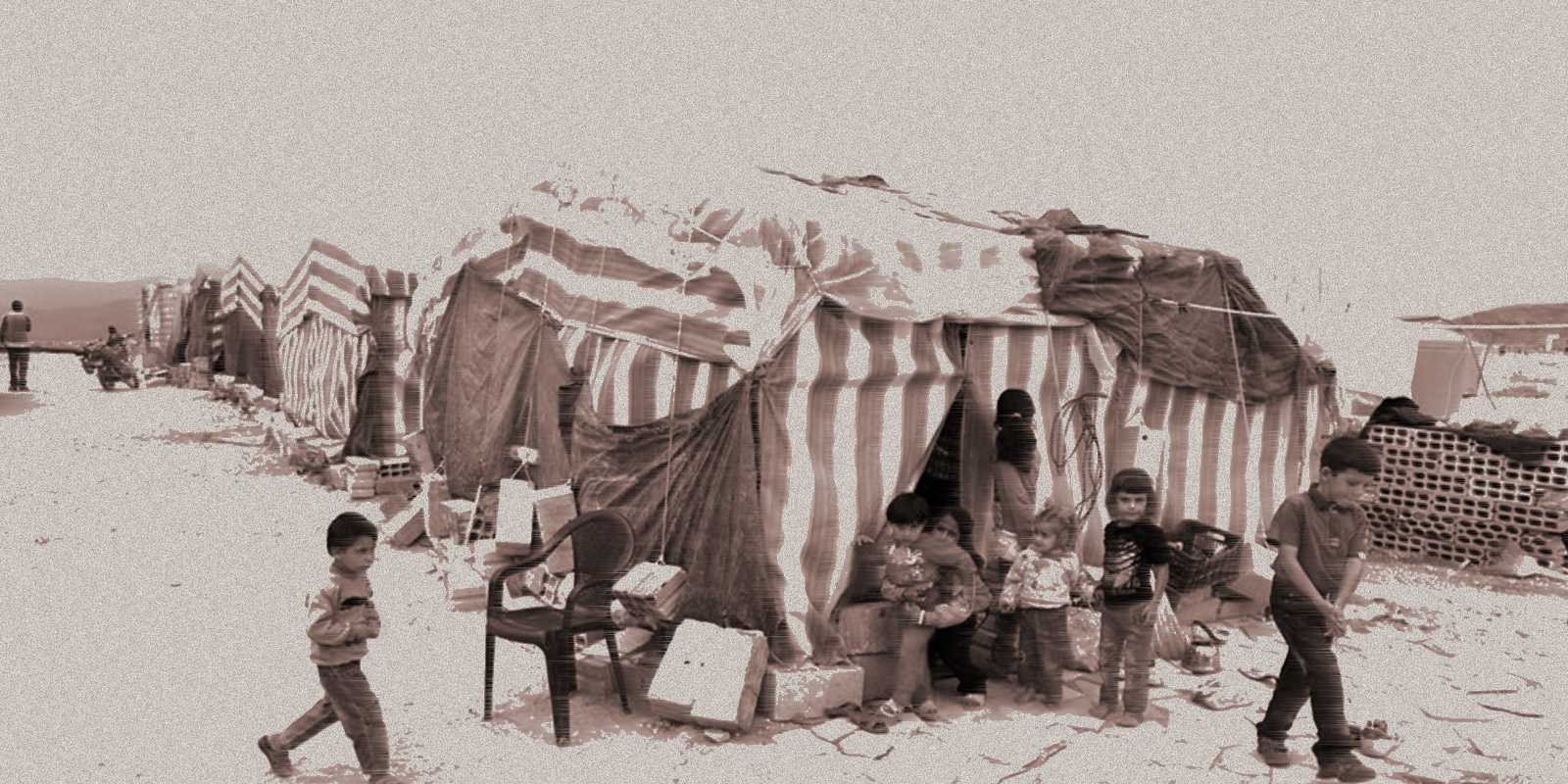
Syrians in Lebanon are living in a state of constant tension and fear. Their presence becomes a bargaining chip each time a political or diplomatic dispute erupts; whether between Lebanese factions themselves, or with Syria, or even neighbouring states. While the Lebanese government exerts pressure on Hezbollah, Syrians fear retaliatory actions, especially as deportation campaigns targeting them intensify.
Recently, the humanitarian situation for Syrian refugees in Lebanon has grown increasingly dire. Local rights organizations have reported a sharp uptick in violations against them. The Access Centre for Human Rights (ACHR) stated in a recent report that forced deportations, mass arrests, evictions, and raids targeting refugee communities are on the rise; creating an unliveable environment for this vulnerable population.
According to Mohammed Hassan, ACHR’s Executive Director, “Certain Lebanese political factions are using the refugee issue as a bargaining chip in domestic conflicts; either to score political points or to divert attention from their failures in managing internal crises.”
Analysts point out that Lebanon’s authorities are pursuing a hardline approach towards Syrian refugees in the absence of any strong international pushback. “The lack of accountability from the international community has given Lebanese authorities a free hand to continue escalating,” Hassan said.
Security experts also question the Lebanese government’s claims that conditions in Syria have improved enough to receive large numbers of returnees. Politically, observers believe the rise in violations against Syrians is tied to strained relations between Beirut and Damascus.
Meanwhile, the UNHCR has launched a “Self-Organized Voluntary Return” program, offering $100 in assistance to each returnee. But many question how “voluntary” these returns are in the face of mounting pressures. UN figures indicate more than 120,000 Syrians have returned from Lebanon without international support, with projections of another 200,000 leaving in the coming months.
Read more: Dozens of Syrian Refugees Voluntarily Return from Lebanon
The UN justifies this push by citing a dramatic rise in stated willingness to return, from 1% to 24% in one year, while setting a goal of 400,000 returns by the end of 2025. Rights groups, however, warn that these numbers may reflect desperation and fear in Lebanon more than genuine readiness to return to Syria.
Over 1.5 million Syrian refugees currently live in Lebanon, about 750,000 of them registered with the UN. Today, they face two grim options: stay in Lebanon under discrimination and growing violations or return to Syria to face difficult living and security conditions. In this bleak landscape, urgent international action is needed to protect refugees and end their exploitation in political conflicts.
Dr. Zeina Mansour, a Beirut-based academic and political economy researcher, says Syrian refugees in Lebanon are confronted with multi-dimensional challenges.
“These include economic, security, legal, political, social, educational, and health aspects,” she told +963, stressing the urgent need for measures to protect and assist them.
She believes the solution lies in organizing a swift return process after sanctions are lifted, alongside providing international support to Syria’s transitional government. Mansour also calls for a bilateral agreement between Lebanon and Syria to regulate this return, something that would ease Lebanon’s economic burden, especially amid its ongoing financial crisis now in its sixth year.
At the same time, Mansour warns against forced deportations, advocating for a rapid mechanism for safe, voluntary return to prevent refugees from becoming casualties of Lebanon’s political and security instability. Coordination between both states, she says, is essential for an orderly plan.
Political infighting in Lebanon, particularly between the Shiite duo and other government and parliamentary blocs, has also worsened refugee conditions. According to observers, this has fuelled anti-refugee rhetoric, intensifying calls for swift voluntary returns or even outright deportations, amid fears of clashes between locals and refugees.
Some political actors, including the Shiite bloc, argue that the large Syrian presence is causing demographic imbalances that could alter Lebanon’s population structure. Others fear that certain refugee groups could have ties to hostile or extremist organizations, threatening Lebanon’s stability.
The Reality of Displacement
Syrian journalist Tarek Ali, speaking from Damascus, offers a detailed account of Syrian refugees’ conditions in Lebanon. He notes their numbers peaked at nearly two million, though Lebanese authorities avoid the term “refugees” to sidestep the legal obligations it entails.
Ali explains that displacement waves did not end with the peak of the Syrian war but continued afterwards, particularly during worsening security conditions. In March alone, 21,000 Syrians, mostly from the Alawite community, crossed into Lebanon, swelling the number to 30,000 by mid-April.
Many endured perilous journeys through forests, orchards, mountains, and rivers under harsh weather. Most were civilians uninvolved in the conflict, fleeing out of fear of revenge or reprisals.
Today, many live in extreme hardship, relying on expired residency permits or smuggling routes. Few receive meaningful aid from either local or international agencies. Dozens are crammed into schools, mosques, and shelters across Lebanon.
Read also: Hezbollah and the Shia Equation: Can the U.S. Reshape Lebanon’s Security Balance?
Community Attitudes and Security
Ali observes that anti-refugee rhetoric has somewhat declined, due in part to fewer new arrivals and increased public sympathy. Still, Lebanese political forces remain split; some offering support, others rejecting the refugees for security, demographic, or political reasons.
Compared to Syria, levels of hate speech in Lebanon remain lower, and refugees continue to live under relatively bearable conditions despite hardships.
As for political disputes, such as the row between Lebanon’s government and the Shiite bloc over disarmament, Ali believes these won’t directly impact refugee conditions. “Even during Hezbollah’s involvement in Syria’s war, these disputes didn’t harm refugees in Lebanon,” he notes.
Hezbollah, Ali adds, has not officially championed refugee causes nor facilitated their entry, except in rare cases of direct interest. Nor has it intervened to regularize their residency status, though it has instructed its supporters to treat them “well.”
In conclusion, Ali stresses that Syrian refugees’ fate in Lebanon is unlikely to hinge on political rivalries, since they live outside the direct protection of the Shiite bloc, instead existing within a broader framework of coexistence. Most have avoided involvement in hostile acts during Syria’s war, distinguishing their situation from other refugee groups.











