

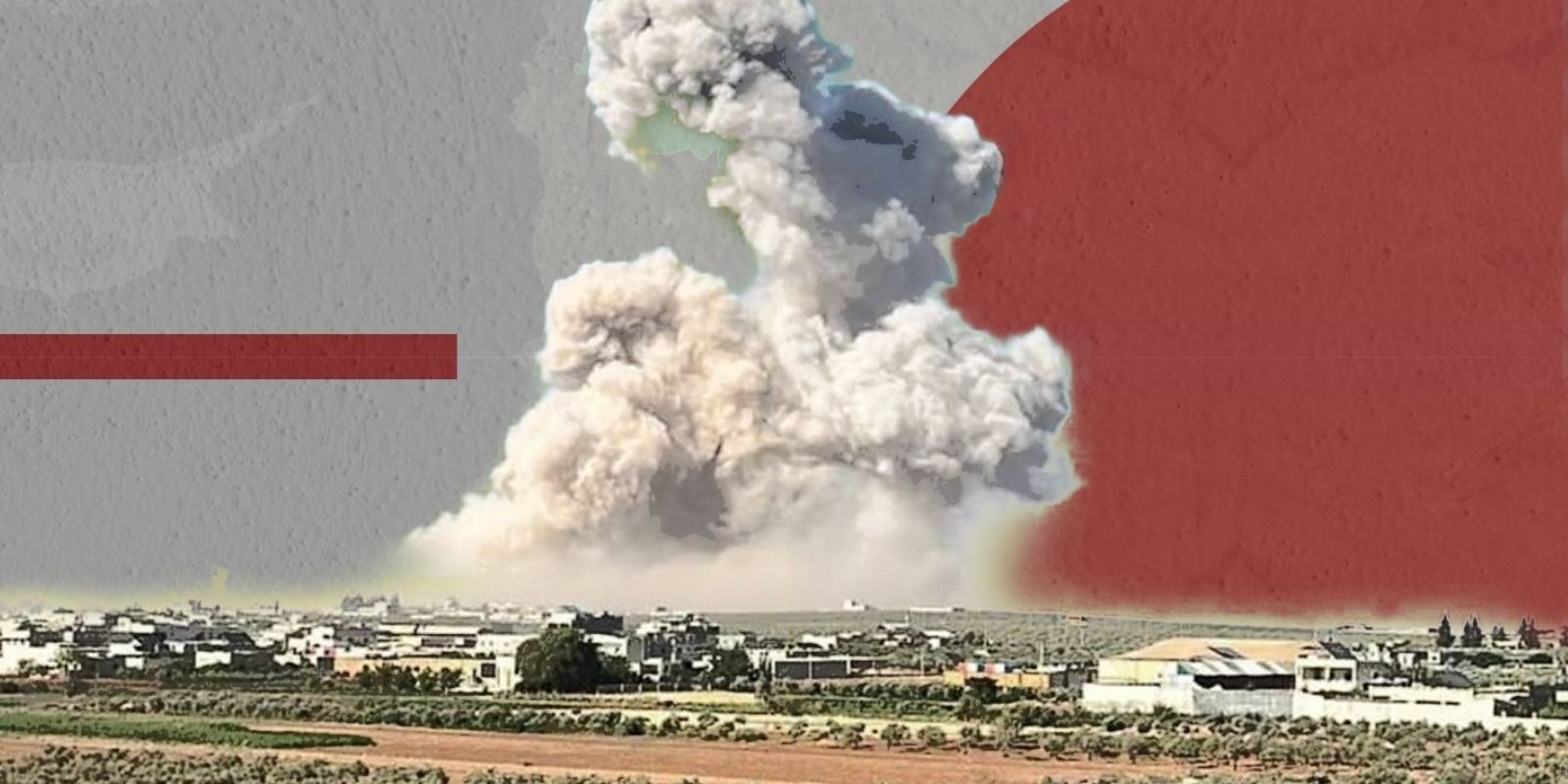
On the afternoon of Thursday, July 24, a massive explosion rocked the skies over Idlib, northwestern Syria, followed by a series of secondary blasts that shook the town of Maarrat Misrin and echoed through nearby villages, particularly Al-Fu’ah to the east. The explosion was traced to a weapons depot belonging to the Turkistan Islamic Party (TIP), one of the most prominent foreign jihadist factions operating in Syria.
As of the time of writing, medical sources have confirmed the deaths of 12 people, including a woman and a child, and more than 160 injuries, some critical suggesting the death toll could rise in the coming hours.
But beyond the numbers lie heartbreaking stories: families who lost loved ones, homes reduced to rubble, and children left with wounds, physical and emotional, in a region plagued by unregulated weapons storage and little local oversight.
Although initial accounts varied regarding the cause, field sources and eyewitnesses confirmed the blast stemmed from the improper storage of explosives and ammunition inside a depot managed by the TIP, which is considered a leading faction among Syrian opposition forces.
“Judgment Day” in Al-Fu’ah
Mustafa Haj Ahmad (35), a resident of Al-Fu’ah, described the explosion to +963 as “nothing short of Judgment Day”, noting its sheer destructive power. Windows shattered, walls cracked, and part of his own home collapsed due to the violent shockwave.
He recounted the terrifying moments of chaos, screams of the wounded mixing with successive blasts, plunging residents into panic.
Mustafa explained that no one in the neighbourhood knew about the depot’s existence, which made the incident feel like a betrayal. “Who authorized storing such dangerous materials in a densely populated area?” he asked.
He emphasized the urgent need for authorities to immediately remove all weapons depots from residential areas, calling the explosion a warning that cannot be ignored.
A Constant Civilian Risk
The Turkistan Islamic Party is made up mostly of ethnic Uyghur fighters from China and has been active in Syria since 2015, controlling large swaths of Idlib’s western countryside, including the Turkmen Mountains and the Al-Rouj Plain. Idlib remains their stronghold and base of operations.
Raed Al-Yousef, a member of an unexploded ordnance (UXO) removal team in Idlib, told +963 they face a tragic irony: “We risk our lives removing mines, while others store explosives next to civilians.”
He highlighted how storing weapons near populated areas, including homes and public facilities, poses a constant danger and undermines the efforts of demining teams.
Horrific Scenes at the Hospital
At Al-Shifa Hospital in Idlib, wards are overwhelmed with victims, most of them women and children. A physician, who asked to remain anonymous, said the hospital received “dozens of cases with severe burns, shrapnel wounds, and trauma from collapsing debris.”
Raeda Al-Adoul (28), the mother of a child injured in the blast, recounted how the explosion struck while the family was eating lunch. “The house shook violently, parts of it collapsed on top of us,” she told +963.
Her ten-year-old son suffered a head injury from shrapnel and remains in critical condition.
Raeda condemned the hidden storage of ammunition near civilians as a “blatant violation of basic human safety.” She added this is not the first time such an incident has occurred in Idlib and fears it won’t be the last.
Recurring Disasters Without Accountability
This wasn’t the first explosion of its kind. In 2021, a blast at a weapons depot in Kafraya killed 15 civilians, including children. Another occurred in Al-Rouj Plain in 2023, resulting in fires that damaged crops and raged for hours, without sufficient firefighting resources.
Human rights activist Raed Al-Musto (35) believes these recurring explosions highlight systemic negligence by the armed groups controlling the region. He explained to +963 that the trend of storing explosives inside or near residential areas, often in basements or industrial buildings, 11represents a pattern, not isolated incidents.
The absence of transparency around who is responsible for these depots, the lack of accountability, and dubious causes, whether from negligence, poor storage, internal conflict, or external strikes, reflect a complete breakdown in oversight.
Observers of Idlib’s local affairs warn that continuing to store weapons in populated areas turns entire towns into powder kegs. They argue that armed factions bear full responsibility for civilian safety and must cease using security justifications to endanger lives. Immediate steps are needed to evacuate these depots and hold those responsible accountable.