


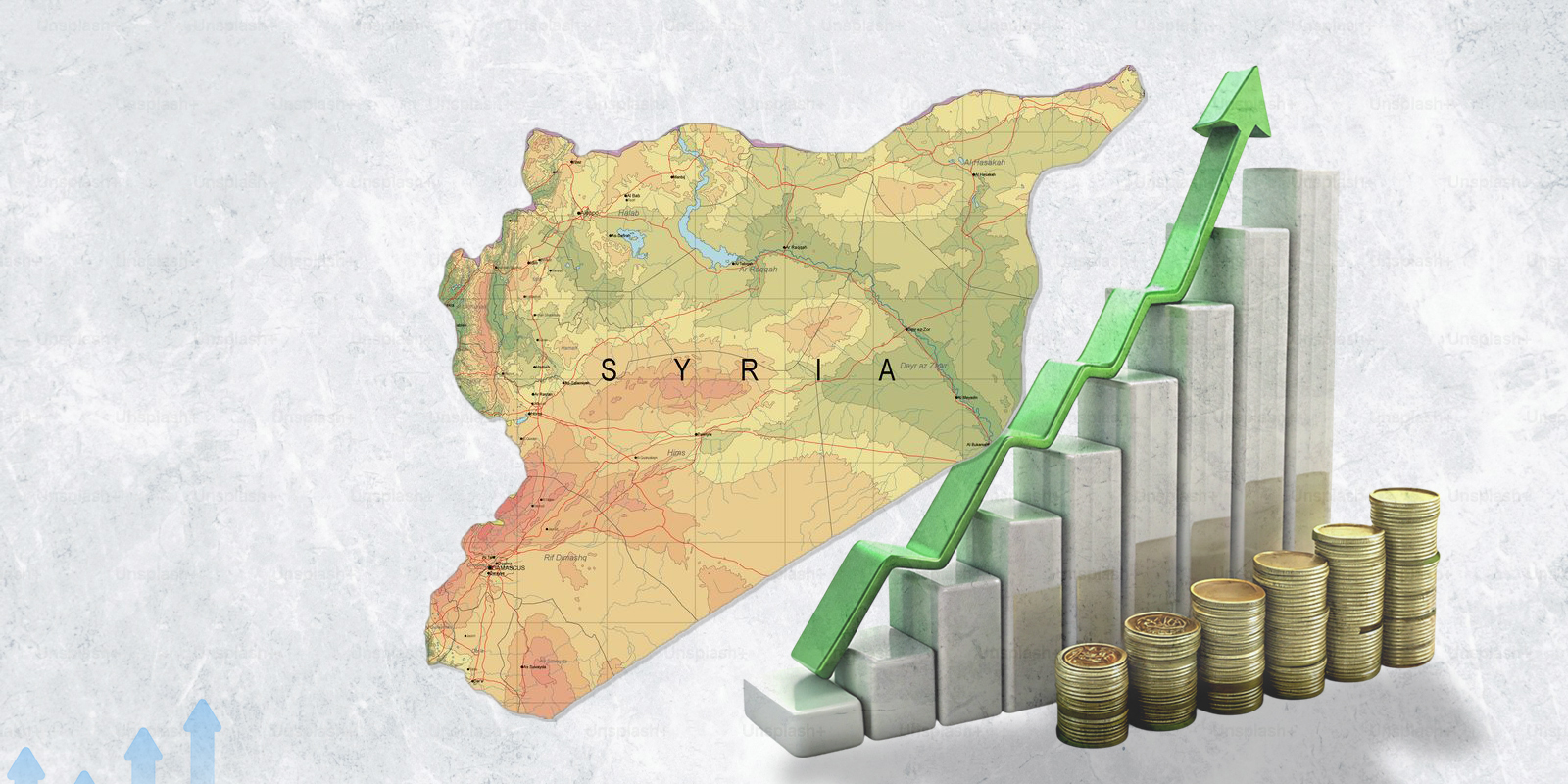
In a move described as an attempt to reactivate the production sector within Syria’s industrial cities, the Syrian government, through the Ministry of Economy and Foreign Trade, has announced a new investment framework aimed at attracting capital and expanding the industrial base. The initiative comes as Syria struggles to restore economic balance following years of war and recession.
The Ministry of Economy officially unveiled the new system, which Minister Mohammad Nidal Al-Shaar described as aligned with the economic transformations underway in Syria. He emphasized that it reflects flexible and modern standards adapted to the profound changes in the business environment caused by war, sanctions, and economic blockade.
Al-Shaar stated that the framework is designed to encourage Syrian capital abroad to return and invest domestically, offering clear incentives and a comprehensive vision to facilitate participation in strategic industrial projects. The emphasis will be on advanced technological industries and on provinces most affected by conflict, part of a broader aim to provide a stable economic environment that reduces displacement and fosters developmental equity.
A Law in the Midst of Crisis
This development arises in a highly complex economic context, with Syria still suffering from unprecedented degradation in its production sectors, the depreciation of the local currency, severe shortages in basic resources and energy, and the persistence of international sanctions that hamper financing and imports. Any new economic initiative must therefore confront these daunting obstacles.
In this context, legitimate questions arise within economic circles about the actual substance of this new system and whether it can genuinely transform Syria’s industrial investment climate, given the pressing need for deep-rooted reform in governance, transparency, and the legal framework.
Read also: Massive Saudi Investments Bring Syria Back Into the Economic Spotlight
A Law Alone Does Not Make for an Attractive Environment
Academic and economic researcher Dr. Rifaat Amer told +963 that “launching a new investment system that rewrites the legal framework for Syria’s industrial cities is, theoretically, a positive step, especially in terms of fostering public-private partnerships (PPP, BOT), enhancing procedural transparency, and integrating environmental and international standards.”
However, he stressed: “A law alone does not create an attractive investment climate. What matters is implementation and governance.”
Amer referred to a recent Reuters report revealing a so-called “shadow committee” reshaping Syria’s economy through covert acquisitions by entities linked to the former regime. According to the report, President Ahmed Al-Sharaa’s brother, Hazem, and an Australian businessman under international sanctions are managing deals through old corruption networks. Nearly 80% of these transactions are allegedly funnelled through Sham Cash, a financial institution operating outside the Central Bank’s oversight and headquartered in Idlib.
Amer concluded that if Ahmed and Hazem Al-Sharaa are overseeing the new investment framework, then shadow economy mechanisms and influence-driven deals could replace governance and transparency, undermining efforts to build a sound investment environment.
He added: “The system’s effectiveness hinges on the presence of independent financial and judicial authorities, something currently absent, as economic and administrative decisions are concentrated in President Ahmed Al-Sharaa’s hands, with his brother Hazem managing implementation from an unofficial position. This arrangement echoes the earlier dynamic between Bashar Al-Assad and Rami Makhlouf and risks reproducing a patronage-based structure.”
Technically, Amer noted that incentives such as customs exemptions, land payment instalments, and flexible investment licensing offer genuine potential but are ultimately useless without long-term guarantees and real legal stability.
He also highlighted how centralized decision-making, lack of genuine separation of powers, and insecurity all diminish investor confidence.
Syria has witnessed similar efforts before, notably in Adra Industrial City in the early 2000s, which failed due to rampant clientelism and weak governance. These structural causes must be addressed before attempting a new version.
Read also: Beyond the Slogans: How Economics Is Redefining Post-Assad Syria
On the matter of introducing fast-track arbitration mechanisms for dispute resolution, Amer considers it a “smart legal step used globally,” but one whose success depends on the independence and credibility of its committees. Without these, the move will be merely symbolic.
Even though President Ahmed Al-Sharaa’s direct involvement in the economic file may enhance the initiative’s executive strength, Amer argues that Hazem’s informal role raises concerns about decision-making centralization. He warns: “Syria’s experience shows that concentrating economic power in the hands of individuals or families leads to influence networks, not competitive market economies.”
On financing, Amer said hopes of integration into the SWIFT system reflect a desire for conditional financial openness. However, sanctions have not been fully lifted, only temporarily frozen in some cases. He added that recent events in Suwayda led the U.S. to extend its sanctions review period by another two years, keeping the investment and transfer environment unstable.
The current socioeconomic landscape, marked by poverty rates exceeding 90%, widespread displacement, collapsed infrastructure, and political instability, continues to repel investment. Amer emphasized that unless the new framework is part of a comprehensive national political and economic project, it risks becoming another tool for elite benefit, with no real impact on productive sectors.
He concluded that while the move reflects a genuine desire by relevant ministries to reform the investment climate, its success depends on serious political will to end cronyism and establish a rule-of-law state that guarantees transparency, accountability, and institutional independence.
Industrial Cities: Between Legal Appeal and Implementation Challenges
From a political analysis perspective, writer and researcher Mustafa Al-Nuaimi argues that “the effectiveness of the new investment system in Syria’s industrial cities cannot be assessed apart from the legal and administrative context in which it operates.” He emphasized that clarity, stability, and clear dispute-resolution mechanisms are critical to attracting domestic and foreign investment.
In comparing this system to previous ones, Al-Nuaimi told +963 that its strengths lie in its comprehensive incentives, such as tax exemptions, infrastructure access, and a sectoral approach focused on value-added industries linked to reconstruction. The introduction of a one-stop shop for investors aims to eliminate burdensome bureaucracy.
Read also: Can Sanctions Relief Jumpstart Syria’s Economic Recovery?
Regarding the potential to encourage investor return, Al-Nuaimi stressed that success depends on the state’s ability to provide essential services, mitigate risks, and retrain a labour force that has suffered from over a decade of societal collapse.
He also emphasized the importance of ensuring the proposed incentives are competitive regionally and effectively implemented over the long term.
Given ongoing sanctions, Al-Nuaimi called for unconventional solutions: barter systems, in-kind investments, self-financed projects, and diplomatic efforts to obtain sector-specific exemptions.
He highlighted the need for international partnerships that facilitate blended financing, technology transfer, and technical expertise; essential components to transforming industrial zones into competitive production hubs.
Despite the obstacles, Al-Nuaimi maintains that success depends on removing key barriers; namely ensuring security, building effective logistical infrastructure, enforcing genuine legal reforms, combating corruption, reforming the financial sector, and launching specialized training programs aligned with current and future market needs.
It is worth noting that Syria’s key industrial zones, like Hassia, Adra, and Sheikh Najjar, have seen major declines in investment in recent years due to economic and security conditions. This decline prompted the government to revise the legal and regulatory structure governing these zones.
Official reports indicate that occupancy in some industrial cities has dropped below 35%, prompting authorities to roll out multiple support packages, the latest being this newly announced system.











