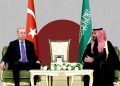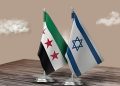



Syria today finds itself at a pivotal historical juncture, caught between competing regional ambitions that threaten to shape, fragment, or dominate its future. As the country attempts to emerge from war and political collapse, Turkey and Israel are moving aggressively to fill the vacuum, each guided by distinct strategic doctrines, both rooted in visions that reach beyond Syria’s borders.
Turkey’s Neo-Ottoman Drive
Ankara is attempting to leverage Syria’s political vacuum to expand its strategic and military influence, underpinned by what Turkish leadership frames as its “Ottoman strategic depth.”
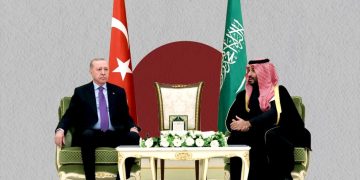
In repeated statements that echo neo-imperial nostalgia, Turkish President Recep Tayyip Erdogan has inserted himself into Syrian affairs. Most recently, Erdogan voiced support for Syrian President Ahmad Al-Shara’s stance on the unrest in Suwayda, reaffirming Ankara’s rejection of any project aimed at dividing Syria.
He also revealed that high-level meetings are taking place in Amman involving Jordanian and U.S. officials to monitor the crisis in Suwayda, and that Turkish intelligence and foreign ministry representatives are in regular contact with their Western counterparts over Syria.
Turkish Foreign Minister Hakan Fidan declared that a new roadmap for Syria had been crafted through joint regional and international efforts, involving Turkey, the U.S., the EU, and Saudi Arabia. Fidan accused Israel of deliberately destabilizing Syria and the region, in violation of international law and territorial sovereignty. He emphasized that regional powers are closely coordinating to counter these actions.
This reflects Turkey’s ongoing expansionist rhetoric, one that blends geopolitical ambition with ideological vision, rooted in a worldview that transcends national borders and echoes the legacy of a renewed Ottoman order.
Dr. Jamal Wakim, an expert in international relations history, told +963 that the so-called “New Turkish Vision” represents a deliberate strategy by Erdogan’s AKP to turn away from Europe and reposition Turkey within the Arab world via Syria. Ankara, he argued, seeks to transform Syria and the Arab region into a “backyard” serving Turkish strategic and economic interests.
Read also: Syria Between Ankara and Tel Aviv: Friendly Foe or Hostile Friend?
According to Wakim, this project also carries a clear ideological mission: exporting the political model of the Muslim Brotherhood across the Arab world under Turkish patronage.
Dr. Qirata reinforced this analysis, arguing that Turkey’s intervention in Syria is not merely a security response, but a key element of its broader “New Ottoman” project. This includes military, cultural, and administrative tools aimed at restoring Turkey as a central power in its former imperial domain.
Operations like Euphrates Shield, Olive Branch, and Peace Spring, he noted, were not just military campaigns. They symbolized Turkish sovereignty: the raising of Turkish flags, renaming of streets, introduction of the Turkish language and currency, and systematic demographic engineering, especially in Kurdish and mixed-population areas.
Such deep-rooted Turkish penetration, according to Qirata, is eroding national identity among local populations, making them feel like strangers in their own land. This undermines efforts to build a unified Syrian state and instead risks fragmenting Syria into semi-autonomous zones aligned with foreign agendas.
Wakim added that Turkish influence now extends well beyond the north and is beginning to assert itself across broader Syrian geography. Ankara, while fearing Syria’s fragmentation and particularly the rise of a Kurdish entity near its borders, is responding by entrenching its military and political presence rather than withdrawing.
Qirata stressed that Syria’s transitional leadership must reframe its relationship with Turkey, not as a political guardian, but as a neighbouring state. He called for the use of legal and diplomatic tools to confront Turkish violations, especially in Afrin and Ras al-Ain, where forced Turkification and the replacement of Syrian institutions with Turkish-backed alternatives have been documented.
Israel’s Southern Ambitions
In the south, Israel is quietly reshaping the geopolitical reality. It has been solidifying its control over the Golan Heights while expanding its reach deeper into southern Syria.
Tel Aviv aims to establish an undeclared “security zone” stretching from the Golan into Suwayda, managed through local proxies.
Qirata warns that this mirrors the Israeli occupation model used in southern Lebanon during the 1980s, a strategy that threatens Syria’s territorial integrity and undermines national reconciliation.
Read also: What Is the Syrian Foreign Minister Bringing to Moscow?
He added that such a reality creates a political exception: rewarding those aligned with foreign actors while exempting them from accountability, turning the south into a gray zone outside state control.
Wakim explained that Israel’s strategy goes beyond southern Syria. It envisions dividing the Fertile Crescent into sectarian mini states. The plan begins with connecting Israeli-controlled Golan with Suwayda, extending to northeastern Syria and the Kurdish regions in Iraq. This would position Israel close to Iran’s borders, opening the door to future strategic strikes.
While Turkey opposes such Israeli moves and may form temporary alliances with Iran against them, Saudi Arabia has also expressed resistance to this kind of Israeli hegemony. Nevertheless, Israel continues to entrench itself through unconventional means, functional partnerships with local militias that secure its interests and prolong instability.
Qirata argues that Syria’s leadership must enshrine the recovery of the south and the Golan Heights as non-negotiable components of any future political settlement. He emphasizes that Syria’s position on Israel must be based on a sovereign, independent national vision.
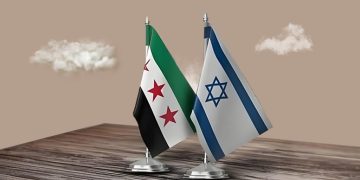
Recently, media sources revealed a rare meeting between Syrian Foreign Minister Asaad Shaybani and Israeli Strategic Affairs Minister Ron Dermer in Paris, attended by U.S. envoy Thomas Barrack. According to Axios, it was the highest-level contact between the two nations in over 25 years.
The meeting reportedly aimed to stabilize southern Syria and prevent renewed confrontations. An Israeli official described it as a potential first step in opening broader diplomatic engagement, beyond narrow security arrangements.
Israeli sources indicated that the Paris meeting capped a series of secret contacts over recent months, suggesting quiet regional shifts designed to redraw political boundaries in Israel’s favour.
Global Powers and the Balance of Influence
Beyond Turkey and Israel, other powers like Russia, Iran, and the U.S., continue to shape Syria’s trajectory. President Al-Sharaa is attempting to adopt a balanced foreign policy, one that engages neighbours and global actors without falling into dependency.
Wakim warns, however, that there are attempts to reassert external control over Syria through economic levers, particularly by courting Syrian elites with historical ties to Iraq and the Gulf. But these efforts face hurdles: U.S. sanctions, liquidity crises, poor economic management, and tense relations with Iraq and Lebanon have caused Syrian exports to drop by up to 70%.
Qirata cautions against “fragmentation through aid,” stressing that only a homegrown national project can truly restore Syrian sovereignty. Foreign-funded solutions, he argues, risk turning Syria into a patchwork of donor-influenced enclaves.
Syria’s Road Ahead: Challenges and Priorities
Syria’s transitional government faces a mountain of challenges: restoring state monopoly on weapons, rebuilding trust among citizens, and launching an inclusive national reconciliation to heal sectarian and ethnic rifts.
Fending off Turkish and Israeli influence without surrendering sovereignty will be a defining test. Qirata underscores the need for a cohesive national political discourse that affirms the inviolability of Syria’s borders and rejects foreign-imposed identities.
Real sovereignty, he argues, won’t come through slogans but through building strong, independent institutions in Damascus, ones that are not managed from Ankara, Tel Aviv, or even Moscow.