


Syria today is entering a pivotal phase in its modern history, standing atop a geopolitical fault line that threatens to redraw the entire map of the Middle East.
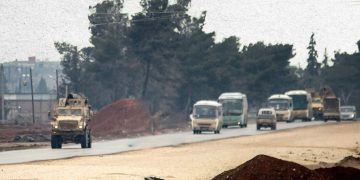
To the north, Turkey is manoeuvring under the pretext of countering the Kurdish threat. To the south, Israel is expanding its reach under the guise of protecting the Druze minority. While these justifications may sound humanitarian, both conceal deeper strategic agendas, rooted in control over new trade and supply routes, from Israel’s proposed “David Corridor” to Turkey’s energy pipelines.
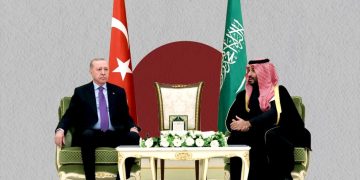
Turkey envisions Syria as part of its strategic sphere, pushing forward economic and military projects with long-term implications. Chief among these is the Qatar–Turkey gas pipeline, an initiative Ankara has been pursuing since 2009, which would transform Turkey into a central energy hub linking the Middle East to Europe.
On the other side, Israel is pursuing its own expansionist project through the so-called “David Corridor”, a land route that would stretch from the occupied Golan Heights eastward through southern Syria and into Iraq, reaching the Euphrates River. The goal: to block Iran’s access to the Levant, elevate Israel as a regional economic competitor to China’s Belt and Road, and secure resource-rich territories abundant in water and oil.
Tensions between these two regional powers have reached a boiling point. Israel’s Ministry of Defense, through its internal “Nagel Committee”, has reportedly recommended that the government prepare for a potential military conflict with Turkey, considering Ankara’s presence in Syria to be a greater long-term threat than Iran’s.
Read also: Imagined Middle East: Are We Returning to Kissinger’s 1974 Vision?
Despite the tension, reports suggest that Turkey and Israel have entered a tacit, undeclared agreement to avoid direct military confrontation in Syria. This understanding includes the establishment of a real-time communication line to prevent escalation during overlapping military operations.
According to leaked details, Israel has agreed to tolerate Turkish expansion north of Palmyra, provided Turkey refrains from deploying air defence systems or surveillance radar that could monitor Israeli air activity. In return, Turkey accepts Israel’s insistence on keeping southern Syria a demilitarized zone, preserving Israel’s aerial and intelligence freedom in the region.
The true dilemma lies in the paradoxical relationship between Turkey and Israel, each needing the other, while simultaneously fearing the other’s ambitions.
Turkey seeks to guarantee that Israel does not obstruct its military or economic agendas in Syria. Conversely, Israel is wary of Turkish expansion near its borders and its potential to reshape regional power dynamics in ways unfavourable to Israeli interests.
Within this high-stakes landscape, Syria’s new leadership finds itself in an extremely delicate position. Damascus must walk a tightrope: leveraging Turkey’s reconstruction and security support while avoiding provocation of Israel, an actor that effectively controls portions of Syrian territory.
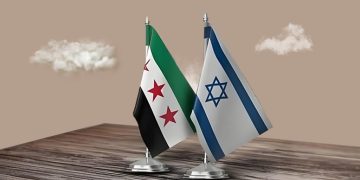
This strategic balancing act may explain why Syrian Israeli backchannel meetings in Azerbaijan, a Turkish-aligned space, have reportedly intensified. These meetings aim to manage overlapping interests without triggering open confrontation.
The Israeli Turkish rivalry in Syria is not just a competition for influence, but a contest over the future structure of the Middle East. Whether Syria becomes a bridge for regional cooperation or a theatre for destructive proxy conflict will depend on how effectively Damascus navigates this volatile dynamic.
And the central question remains: Can Syria turn its hostile friends into real partners, or will it learn the hard way that its friendliest enemies hide the sharpest agendas? The answer will shape not only Syria’s destinybut the broader balance of power across the Middle East.