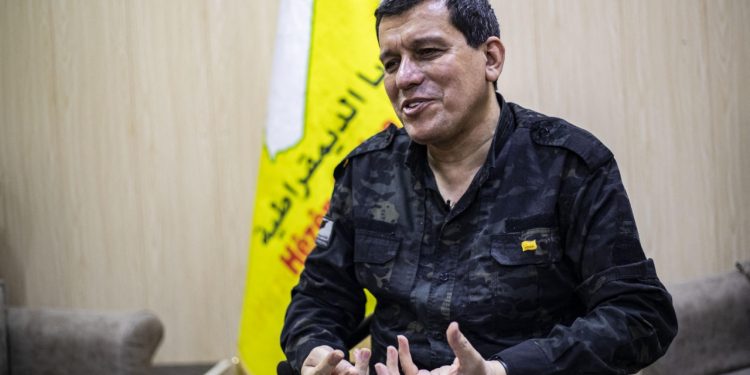
Hasaka, northeast Syria – The top commander of the Kurdish-led Syrian Democratic Forces (SDF) said on Tuesday they are committed to Syria’s unity and have formally requested the return of government institutions to areas under their control in the northeast.
In an interview with Saudi-owned Al Hadath TV, General Mazloum Abdi said the SDF and Damascus share an understanding on the need for “one army and one flag”, affirming support for a decentralized political model that preserves Syria’s territorial integrity.
“We are not seeking separation. Decentralization doesn’t mean division,” Abdi said. “Some sovereign institutions should remain centralized, and our only option with Damascus is dialogue.”
Abdi revealed that new rounds of talks are expected with Syrian government officials and said recent unrest in Suweyda had reinforced the importance of political negotiation. He stated that the SDF aims to become part of the Syrian Ministry of Defense in any future settlement.
The commander confirmed preparations for a postponed meeting in Paris with Syrian officials, originally delayed at Damascus’s request due to the Suweyda crisis.
Related: U.S. Envoy to Syria Held Call with Kurdish-Led SDF Commander
Abdi reiterated the SDF’s commitment to the March 10 agreement signed with Syrian President Ahmed Al-Sharaa, which outlines an eight-point framework for integrating northeastern institutions, including border crossings, Qamishli airport, and oil fields, into the central state structure.
He stressed that implementation of the deal is progressing slowly due to technical issues on both sides. The agreement also recognized the Kurdish community as an integral part of the Syrian nation and affirmed their right to citizenship and cultural expression.
Abdi said Damascus has shown willingness to accept Kurdish language and cultural rights, and he called for Kurdish to be recognized as an official language alongside Arabic in Kurdish-majority regions.
He added that the SDF aims to transform the current ceasefire in northern and eastern Syria into permanent peace but denied being offered any official position in the Syrian government.
Read also: Syrian Kurdish Forces Call for Decentralized Governance in Talks with Damascus
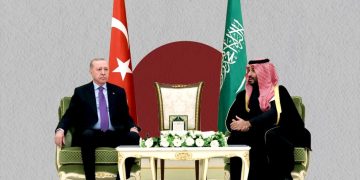
Commenting on regional diplomacy, Abdi said communication channels with Turkey remain open and described them as “positive.” He also welcomed Saudi Arabia’s role, suggesting Riyadh could serve as a mediator and noting its influence in recent moves to normalize Syria’s international standing.
The March agreement also included provisions for the return of displaced persons and a nationwide ceasefire.